Showing posts with label Feminism. Show all posts

Thursday, 31 December 2020

That Was The Year That Was

What do I know?
As screenwriter William Goldman (The Princess Bride) wrote in his 1982 memoir Adventures in the Screen Trade

Nobody Knows Anything

And looking back to January 2020, I could not have predicted that I would live through historic times:

  • the stout guarding of George Eliot’s statue in Nuneaton Market Square in case any protestors felt the need to vandalise the author of Mill on the Floss;
  • the (final) Brexit deal, heralding months and years of further bureaucratic wrangling (thank goodness the deal is “oven-ready”) but hopefully there is an end to the Tory EuroPsychoDrama which distracts, deflects and divides;
  • the clear and democratic defeat of President Trump in a corrosive American election;
  • the clamping down by Chinese authorities on civil liberties in Hong Kong;
  • the (to date) almost 83,000,000 cases and almost 2,000,000 deaths from a global, deadly pandemic.

What I DO know.
I know I’ve done a lot of local walking, completed a lot of jigsaw puzzles, re-read Dickens's Martin Chuzzlewit and Dombey and Son, read a lot of other books (including my book of the year, Maggie O'Farrell's Hamnet), watched a lot of TV, attended lectures, interviews and Tai Chi classes online, watched theatre online and extracted every ounce of pleasure I could from the family and friends I’ve managed to see with the changing (and sometimes confusing) restrictions, lockdown and tiers. I know one daughter was furloughed for a time (and has worked from her home for much of the time.) I know another daughter continued training to become a nurse (including working on Covid wards and now helping deliver the vaccine.) I know my wife attended French and ballet classes and a book group online and I know she continued to work (safely) at a local Food Bank which, in 2010, delivered 600 bags a year and currently delivers 600 bags a week…. anyone care to speculate what social policies have led to the increase in the demand for food parcels?
Rainbows everywhere
In windows, on hillsides, in the sky…. Rainbows expressed appreciation towards key workers. Compassion, kindness and solidarity triumphed over selfishness after the initial panic of the approaching first lockdown and before the cynicism of the Autumn. The environment bounced back. Birds filled the air. Nature triumphed. In the Spring and Summer children rode bicycles freely on emptier-than-usual roads. Until this year the record for the speed of developing a vaccine was held by the 1960s mumps jab, but the glory (and hard work) of scientists cooperating around the world have produced two safe and effective vaccines for Covid-19 within a year, and a third vaccine is imminent. Hopefully the days are over for those who believe Michael Gove’s soundbite that “people have had enough of experts….” (Particularly those who never heard Gove’s pitiful attempts to wriggle out of saying it in the months following.)
Women-led countries
An analysis by academics at Liverpool and Reading Universities of the initial governmental policy responses to Covid-19 up to 19th May, adjusted for variables (GDP, population density etc), concluded that countries led by women handled the pandemic “systematically and significantly better” than those led by men, particularly ones following a populist agenda (take a bow, Trump, Bolsanaro and BoJo.) So, let’s hear it for Finland’s Sanna Marin, Denmark’s Mette Frederiksen, New Zealand’s Jacinda Ardern, Taiwan’s Tsai Ing-wen and Germany’s Angela Merkel. “When women-led countries are compared to countries similar to them along a range of characteristics, they have performed better, experiencing fewer cases as well as fewer deaths.”

So, looking back through the diary of my little life for 2020, what did I comment upon?
January & February 2020
  • Confirmation reaches the UK Media that Chinese people are dying of a novel virus, probably originating in a wet market in Wuhan. (As the weeks go by, I convince myself that my 33 days of coughing and high temperature in November and December of 2019 are not connected. I am NOT Patient Zero.) The Republican-controlled Senate acquits President Trump of charges of abuse of power and obstructing congress; in February President Trump tells a rally that the now-identified Covid-19 virus will be gone by April.
In my little life I saw Cats, Little Women, Star Wars: the Rise of Skywalker, Jojo Rabbit, EMMA. and Parasite at the cinema. At the theatre I saw King John, A Museum in Baghdad and The Whip at the RSC, the musical Gypsy at Manchester’s Royal Exchange, Ballet Rambert at Bradford Alhambra and I went to a Van Gogh audio-visual display in York. I enjoyed a cheese and wine evening in Leeds with a pal, attended a school reunion in Wakefield and marvelled at the National Space Centre in Leicester. To celebrate Valentine’s Day, Sally and I chugged along on a steam train with Prosecco and afternoon tea. (Meanwhile, Covid-19 rolls down the line to Italy….)
March & April 2020
  • The World Health Organisation declares that Covid-19 is a pandemic, Italy goes into full lockdown and, after increasing clamour from health experts, the UK government locks down, and the “Clap for Carers” begins on Thursday nights at 8pm. For a fortnight, supermarkets struggle to fill shelves with particular items. Boris Johnson, the UK Prime Minister is diagnosed with Covid-19 and Keir Starmer becomes Labour leader. Captain Tom Moore becomes a hero by doing laps of his garden on a zimmer frame and raising £32m for the NHS. The Queen reassures the nation. President Trump suggests injecting bleach and bringing light inside the body (worth quoting verbatim for the record):
"I see the disinfectant, where it knocks it out in one minute. And is there a way we can do something like that by injection inside or almost a cleaning, because you see it gets in the lungs and it does a tremendous number on the lungs…. I said supposing you brought the light inside the body, which you can do either through the skin or in some other way. And I think you said you're going to test that too... So, we'll see, but the whole concept of the light, the way it kills it in one minute - that's pretty powerful."
In my little life I saw Dark Waters, Military Wives and Onward at the cinema and Acosta Danza (Carlos Acosta dance group) at the Alhambra Theatre in Bradford. They were the final trips to the cinema and theatre until the Autumn because of lockdown or tier restrictions. Final meals out, final family gatherings, the beginnings of Skype and Zoom group calls, the scheduling of WALKING began. Emily returned home to live in our attic in isolation as she worked on a “hot ward” and subsequently recovered from what was almost certainly Covid symptoms. My niece, and then my sister, were diagnosed with (and hospitalised by) Covid-19 in April – thankfully both went on to recover. NT Live, YouTube, quality TV and lectures online filled time and Tai Chi classes switched to online.
May & June 2020
  • Health Secretary Matt Hancock’s claim of delivering 100,000 Covid tests a day is debunked when he has to admit that what he meant was that the bulk of them had been put in the post. UK government credibility is undermined by advisor Dominic Cummings’s ludicrous version of his trip to County Durham and Barnard Castle. George Floyd, an unarmed black man, is unlawfully killed by police in Minneapolis. Marcus Rashford leads a successful campaign for free school meals for disadvantaged children.
In my little life I attended my first Zoom funeral (very impressive) and phrases like “socially distanced” became ubiquitous. The Hay Festival successfully broadcast its talks and performances online. Our future holidays were cancelled. We got a new bed and in May became an “empty nest” again.
July & August 2020
  • Chancellor Rishi Sunak launches an Eat Out To Help Out scheme to revive the hospitality industry. Joe Biden chooses Kamala Harris as a running mate to stand against Donald Trump later in the year. The awarding of GCSE and A Level results is a fiasco that was predicted and could easily have been avoided and the hapless Education Secretary, Gavin Williamson, keeps his job after the first of what seems like a series of gaffes and U-turns that continues through the rest of the year.
In my little life we celebrated our 34th wedding anniversary with a picnic and walk on Penistone Hill. We were able to meet friends in the garden – but only until August 1st. The birth of Great Niece Charlotte added new life to the wider Johnson clan, a welcome miracle in the middle of the year. The RSC started broadcasting the Talking Shakespeare series of interviews. Pre-Covid arrangements and maskless supermarket shopping seemed to be a very distant memory.
September & October 2020
  • The “world-beating” (organised by the PM’s private sector chums) Test and Trace system fails as schools and office workers return at the same time to superspread Covid-19 and kickstart the second wave of infections. Jacinda Ardern wins a landslide victory in the New Zealand elections having shown clear leadership in dealing with the pandemic. Having publicly argued with the Mayors of Middlesborough and Manchester about regional lockdown rules, Boris Johnson announces a second national lockdown for November.
In my little life I went to the cinema once: The Perfect Candidate and, gloriously, went to Leeds Playhouse to see some socially distanced theatre: Orpheus in the Record Shop, Krapp’s Last Tape and La Voix Humaine. My 60th birthday came and went without pomp but with good food, a terrific hike and Katherine Hepburn in Bringing Up Baby.
November & December 2020
  • The second national lockdown makes some, but not enough, impact on the rising cases of Covid-19 but the world celebrates as a German-Turkish couple, Özlem Türeci and Uğur Şahin, produce an effective vaccine at Pfizer. Dominic Cummings (and Lee Cain) exit from UK power struggles in 10 Downing Street and Joe Biden and Kamala Harris decisively win the US Presidential election with a bigger margin than Trump beat Clinton in 2016. A 90-year old grandmother from Coventry, Margaret Keenan, becomes the first (non-clinical-trial) person in the world to receive a fully-tested and approved Covid vaccine. Second in line for the jab in Warwickshire was 81-year old William Shakespeare….!
In my little life, I squeezed in one cinema trip: Uncle Vanya and was deliriously happy when the US election made sense of my hope in humanity. I started my re-reading of all Shakespeare’s works with Two Gentlemen of Verona and we began having posh takeaways delivered once a week to “celebrate” another week survived. As the year ended we managed to see a good number of friends in outdoor venues and the Christmas spirit endured in spite of the government’s poor communication skills.
So what next?
It would be good to think that 2021 will be the year when lessons learned from the pandemic begin to bear fruit. That....
  • the “rat race” is not the only way to live
  • home working is possible
  • a long daily commute is not conducive to good living
  • nature is indispensable
  • a cleaner environment is achievable
  • community resources are value for money
  • the arts bring entertainment, inspiration and solace to millions
  • local expertise is invaluable
  • experts are worth attending to
  • heroes come in all shapes, sizes, creeds and colour
  • an equal right for one is an equal right for all
  • carers, volunteers and key workers are more important in a crisis than pin-striped hedge-fund managers
  • compassion and kindness are free
  • the welfare state is as precious as the NHS
  • magic money trees are not and have never been real – because where there’s a (political) will, there’s a (financial) way.
New Year. New Decade. Welcome to the future....  

Saturday, 26 September 2020

PreBirthday Birthday Treats

Big Birthday Tighter Lockdown

I live in an area that has had an increasing Covid infection rate so, with tighter lockdown restrictions, my plans for celebrating my 60th birthday in the middle of October are well and truly on hold. Which explains why my favourite walk on the moors to Top Withins (scheduled for my birthday weekend) happened early. And a trip to the Harvey Nichols restaurant in Leeds was also tacked onto a trip that was meant to be just doing chores. Blowing the cobwebs away and putting the world to rights with a picnic at the Brontë Falls; and savouring the time and tastes over a delicious meal – I already feel I’ve been well and truly treated. (Happy Early Birthday To Me!) As a bonus I visited for the first time the Tiled Hall Café at Leeds Art Gallery.

Seasons Mingling
On Friday, I meandered along the River Aire and bathed in forest light feeling like the luckiest man alive. The day before, on Thursday, marble-sized hailstones battered Saltaire, crushing plants and battering berries off the weeping cotoneaster in our back garden. Is it Summer or Autumn or has Winter sneaked in? Sometime in October I’ll record (I hope) a RETURN TO LIVE THEATRE – I’ll be attending 3 x 45minute performances at Leeds Playhouse…. But yesterday, after the river walk and Tai Chi in the park (who guessed I would ever be doing Tai Chi?) I made a RETURN TO THE CINEMA…. So, in Pictureville, I was one of five masked punters who was glued to The Perfect Candidate.
No urgent justification to fund this project
I may have been so cinema-deprived that The Perfect Candidate felt like the best thing I’ve seen in ages – and that’s because it’s the ONLY thing I’ve seen at the cinema since the beginning of lockdown. There were a couple of moments in the film that felt formulaic – though other parts that were not formulaic and I was definitely transported out of my self and my immediate concerns into a different world. So here’s what I thought about my first cinema film in six months:
  • I felt safe and comfortable in Pictureville cinema
  • One of my favourite films of 2012 was Wajdja about a girl and her desire to ride a bike, made in secretive conditions in Saudi Arabia by the same director as The Perfect Candidate, Haifaa Al-Mounsour – this new film has a bigger budget, seems more obviously “cinematic” but has the same sensibilities and attention to human detail as Wadjda
  • As soon as you see Dr Maryam (Mila Al Zahrani) driving her car, you know this is a 21st century Saudi Arabia. Maryam is an ordinary woman, observant and devout, and with extraordinary determination and enough temper to cut through some of the bullshit she encounters in her life as a trained doctor in a remote clinic and, later, accidentally, as a candidate for the local Municipal Council
  • Helping Maryam (at first reluctantly) are her two sisters: Sara (a teenage eye-roller) and Selma (a confident wedding planner, played by Dhay who is, apparently, for those who know these things, a real-life social media influencer)
  • The three sisters are left home alone by their patriarchal father who, against stereotype, wants to go “on tour” with his band of musicians, partly to recover from the grief over the loss of his unconventional wife a year before. He is prepared to defy extremist threats to censor his musical talents and states that he wants his daughters to live fulfilled lives.
  • The authorities want Dr Maryam to concentrate on treating patients who are prepared to let a female doctor touch them and, later, to focus her political efforts on playgrounds for children and gardens. But there’s a more urgent priority in Maryam’s mind and her rival male candidate has no interest in…. repairing the road to her local clinic
  • The Perfect Candidate made me laugh, feel angry, feel nervous, opened new vistas in my mind – and gave me hope


Saturday, 19 September 2020

A (Yorkshire) lass unparallel'd

Boast thee, Death…. Downy windows close
In Antony and Cleopatra, Charmian closes the eyes of her asp-poisoned mistress with the following words:
So, fare thee well.
Now boast thee, Death. In thy possession lies
A lass unparallel'd. Downy windows, close;
And golden Phoebus never be beheld
Of eyes again so royal!
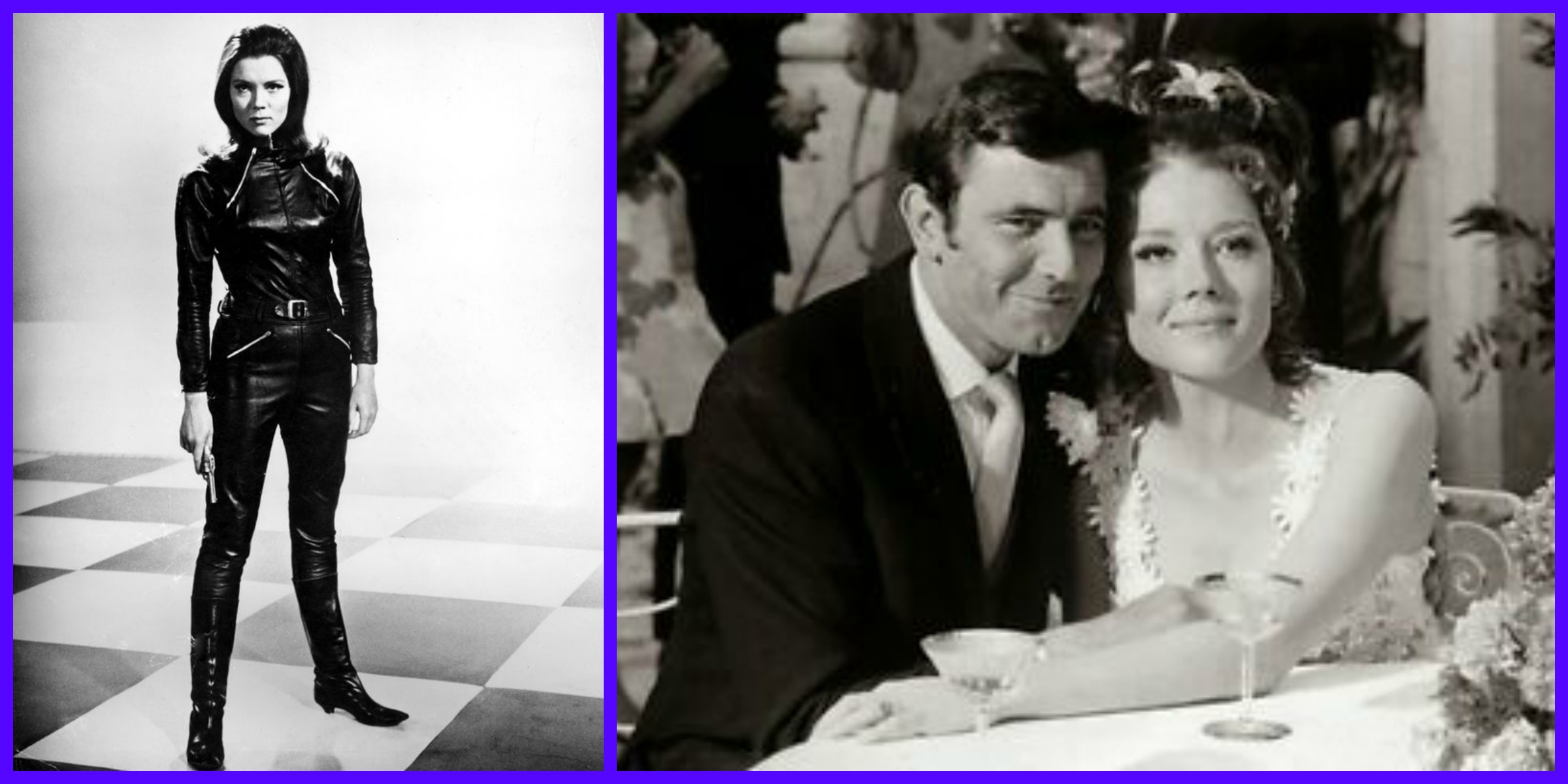
And thus spake Jenny Michelmore to Diana Rigg at the Chichester Festival Theatre in 1985. Thirty-five years later, on September 10th 2020, that same majestic Cleopatra, Dame Diana, took her last bow. Born in Doncaster, Diana Rigg always paid tribute to her Yorkshire roots. Her father was a railway engineer who was transferred to work on the railways in India where Diana learned Hindi as a second language. In later years, when an interviewer expected her to cite India when asking “where did you develop your ingrained sense of justice?”  Diana’s answer was “Yorkshire.” Although feeling she didn’t fit in when she returned to school in Leeds, Diana’s drama teacher at Fulneck, Sylvia Greenwood, instilled a love of Shakespeare and performing and Dame Diana returned to Leeds to receive an honorary degree and visit her old school.
Mistress of Theatre, TV, Cinema
At school Diana appeared as Orlando in Shakespeare’s As You Like It and Emily Brontë in The Brontës. She went on to be crowned with plaudits, winning BAFTA, Emmy, Tony and Evening Standard Awards in her time. (And striking out – successfully – for equal pay with her co-star in The Avengers at a time when it was rare for women to highlight inequality.) Highlights included:
  • In Theatre: Brecht’s Caucasian Chalk Circle and Mother Courage, Shakespeare’s King Lear, Twelfth Night, Macbeth and Antony and Cleopatra (as Cordelia, Viola, Lady M and Cleopatra), Ronald Millar’s Abelard and Helouise, Stoppard’s plays Jumpers and Night and Day, both Eliza Dolittle and Mrs Higgins (twice) in My Fair Lady, Sondheim’s Follies, Euripides’ Medea, Albee’s Who’s Afraid of Virginia Woolf, Williams’s Suddenly Last Summer and Chekhov’s The Cherry Orchard
  • On TV: Shakespeare’s King Lear (as Regan), The Morecambe and Wise Show, Clytemnestra in The Oresteia, Ibsens’s Hedda Gabler, the 1985 Bleak House, her BAFTA-winning turn in Mother Love, Moll Flanders, Mrs Danvers in 1997’s Rebecca, Oleanna Tyrell in Game of Thrones, and cameos in popular programmes like Victoria, Detectorists, Doctor Who and the forthcoming Black Narcissus. But she will always be associated with her groundbreaking performance as Emma Peel in 51 episodes of The Avengers
  • On film: Shakespeare’s Midsummer Night’s Dream and Julius Caesar (as Helena and Portia), Mrs Tracey Bond in On Her Majesty’s Secret Service, Theatre of Blood, A Little Night Music, The Great Muppet Caper, Evil Under The Sun, The Painted Veil and the forthcoming Last Night in Soho
As well as her Shakespeare roles, I was most affected by (on TV) her performances in The Avengers, Mother Love, Moll Flanders, Game of Thrones and Detectorists; on film the shock of her fate in On Her Majesty’s Secret Service; but I was lucky enough to see her grimy, cackling, pipe-smoking, funny, grotesque Mother Courage on stage at the National Theatre in 1995 – a character full of grim energy at the beginning, dragging her enormous cart around the stage, quipping, dominating, manipulating; and, by the end of the production, a zombified hollowed-out shell of a woman, emblematic of all people shattered by the effects of needless war. An extremely un-vain performance. An acting legend.


Saturday, 14 September 2019

The Familiars

Statue of Alice Nutter in Roughlee, Gawthorpe Hall, the Pendle Witch Trials and Stacey Hall's The Familiars
The Familiars by Stacey Halls
During a recent trip to Scotland, Sally, Emily and I listened rapt to an audio reading of the tale of Fleetwood Shuttleworth. Stacey Hall’s novel The Familiars gives an account of pregnant Fleetwood and her choice of midwife, the enigmatic Alice Grey, and how they both get caught up in the historical events and people involved in the Pendle Witch Trials. I don’t want to reveal any spoilers about the novel but would highly recommend it if you enjoy strong female characters, historical fiction, Gothic conventions and stories of friendship, brutality, betrayal, hypocrisy, religious fundamentalism and the clash of contrasting spirits.
Gawthorpe Hall

Pendle Heritage Centre and Gawthorpe Hall

Though Alice Grey is an historical name, her character is imagined. Fleetwood Shuttleworth, however, is the fabulous name of the real-life owner of Gawthorpe Hall, a mighty building open to the public right now, in the hands of the National Trust. The Elizabethan interior has panelling and ceilings of astonishing merit. Not far away is the informative and moving Pendle Heritage Centre which provides the details, amongst many other things, of:

  • James I’s tightening of the screws following the Gunpowder Plot
  • the Demdike and Chattox families
  • pedlar John Law and his “cursing” by Alison Device
  • Malkin Tower and the “Witches’ Sabbath”
  • Alice Nutter, Ashlar House, Lancaster Castle, Roger Nowell
  • Jennet Device and the Pendle Witch Trial and the 11 hangings that resulted
    Pendle Heritage Centre (and more Gawthorpe Hall images)

Saturday, 22 June 2019

Fair and gracious daughter

Harriet's birthday in June
"Good morning to you, fair and gracious daughter"
Thus speaks the Duke in Measure for Measure to Isabella, sadly a complicated relationship riddled with ambiguities and power struggles in a play that over 400 years after it was written still causes an audience to gasp in shock at Me Too moments…. Thankfully no such complication exists between my youngest daughter and me whose spirit reminds me more of Beatrice in Much Ado About Nothing:
There’s little of the melancholy element in her, my lord: she is never sad but when she sleeps; and not ever sad then; for I have heard my daughter say, she hath often dreamt of unhappiness, and waked herself with laughing.
Maybe Harriet’s not quite as deliriously optimistic as Beatrice, but she can certainly spin life’s twists and turns into a way forward, the next step, a target, a plan….
Cora being patient....


Saturday, 25 May 2019

Iron Ring of Castles

Peaceful Now, Iron Ring Not Needed
Knowing that Edward I built his “Iron Ring of Castles” in this area of north Wales to control the rebellious Welsh is easy to forget when you stand on Conwy beach and look across to the Great Orme (the massive chunk of limestone rising up near Llandudno.) The beach has golden sandbanks and dunes, as well as charming bluebell walks to reach it from certain directions.
Penrhyn Castle (Castle Penrhyn)
Was NOT one of Edward I’s Iron Ring – in fact is is a Victorian pile with faux medieval features, but with the attraction of enchanting William Morris decoration and pre-Raphaelite paintings. The displays about the impact of the building of the railways and the use of the local slate quarry were compelling, probably because the information honestly and imaginatively confronted the slave trade’s role in contributing to the growing economy of the Pennant family in the 17th and 18th centuries.
From “pretend” Castle Penrhyn to Fortress Caernarvon
Sturdy Caernarfon (Canarvon Castle to English tongues) is a lynchpin of the Iron Ring and has been home to several important historical events, not least of which was the investiture of Prince Charles in 1969 and, five decades earlier in 1911, the future King Edward VIII, both becoming Prince of Wales. The mighty, heavily restored Caernarvon boasts Castillian octagonal turrets (no less than three on the Eagle Tower.) 
Multimedia Castle
Imaginative multi-media displays brought different periods of the castle’s history to life. There was a circular projection that helped fill in the timeline, a giant “chess board” depicting the ownership of the title “Prince of Wales”, a shadow-puppet pageant of Eleanor of Castille’s life and a dramatic depiction of Edward I’s manipulation (to his own ends) of the myths of King Arthur.
The Museum of the Royal Welch Fusiliers
Within the Castle is an account of the distinguished Welch Fusiliers (yes, spelled with a c not an s!) The regiment was raised in 1689 and the museum contains fascinating material, including an account of Jenny Jones and Mother Ross, women who dressed as men to fight beside their comrades. A goat has been the regiment’s mascot since 1777 and, since 1844 and Queen Victoria’s “gift,” the goat has always been a “royal goat.” The new royal baby, Archie, appeared in early May, so it seemed somewhat fitting that we were visiting one of Archie’s ancestor’s large-scale Defence of the Realm F-Off castles. Will Archie ever be crowned Prince of Wales? (As Seventh in line to the throne, it is unlikely but, then again, who would have predicted Edward VIII’s life choices back in 1911?)
Harriet was off camping on this holiday; and this pic includes the longest town name in the UK

Saturday, 13 April 2019

Shall Earth No More Inspire Thee

Mother's Day at the Bronte Parsonage Museum

Mother's Day 2019
We chose to be in Haworth on Mother’s Day. It may seem counterintuitive since the Brontë Parsonage was a home bereft of a mother. Mother Maria died soon after the famous family moved to the town of Haworth from Thornton in Bradford. Therefore, the Parsonage (during the years 1820 to 1861) relied for maternal influences on Aunt Branwell for 21 years, on home helps Tabby Aykroyd and Martha Brown and the sisterly love and mutual support of Charlotte, Emily and Anne.
When imagination once runs riot
Every time I walk round the Brontë Parsonage Museum (and I have done it over 20 times now, including the times I took students there) I spot something new or feel something different. This time I found myself imagining the love, rivalry and intensity of the sibling relationships; how they must have been constantly aware of where each other was in the house, the changing dynamics when each of them left for a time, the circumstances that brought each of them back. And the changing atmosphere when, one by one, they died.
Shall Earth No More Inspire Thee
The extra incentive to visit on Mother’s Day was the opportunity to enjoy a unique audio-hiking experience. The Parsonage Museum have commissioned composer Adrian McNally to set to music a selection of Emily Brontë’s poems. Adrian composed by day at Ponden Hall (historically a place that sheltered Branwell, Emily and Anne along with servant Sarah Garrs during the Crow Hill Bog Burst, a thunderstorm and mudslide in 1824.) Adrian then practised and performed the music on the piano you can see today in Mr Brontë’s study (played by Emily during her lifetime, also by Anne.) Rachel and Becky Unthank (folk group, The Unthanks) have performed and recorded the poems and the Parsonage have devised a walk up onto Penistone Hill so you can listen to the songs/poems as you follow a 45-minute climb and descent onto the nearby moor.
Song Cycle in order of audio experience in Haworth
1. Deep deep down in the silent grave
With no-one to mourn above
Here with my knee upon thy stone
I bid adieu to feelings gone
I leave with thee my tears and pain
And rush into the world again

O come again what chains withhold
The steps that used so fleet to be
Come leave thy dwelling dark and cold
Once more to visit me

Was it with the fields of green
Blowing flower and budding tree
With the summer heaven serene
That thou didst visit me?

No ‘t was not the flowery plain
No ‘t was not the fragrant air
Summer skies will come again
But thou wilt not be there

2. She dried her tears and they did smile
To see her cheeks' returning glow
How little dreaming all the while
That full heart throbbed to overflow.

With that sweet look and lively tone
And bright eye shining all the day
They could not guess at midnight lone
How she would weep the time away.

3. I’m happiest when most away
I can bear my soul from its home of clay
On a windy night when the moon is bright
And the eye can wander through worlds of light—

When I am not and none beside—
Nor earth nor sea nor cloudless sky—
But only spirit wandering wide
Through infinite immensity.

4. Shall Earth no more inspire thee,
Thou lonely dreamer now?
Since passion may not fire thee
Shall nature cease to bow?

Thy mind is ever moving
In regions dark to thee;
Recall its useless roving -
Come back and dwell with me.

I know my mountain breezes
Enchant and soothe thee still -
I know my sunshine pleases
Despite thy wayward will.

When day with evening blending
Sinks from the summer sky,
I've seen thy spirit bending
In fond idolatry.

I've watched thee every hour;
I know my mighty sway,
I know my magic power
To drive thy griefs away.

Few hearts to mortals given
On earth so wildly pine;
Yet few would ask a Heaven
More like this Earth than thine.

Then let my winds caress thee;
Thy comrade let me be -
Since nought beside can bless thee
Return and dwell with me.

5. O evening, why is thy light so sad
Why is the sun's last ray so cold?
Hush our smile is as ever glad
But thy heart is growing old.

It's over now; I've known it all;
I'll hide it in my heart no more,
But back again that night recall,
And think the fearful vision o'er.

The evening sun in cloudless shine
Has passed from summer's heaven divine,
And dark the shades of twilight grew,
And stars were in the depth of blue,
And in the heath or mountains far
From human eye and human care,
With thoughtful heart and tearful eye,
I sadly watched that solemn sky.
6. High waving heather 'neath stormy blasts bending,
Midnight and moonlight and bright shining stars;
Darkness and glory rejoicingly blending,
Earth rising to heaven and heaven descending,
Man's spirit away from its drear dungeon sending,
Bursting the fetters and breaking the bars.

All down the mountain sides wild forests lending
One mighty voice to the life-giving wind;
Rivers their banks in their jubilee rending,
Fast through the valleys a reckless course wending,
Wider and deeper their waters extending,
Leaving a desolate desert behind.

Shining and lowering and swelling and dying,
Changing forever from midnight to noon;
Roaring like thunder, like soft music sighing,
Shadows on shadows advancing and flying,
Lightning-bright flashes the deep gloom defying,
Coming as swiftly and fading as soon.

7. Lines
The soft unclouded blue of air,
The earth as golden, green, and fair,
And bright as Eden's used to be,
That air and earth have rested me,

Laid on the grass I lapsed away,
Sank back again to childhood's day;
All harsh thoughts perished, memory mild
Subdued both grief and passion wild.

But did the sunshine even now
That bathed his stern and swarthy brow,
Oh did it wake—I long to know—
One whisper, one sweet dream in him,
One lingering joy that years ago
Had faded—lost in distance dim?

That iron man was born like me,
⁠And he was once an ardent boy;
He must have felt in infancy
⁠The glory of a summer sky.

Though storms untold his mind has tossed,
He cannot utterly have lost
Remembrance of his early home—
So lost that not a gleam may come.

No vision of his mother's face
⁠When she so fondly mild set free
Her darling child from her embrace
⁠To roam till eve at liberty.

Nor of his haunts, nor of the flowers,
⁠His tiny hand would grateful bear,
Returning from the darkening bowers,
⁠To weave into her glossy hair.

I saw the light breeze kiss his cheek,
⁠His fingers 'mid the roses twined;
I watched to mark one transient streak
⁠Of pensive softness shade his mind.

The open window showed around
⁠A glowing park and glorious sky,
And thick woods swelling with the sound
⁠Of nature's mingled harmony.

Silent he sat. That stormy breast
At length I said has deigned to rest;
At length above that spirit flows
The waveless ocean of repose.

Let me draw near, 'twill soothe to view
His dark eyes dimmed with holy dew;
Remorse even now may wake within
And half unchain his soul from sin.

Perhaps this is the destined hour
When Hell shall lose its fatal power,
And Heaven itself shall bend above
To hail the soul redeemed by love.

Unmarked I gazed, my idle thought
Passed with the ray whose shine it caught;
One glance revealed how little care
He felt for all the beauty there.

Oh! crime can make the heart grow old
⁠Sooner than years of wearing woe,
Can turn the warmest bosom cold
⁠As winter wind or polar snow.
8. Remembrance
Cold in the earth - and the deep snow piled above thee.
Far, far removed, cold in the dreary grave!
Have I forgot, my only Love, to love thee,
Severed at last by Time's all-severing wave?

Now, when alone, do my thoughts no longer hover
Over the mountains on that northern shore;
Resting their wings where heath and fern-leaves cover
That noble heart for ever, ever more?

Cold in the earth - and fifteen wild Decembers,
From those brown hills, have melted into spring:
Faithful, indeed, is the spirit that remembers
After such years of change and suffering!

Sweet Love of youth, forgive, if I forget thee
While the world's tide is bearing me along;
Other desires and other hopes beset me,
Hopes which obscure but cannot do thee wrong!

No later light has lightened up my heaven;
No second morn has ever shone for me:
All my life's bliss from thy dear life was given,
All my life's bliss is in the grave with thee.

But when the days of golden dreams had perished
And even Despair was powerless to destroy,
Then did I learn how existence could be cherished,
Strengthened, and fed without the aid of joy.

Then did I check the tears of useless passion -
Weaned my young soul from yearning after thine;
Sternly denied its burning wish to hasten
Down to that tomb already more than mine.

And even yet, I dare not let it languish,
Dare not indulge in Memory's rapturous pain;
Once drinking deep of that divinest anguish,
How could I seek the empty world again?

9. The night is darkening round me
The wild winds coldly blow;
But a tyrant spell has bound me
And I cannot, cannot go.

The giant trees are bending
Their bare boughs weighed with snow.
And the storm is fast descending,
And yet I cannot go.

Clouds beyond clouds above me,
Wastes beyond wastes below;
But nothing drear can move me;
I will not, cannot go.

I'll come when thou art saddest,
Laid alone in the darkened room,
When the mad day's mirth has vanished,
And the smile of joy is banished
From evening's chilly gloom.

I'll come when the heart's real feeling
Has entire, unbiased sway,
And my influence o'er thee stealing,
Grief deepening, joy congealing,
Shall bear thy soul away.

Listen! 'tis just the hour,
The awful time for thee.
Dost thou not feel upon thy soul
A flood of strange sensations roll,
Forerunners of a sterner power,
Heralds of me?

I would have touched the heavenly key
That spoke alike of bliss and thee;
I would have woke the entrancing song,
But its words died upon my tongue.
And then I knew that hallowed strain
Would never speak of joy again,
And then I felt . . .

The night is darkening round me
The wild winds coldly blow;
But a tyrant spell has bound me
And I cannot, cannot go.