Showing posts with label Eastmoor Estate. Show all posts

Saturday, 2 September 2017

Soaring Tethered


Breakfast, dinner, tea
School dinners were always school dinners during the 1960s and 1970s. You gave the teacher your “dinner money.” I can’t remember when I started talking about lunch when I meant dinner. I haven’t graduated to dinner to mean tea and still say “what’re we having for tea?” (meaning what many call dinner.) Supper was always supper. Then a few years ago I learned some people talk about “kitchen supper” but I always thought of supper as being in your pyjamas sitting in front of the coal fire….(usually bread and dripping or a crumpet toasted on a toasting fork.) I can’t imagine sitting in the kitchen having supper….

Class
I imagined as a child I would always be working class. Then I did A Levels, went to the University of Manchester, lived abroad in Finland for a year and became a teacher. At what point on that journey did I become middle class? Does it matter? Why even think about it? Is it a social invention to keep people in line and control them? Does class exist? It clearly obsesses the British nation, and often troubles, niggles and unsettles me. I think it confuses and divides people. Two related memories have stuck in my mind.
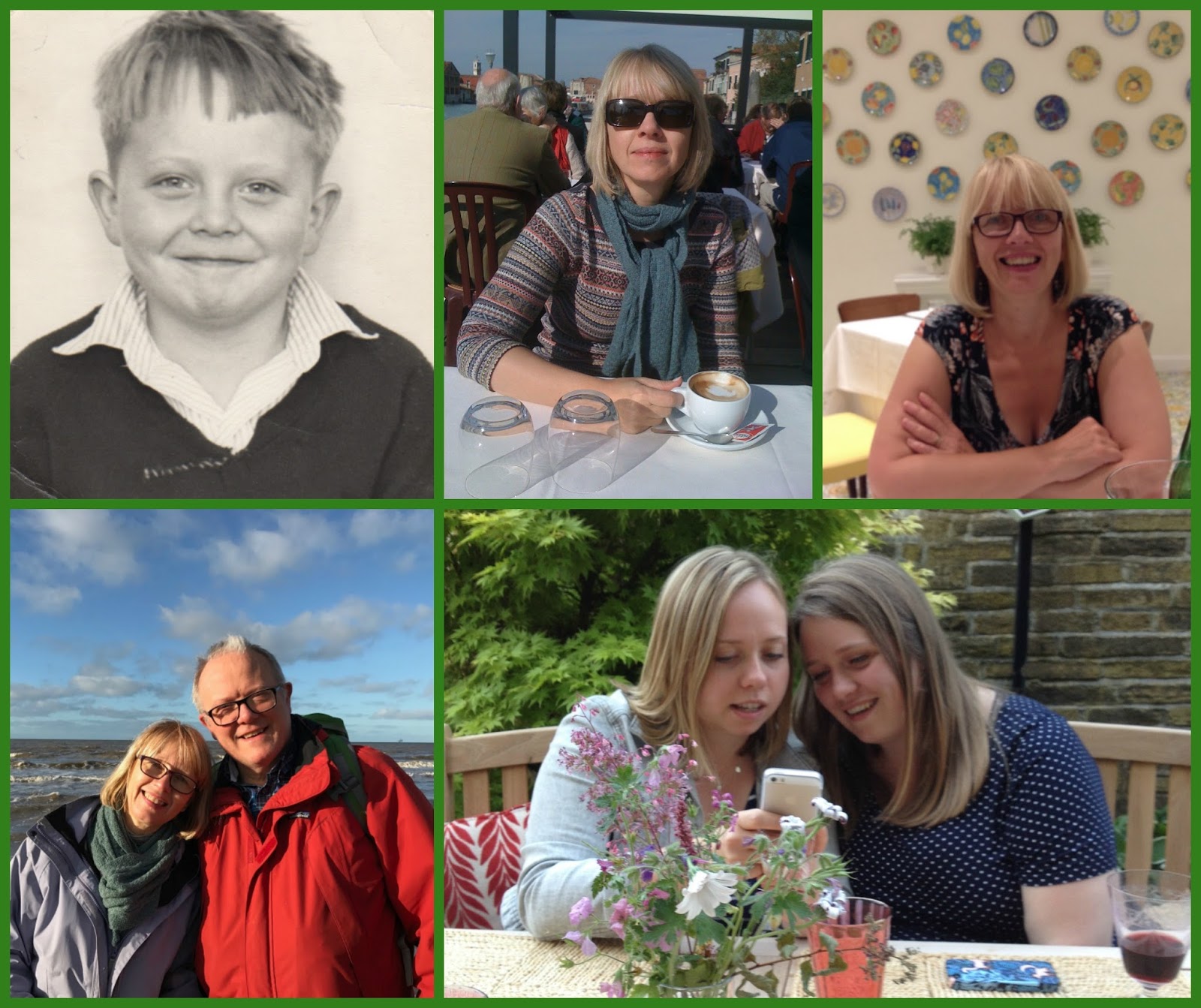
Memory One
The first memory was on the night before being taken to university (in my older brother, Mick’s, car; my parents never owned a car.) I sat on the stairs in my house on Eastmoor Estate in Wakefield and wept like a baby – barrels of snot pouring down my chin – wishing I wasn’t always called the “brainy one.” Within a month or so at university I’d got over that feeling and was reading like a madman and writing essays that were competitively brainy (so brainy that when I came across one recently I didn’t understand the argument one bit.) So my grief about leaving home was short-lived. Something drove me on to devour education and aspire to be as brainy as possible. (Though lacking in common sense, as I think my wife, daughters and sister might testify….)
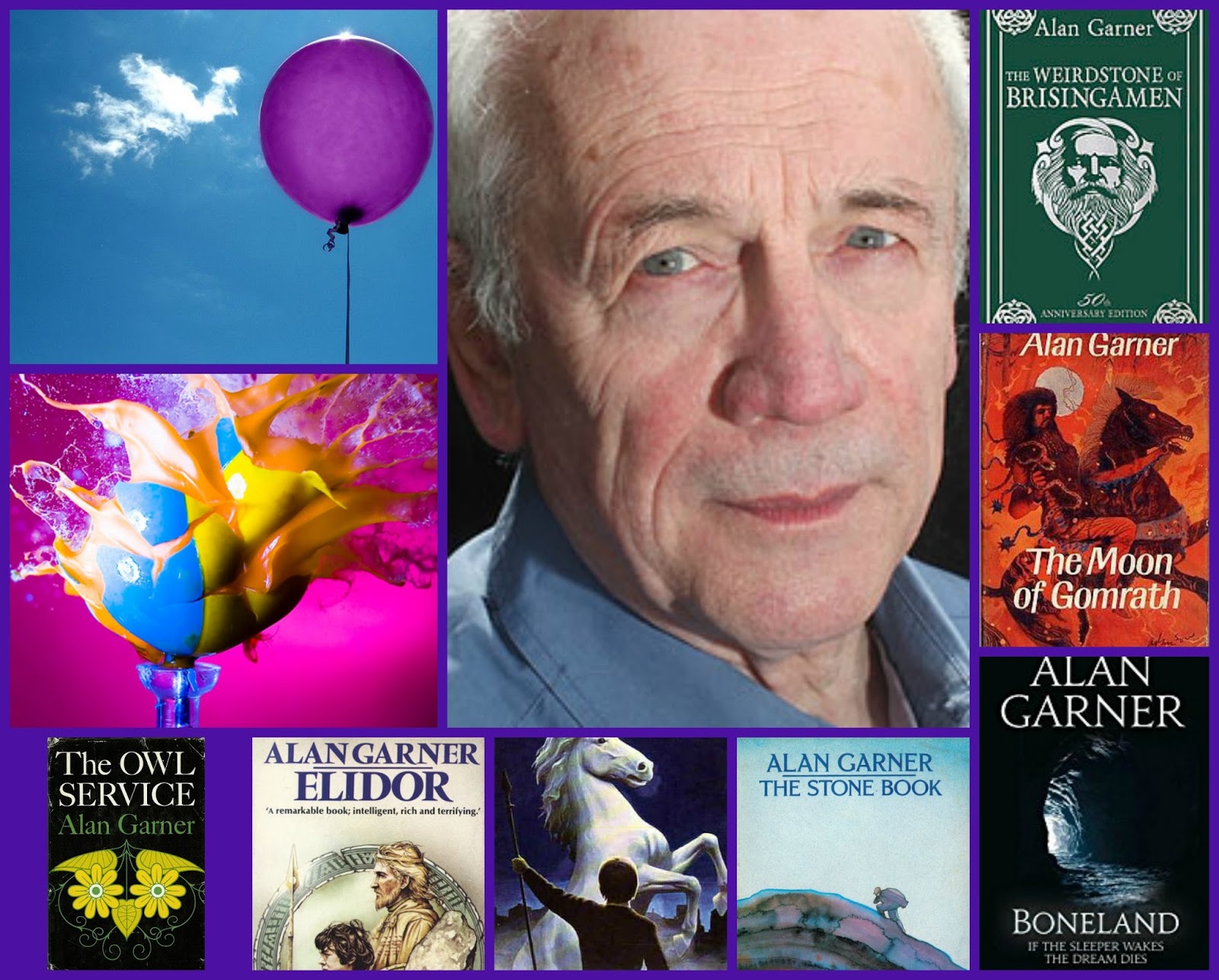
Burst balloon – memory two
The second memory I have is of listening to one of my favourite writers, Alan Garner, lecture about his own dislocation from his “class.” He was lecturing about writing and mental health and being honest about a personal experience when he felt he had had a nervous breakdown. He saw education and moving away from home akin to being blown up like a balloon. The balloon gets bigger and floats away, getting bigger, seeing further and wider, getting perspective, gaining height. Sometimes the balloon bursts. (How he felt about his own nervous breakdown.) The balloon needs sticking back together. Patching up. Before it can be inflated again. Sometimes, though, the balloon floats but it remains tethered to the ground, to its base, to where it came from. And it can be pulled back to its roots and bounce back again freely when it wants. And soar. And return. And soar again. Soaring tethered.

Tuesday, 31 May 2016

Blog One Hundred


Me - proud as punch because I'd sewed up my jumper myself - not sure who cut my hair!

Blog One Hundred

Welcome to my 100th blog. Time to take stock. What does the Blogspot data tell me?
  • TheReadinessIsAllLetBe has been visited over 13,000 times, so far
  • So far, people in 76 countries have followed links to the site
  • Apart from the UK, the countries that visit my blog most frequently, so far, are:
  • the US, Ireland, Russia, France and Germany
  • So far, the top most frequently-mentioned topics are:
  • Family, Shakespeare, History, Yorkshire and Reading


Edward Patrick Johnson and Annie Elizabeth (Veronica)

We are all the product of who and where we came from, so I am glad that Family and Yorkshire feature in over half my posts. When Annie Penn married Eddie Johnson…. they produced five children, one of whom was me. As an adult there are many questions I wish I could now ask my parents about their lives, their opinions, their decisions, their feelings. I wish I could ask advice from both of them. I wish I could thank my Dad for giving me an appreciation of classical music and of Shakespeare but he probably also gave me an addictive personality so I could challenge him about that. I wish I could thank my Mum for giving me a love of history and of reading fiction, of giving me the capacity to love without qualification and enjoy walks in the countryside; but I also know she saddled me with a delusional and romantic cockeyed optimism.

Joseph, Michael Christopher and Teresa

How much did my siblings mould me when I was growing up? How could we all be so different, being brought up by the same parents; but also, in noticeable ways, how could we be so similar? Nature or nurture and in what proportion if a mixture? (Do those snake-belts – worn by Josh in the picture above – still exist for boys today? If not, why not?)
(Portrait on wall) Grandad Penn, (Back Row) Harry, Minnie, Annie, Joe, Reg, (Front Row) Claire, Mary, Granny Penn, John

Mary, John, Harry, Claire, Joe, Reg, Annie, Doreen and Minnie

I wish I could thank my parade of aunties and uncles who came in and out of my life throughout my first 18 years. One of my strongest childhood memories is listening to my Mum and Auntie Claire nattering endlessly about the world and their neighbours, family and friends, a cavalcade of anecdotes from the lurid past and the vivid present to expand my horizons. What would my Grandad Penn (hovering behind my Mum’s head in the picture above) have to tell me if I could ask him about his life? I knew enough and to spare about Granny Penn’s gangrenous leg, her mysterious snuff box and her teeth which she often sent me to find. In a notebook of my Mum’s she writes that her eldest sister, Mary, was born in Normanton; her eldest brother, John, was born at Outwood; siblings Harry, Claire, Joe and Reg were born in Nicolson Row; and she and her younger sisters, Doreen (who died) and Minnie were born in the house in Chapel Yard which no longer stands in Wakefield. Why were the nine children born in four different locations? (I know that the above picture was taken by my brother Josh at the house in Woodhouse Road on Eastmoor Estate which was my Auntie Mary and Uncle Alf’s house, the house where Gran lived out her final days.)

Mick’s 1970s Wedding

As far as I know (correct me if I’m wrong, family) but this picture (when Mick married Jan) is the only time we were photographed as a sevensome….? I remember my platform shoes and those flares. I remember Mum saying “I like my legs in this picture but I wish my hat didn’t shade my face so much.” Funny what you remember…. Funny how time goes by…. Funny how in the 1970s I had no idea I’d be able to scan pictures 40 years later and put them in a kind of internet diary…. Here’s to the next 100 blogs!
Funny how almost 30 years ago....

Saturday, 19 September 2015

Constant as the northern star....

Saltaire Festival

Saltaire Festival

A few times a year Saltaire, where I live, holds a street and park festival with beer tents, food stalls, craft and vintage stalls, live music and street performers. Some years there are arts trails, open garden trails and in recent years in the build-up to Christmas there has been a Window Advent Calendar hunt. All these events bring out the creative best in local people and the atmosphere is generally fantastic although the Festival now is a huge and crowded event and seems to get bigger every year. I am as proud of my adopted home, Saltaire, as I am of my birth city of Wakefield.


Proud of Wakefield

Wakefield Cathedral

Growing up, I loved Wakefield. I loved the open fields near Eastmoor Estate, the sense of history with Sandal Castle and the chantry chapel, the cathedral, the parks, the opportunities for both sports and the arts; as a teenager I played rugby and acted in a local amateur dramatic society – an odd combo looking back. One of the constants about Yorkshire through my life has been how quickly you can get to places of interest and beauty.


Harewood House

Harewood House near Leeds

A place like Harewood House, for example, has so many quirky aspects: the beauty of the house and grounds; the Bird Garden (complete with penguins); the terrace art gallery and cafĂ©; the display about Britain’s history of slavery; and the painting of the “Scandalous” Lady Worsley, recently portrayed in a BBC TV drama by Natalie Dormer.


East Riddlesden Hall

East Riddlesden Hall between Bingley and Keighley

Along the road from my house is the National Trust-run East Riddlesden Hall complete with a huge ancient barn, legends of hauntings, at least three stages of building and a riverside walk.


Jervaulx Abbey

Jervaulx Abbey, North Yorkshire

Further afield is the tranquility of one of the great ruined abbeys of the north. You can take your pick in Yorkshire from Bolton, Byfield, Coverham, Easby, Fountains, Jervaulx, Kirkham, Monk Bretton, Mount Grace, Rievaulx, Roche, Whitby and York St Mary’s. The pictures above are from Jervaulx but they all are atmospheric and peaceful  places to visit.


Middleham Castle

Middleham Castle, North Yorkshire

And not far from Jervaulx is my favourite Yorkshire castle, childhood home of Richard III, Middleham, maintained by English Heritage. I visited Leicester cathedral recently to see the new burial site of Richard but it is Middleham where his heart seems to have been and where his positive reputation remains intact.

Linda Thompson's statue of Richard III at Middleham Castle
I have posted the poem below in a previous blog, but I think it’s a superbly crafted piece of writing:


Richard by Carol Ann Duffy
My bones, scripted in light, upon cold soil,
a human braille. My skull, scarred by a crown,
emptied of history. Describe my soul
as incense, votive, vanishing; you own
the same. Grant me the carving of my name.
These relics, bless. Imagine you re-tie
a broken string and on it thread a cross,
the symbol severed from me when I died.
The end of time – an unknown, unfelt loss –
unless the Resurrection of the Dead …
or I once dreamed of this, your future breath
in prayer for me, lost long, forever found;
or sensed you from the backstage of my death,
as kings glimpse shadows on a battleground.


Saturday, 8 August 2015

One Born Every Minute

Memories are made of this

What do I remember from my own childhood birthdays? The above pics are of my brother’s birthday in about 1962 or 1963 when I was 2 or 3.  I can’t remember the occasion in the photographs but I remember the kinds of things that used to happen at parties when I was a kid. Pass the parcel, pin the tail on the donkey, musical statues, sleeping logs, balloons, potted meat sandwiches, crisps, pop, sausage rolls, a cake with candles, jelly and ice cream…. For the record, the people in the first pic are: brother Chris, Nelly Macarthy, Alan Kirby, Mum, brother Mick with me on his knee, Gilian Hughes, Linda Thackeray and Gary Corcoran. The second pic features brother Mick with his hand on my shoulder, cousin “Little Mary,” Mick Batty and sheriff brother Chris. Happy times!
Joseph, Michael, Christopher and baby me

Are birthdays over-rated?

Is a birthday celebration an over-rated and self-indulgent activity? Are birthdays “made up”, like Yorkshire Day, Secretary’s day and all the rest of the commercially-dubious days? Why make a fuss over the day when, by chance, you were squeezed out of (or surgically helped out from) your mother’s uterus? Shouldn’t every child’s birthday be, in fact, a tribute day to the painful labours of their mother? Or their fainting father? Is a day that focuses on celebrating one person a bit selfish?
Locked-In in Leeds

I love birthdays (for the record)

Birthdays, in my experience, are wonderful. Life’s too short to worry about whether or not a day is selfish or commercial. One day a year is not too extravagant to give all your love and best wishes to someone (or to get it back from loved ones when it is your own birthday.) As for paying tribute to mothers and fathers…. We should probably do that every day we can. What I wouldn’t give now to have an adult conversation with my Mum or my Dad. And ask things I never thought to ask when they were alive.
Memories around 19th June 2015

 “It is my birth-day….”

is a poignant quotation from one of the world's great plays. At a critical moment in the battles over one of the biggest empires in the world, an Egyptian queen suddenly remembers a personal detail:
It is my birth-day:
I had thought to have held it poor: but, since my lord
Is Antony again, I will be Cleopatra.
Even a great queen like Cleopatra can stop in her tracks and decide to “mock the midnight bell” with her beloved Antony on her birthday.
Memories around 24th July 2015

Modern Birthdays

Today there is enormous pressure on parents to give children incredibly elaborate birthdays. But I think I’m a bit (happily) old-fashioned in the kinds of birthday my family usually celebrates:

  • cards (and messages) from loved ones
  • a few presents that matter
  • a special meal picked by the Birthday person
  • a special trip picked by the Birthday Person. 
  • And, naturally, a cake with candles! 

On my next birthday I’ll be 55; one of my very weird regular flights of fantasy is to think about time in relative terms – 55 years before I was born it was 1905, pre-Titanic, pre-First World War, pre-talking movies, Edward VII had been on the throne almost 5 years, my Mum and Dad had yet to be born…. Sixteen years before I was born, Hitler was still alive and there was no end in sight for the Second World War…. Time flies!  We should celebrate every birthday we can.
Here's to the next year's round of birthdays....


Saturday, 1 November 2014

Chubbing as a nipper

Childhood freedom
As a child growing up in the 1960s on the Eastmoor Estate in Wakefield, my playground consisted of fields, dens, paths, bushes, trees, woods, a canal, a river, bridges, haunted ruins, marshes, bonfires…. On days out, my eldest brother would take me, my mum and sister to places like Brimham Rocks in North Yorkshire, a weird and atmospheric collection of rocks on the moors near Pateley Bridge. Another day might be spent exploring the ruins of the great northern abbeys – Byland, Fountains, Jervaulx, Kirkstall, Riveaulx and Roche. In winter laking out* might mean involving two gangs playing Kick Out Can in the smog-riddled ginnels** and gardens of the estate.
*laking out = playing out from the Old Norse laik – “to play”
**ginnels = snickets, alleyways
Bonfire night
TV for children was limited, computers were non-existent and so running free seemed to be the only way to live – but back for tea or for bed! Friendships, loyalties, enemies and rivalries were passionate, none more so than around bonfire night when rival gangs went chubbing*** and then jealously guarded their huge bonfires. It was a great honour to be on guard duty, especially if you were a nipper**** and you were paired up with one of the older lads. 
***chubbing = scrounging for stuff to burn on the street bonfire
****nipper = small kid
Chubbing in the 1960s. Photo property of Bill Bullock.
The giant stack – ElfNSafety nightmare
Modern health and safety regulations wouldn’t tolerate the sorts of bonfire night I remember from childhood.  The centre pole was usually an abandoned telegraph pole with discarded railway sleepers stacked around it.  Linton Road householders would shove in broken cupboards, old sofas and discarded toys so the stack looked like an immense wigwam jumble sale.  Whether the urban myth was true – that one year, one boy was burned to death because he fell asleep when on guard – I never found out.  But the nearest Saturday to November 5th always saw the conflagration go up with a roar.
A local bonfire stack that wouldn't be allowed these days
Tasty treats
Pork pies, mushy peas, baked potatoes, parkin and “bonfire toffee” appeared with paper cups of pop from the Corona van – dandelion and burdock, cola, lemonade, orangeade, cream soda, limeade, cherryade. Some “taties” were cooked on sticks in the fire itself. Did the mums all have a planning meeting to coordinate all the food and drink?
Are the memories true?
Every year someone was burned with a banger and every year someone had to stay up through the night until the embers were safe to leave. Was it really as wild and pagan as my memory conjures? Or have the phantom dangers of childhood conjured a more feral existence than really happened?

Saturday, 18 October 2014

1564 and 1960 - an Anniversary and a Birthday

15th October 1960
Presents, cards, breakfast, ingredients for a cake
So it was my birthday on 15th October. I was born in 1960 at 2:30pm in the afternoon in the front room of what was then 122 Linton Road on Eastmoor Estate in Wakefield. The house later became a different number because more houses were built.
And it's a beautiful day....
So I had some prezzies and got some great cards from family and friends – thank you, all – and watched the film Fargo in the afternoon, with the family. (“There’s more to life than a little money, you know? Don’tcha know that? And here ya are. And it’s a beautiful day. Well, I just don’t understand it.”)
Frances McDormand as Marge Gunderson

Be More Molly and Marge
Some films (Fargo is one of them) contain characters that you never forget, and the final words (quoted in the paragraph above) of Marge Gunderson, played by Frances McDormand, capture a universal human impulse that turns the film into a piece of philosophy. It IS hard to understand why some of the characters behave the way they do when the world is essentially such a kind and wonderful place to be. One of my presents is the box set of the TV series of Fargo which I’ve already seen but which I’m sure I’ll watch plenty more times – and for every Lorne Malvo or Lester Nygaard, there is a Molly Solverson or a Gus Grimly. Molly in the TV series is the moral equivalent of Marge in the film – and as I celebrate my birthday I hope to Be More Molly and Marge – I’m sure it’s what Shakespeare would have wanted.
Alison Tolman as Molly Solverson
450 years ago Shakespeare was born
(23rd April1564 or thereabouts)
Did Shakespeare know his body of work would contain so many themes? Did he think of his work as having a coherent whole? An overarching style and tone? The range of ideas in his work had never accumulated in one person’s work before his writing career and has never been surpassed since, by any writer in any language. Shakespeare deals with just about every theme and aspect of human life known in England at the time, all of which are still relevant. As Ben Jonson predicted in his First Folio epitaph:
He was not of an age, but for all time!