Showing posts with label Antony and Cleopatra. Show all posts

Saturday, 3 July 2021

Head above the parapet again

The scariest moment is always just before you start*
*Stephen King
So, I’ve been summoned back into the world of Rhenium where survivors of the human race attempt to create a better society on a new planet in a galaxy far, far away…. (if you want to see where I was back in August 2018 before I contacted agents and got a wide range of responses - some very pertinent and some just rude, click here.)  Covid-19 lockdowns didn’t boil creative juices inside me, just survivor instincts, so I put my magnum opus aside for the best part of three years in favour of reading, walking, feasting, watching TV and doing jigsaws.
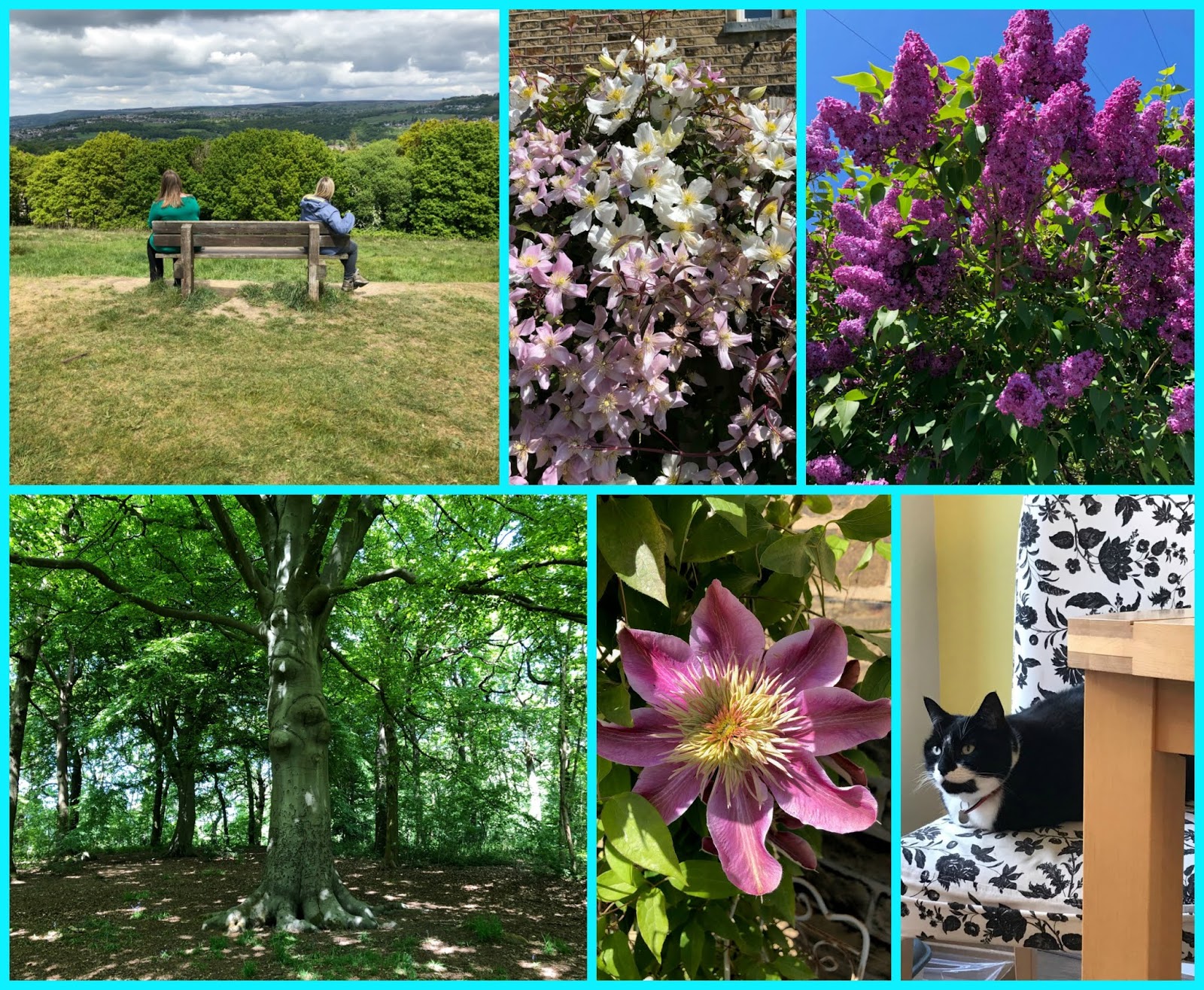
Bark, roses, flowers, outdoor eating.... summer 2021
Write. Write more. Edit. Edit more.
A combination of factors has brought Raydan Wakes back under the microscope and it is now subject to the laser-bright-brutal scrutiny of my editorial pen.
Go with me to my tent; where you shall see….
How calm and gentle I proceeded still
In all my writings.
Suffice to say, the new version seems (to me) radically different from the first (two, five, thirteen?) version(s). Some sections I cannot even remember writing…. Creative writing is a very peculiar hobby! But I’m back in the saddle again, clopping along the lonesome trail…. Giddy up, cowboy! (with thanks to the critters on the pioneer trail who cheer me on….)
The colours of Rhenium society and Nick Shelton's artist's impression of two key characters


Saturday, 27 February 2021

Talking Shakespeare Neljä (Four)

Dense, Juicy, Layered
David Oyelowo, speaking from Los Angeles, remembered a dusty (and intimidating) copy of Shakespeare’s plays in his family’s Islington council flat. He was later surprised to discover Kenneth Branagh’s film of Henry V was also written by Shakespeare, having watched it as a movie, not caring about the language. The real breakthrough for David, though, was seeing a live production at the National Theatre – the visceral production of Robert Lapage’s mudbath Midsummer Night’s Dream with Timothy Spall as Bottom. David started acting accidentally when he tried to impress a girl by joining a youth theatre and then standing in when another young actor couldn’t attend because of a tube strike. His Theatre Studies teacher, Jill Foster, encouraged him to consider acting as a profession and helped David audition (successfully) for LAMDA. His father fully expected him to “get it out of his system” when he was given small roles (seven lines in Antony and Cleopatra) at the Royal Shakespeare Company. But the bug had bitten and seeing someone like Mark Rylance in his fourth incarnation of Hamlet at The Globe deliver the language with “dexterity, musculariy and elasticity” further reinforced David’s conviction that Shakespeare is the “Everest of Acting… so dense, so juicy, so layered.” 
Greg Doran of the Royal Shakespeare Talking Shakespeare with David Oyelowo, Helen Mirren and Ian McKellen
Vulnerability and Frailty
He gave a very funny account of getting the role of Henry VI and loved “the journey” of his time on Michael Boyd’s production but became weary of the “pioneer” emphasis placed on him by the media wanting to interview him about being the first black actor at the RSC to play an English king. He detected a similarity between Dr Martin Luther King in the movie Selma and Henry VI where the abiding motivation for both characters, as he played them, was religious faith, leading to vulnerability and frailty. David felt that both MLK and Henry VI fully expected everyone around them to be imbued with the same values and were both destabilised when the. His other major Shakespeare role was playing Othello with Daniel Craig and Rachel Brosnahan (as Iago and Desdemona) in an intimate production in New York in 2015. Like Greg Doran, I hope he can be tempted away from Hollywood for more UK stage work in the future.
Selection of David Oyelowo roles: as Henry VI, Othello, Orlando in As You Like It and the movie Selma
Queen Helen
Helen Mirren is a multiple award winner: she has carried home an Oscar, a Tony and an Emmy and has famously played a line of queens: Queen Margaret in the Henry VI trilogy; and on TV and film: Catherine the Great, Elizabeth I and Elizabeth II. She also has the distinction of playing Cleopatra three times, first at the National Youth Theatre in 1963 and then later playing opposite Michael Gambon (1982) and Alan Rickman (1998) as her Antonys. I was lucky to see the 1982 Adrian Noble production (in The Other Place in Stratford-upon-Avon) and for me it became a benchmark production of how epic plays can be staged in small spaces. Helen’s early memories of working at the RSC include watching the generous Ian Richardson from the wings in Coriolanus.  She reminisced about working (warily) with the mercurial Nicol Williamson (on both stage and in the film Excalibur) and played Lady Anne, Julia in Two Gentlemen of Verona and Ophelia to Alan Howard’s Hamlet. She also vividly recounted the touring production of Troilus and Cressida which many argued brought the play back into favour in modern times and she described working with Peter Brook in the legendary project Conference of the Birds which toured the Saharan regions of Africa in 1979.
Helen Mirren as Cleopatra (three times), Cressida, Prospera in The Tempest and Rosalind in As You Like It
Sir Ian ("You shall not pass....")
Ian McKellen has had recent experience of remembering his distinguished acting career as part of his touring one-man show which raised considerable funds for small venues throughout the UK. (Tolkien, Shakespeare, Others and You.) With Greg Doran he shared early memories of seeing and loving theatre and getting involved in amateur and school productions. He always thought Shakespeare seemed fun and enjoyed travelling down from Bolton for school Shakespeare camps in Stratford-upon-Avon. He saw Laurence Olivier, Peggy Ashcroft and Charles Laughton in their prime (but also confessed to sleeping through Olivier’s Corialanus – it was a school trip, after all.) At Cambridge he joined the Marlowe Society and came under the influence of George Rylands who has mentored many of today’s great theatre directors as well as John Barton who persuaded young McKellen he could play the ancient Justice Shallow in Henry IV Part Two. He gave a moving account of working at Nottingham Playhouse with Tyrone Guthrie who gave McKellen confidence about becoming an actor and credits Maggie Smith with recommending him to Olivier to join the Old Vic. He was waspish about Franco Zefirelli and had insights into the impact of Olivier and of touring Shakespeare in the provinces and abroad with Prospect Theatre. I’ve seen many of his stage performances and been lucky to meet him both backstage after Waiting for Godot and at a UK showing of the film Gods and Monsters at Bradford’s Pictureville Cinema. Always gracious and always energetic, with a significant place in popular film history with his portrayals of Magneto and Gandalf, Sir Ian continues to be an astonishing creative force for good in the UK.
Ian McKellen as Romeo, Macbeth, Toby Belch in Twelfth Night (which I saw in Doncaster!), Coriolanus, Richard III, King Lear (twice) and Prospero in The Tempest at Leeds Playhouse


Saturday, 19 September 2020

A (Yorkshire) lass unparallel'd

Boast thee, Death…. Downy windows close
In Antony and Cleopatra, Charmian closes the eyes of her asp-poisoned mistress with the following words:
So, fare thee well.
Now boast thee, Death. In thy possession lies
A lass unparallel'd. Downy windows, close;
And golden Phoebus never be beheld
Of eyes again so royal!
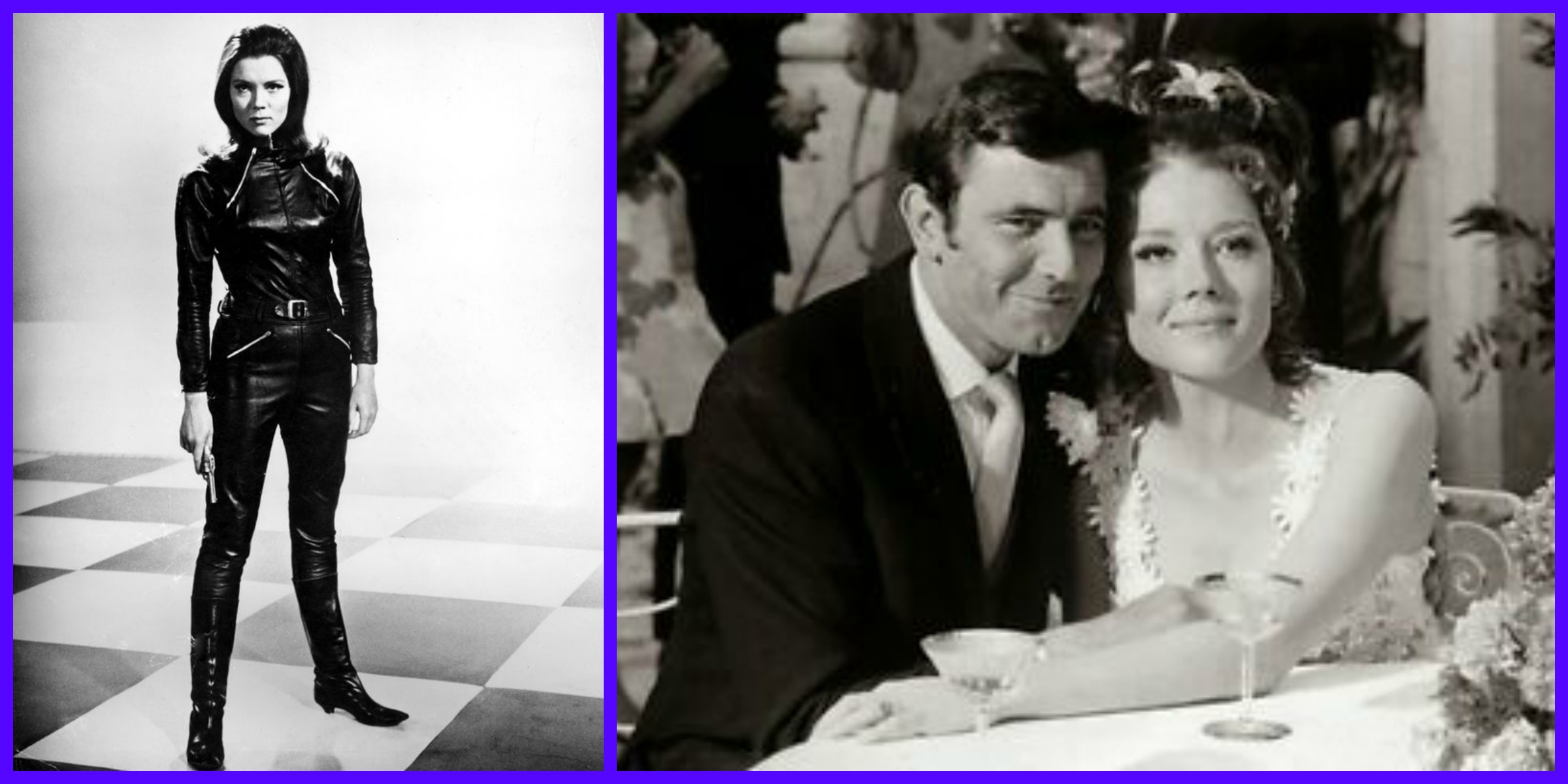
And thus spake Jenny Michelmore to Diana Rigg at the Chichester Festival Theatre in 1985. Thirty-five years later, on September 10th 2020, that same majestic Cleopatra, Dame Diana, took her last bow. Born in Doncaster, Diana Rigg always paid tribute to her Yorkshire roots. Her father was a railway engineer who was transferred to work on the railways in India where Diana learned Hindi as a second language. In later years, when an interviewer expected her to cite India when asking “where did you develop your ingrained sense of justice?”  Diana’s answer was “Yorkshire.” Although feeling she didn’t fit in when she returned to school in Leeds, Diana’s drama teacher at Fulneck, Sylvia Greenwood, instilled a love of Shakespeare and performing and Dame Diana returned to Leeds to receive an honorary degree and visit her old school.
Mistress of Theatre, TV, Cinema
At school Diana appeared as Orlando in Shakespeare’s As You Like It and Emily Brontë in The Brontës. She went on to be crowned with plaudits, winning BAFTA, Emmy, Tony and Evening Standard Awards in her time. (And striking out – successfully – for equal pay with her co-star in The Avengers at a time when it was rare for women to highlight inequality.) Highlights included:
  • In Theatre: Brecht’s Caucasian Chalk Circle and Mother Courage, Shakespeare’s King Lear, Twelfth Night, Macbeth and Antony and Cleopatra (as Cordelia, Viola, Lady M and Cleopatra), Ronald Millar’s Abelard and Helouise, Stoppard’s plays Jumpers and Night and Day, both Eliza Dolittle and Mrs Higgins (twice) in My Fair Lady, Sondheim’s Follies, Euripides’ Medea, Albee’s Who’s Afraid of Virginia Woolf, Williams’s Suddenly Last Summer and Chekhov’s The Cherry Orchard
  • On TV: Shakespeare’s King Lear (as Regan), The Morecambe and Wise Show, Clytemnestra in The Oresteia, Ibsens’s Hedda Gabler, the 1985 Bleak House, her BAFTA-winning turn in Mother Love, Moll Flanders, Mrs Danvers in 1997’s Rebecca, Oleanna Tyrell in Game of Thrones, and cameos in popular programmes like Victoria, Detectorists, Doctor Who and the forthcoming Black Narcissus. But she will always be associated with her groundbreaking performance as Emma Peel in 51 episodes of The Avengers
  • On film: Shakespeare’s Midsummer Night’s Dream and Julius Caesar (as Helena and Portia), Mrs Tracey Bond in On Her Majesty’s Secret Service, Theatre of Blood, A Little Night Music, The Great Muppet Caper, Evil Under The Sun, The Painted Veil and the forthcoming Last Night in Soho
As well as her Shakespeare roles, I was most affected by (on TV) her performances in The Avengers, Mother Love, Moll Flanders, Game of Thrones and Detectorists; on film the shock of her fate in On Her Majesty’s Secret Service; but I was lucky enough to see her grimy, cackling, pipe-smoking, funny, grotesque Mother Courage on stage at the National Theatre in 1995 – a character full of grim energy at the beginning, dragging her enormous cart around the stage, quipping, dominating, manipulating; and, by the end of the production, a zombified hollowed-out shell of a woman, emblematic of all people shattered by the effects of needless war. An extremely un-vain performance. An acting legend.


Saturday, 23 May 2020

New horizons

Had we but World enough and Time
In the past week, the Coronavirus Lockdown has begun easing in the UK. Will “normal life” return? What will “new normal” be like? I hope a kinder world emerges.
….at my back I always hear
Time’s wingèd chariot hurrying near;
And yonder all before us lie
Deserts of vast eternity.
In Andrew Marvell’s poem To His Coy Mistress, the voice of the poem urges us to Sieze the Day before, in the words of Cleopatra’s attendant Iras, “The bright day is done/And we are for the dark.” The pandemic has caused a great Pause in the affairs of much of the human race. What are the future horizons?

Saturday, 25 April 2020

Lockdown Shakespeare

Clockwise from top left: Hamlet, Romeo and Juliet, The Merchant of Venice, Othello, A Midsummer Night's Dream, Macbeth, Much Ado About Nothing, The Tempest - all currently on BBC iPlayer
April 23rd
Every year (from 23rd March which is my Mum’s birthday) I start to anticipate 23rd April – yes, St George’s day, but more profoundly for me, the day when Shakespeare died and the day when he was likely born (given that he was baptised on 26th April 1564 and the common practice in Elizabethan times was to baptise three days after the birth.) In the front room in my childhood home there was the family Bible, a set of encyclopedias and a Complete Works of William Shakespeare, complete with Fuseli plates. I never thought to ask my parents (and it is now too late) how Shakespeare got into our house. But the book proved, for me, a doorway to a surprising, inspiring, mind-bending landscape of love, friendship, murder, passion, betrayal, pride, violence, jealousy, redemption, tenderness and magic. Every story was told with memorable languagesometimes exquisite poetry, sometimes impenetrable jokes or confusing grammar; but, despite some difficult bits, on every page, certain words and phrases bounced out and tickled my fancy….  What a pleasure it has been to revisit some of the productions I’ve seen on the BBC iPlayer (Shakespeare in Quarantine) or as part of the NTLive YouTube broadcasts.
NT Live screenings of: Twelfth Night and Antony and Cleopatra

Saturday, 9 February 2019

What's in a name?

Me, cousin Ann, Sally, Dan, Ellisa, Logan. god-daughter, Lisa
A rose by any other name would smell as sweet
A recent Christening in Ossett saw Ellisa Anna Clara christened in the magnificent but freezing Trinity Church, Ossett. An early question about each new life on Earth is what to call the new baby. Ellisa Anna Clara was blessed with a trio of names paying tribute to important members of her ancestral tribe. Celebrities often make the news with their decisions, like Gwyneth Paltrow’s Apple and Angie Bowie’s Zowie – I’m assuming the Mums had more say than Chris Martin and David Bowie in those cases – but they have to take a bow before the choices of Adelaide Zappa (and her husband Frank) with their offspring’s names: Moon Unit, Dweezil and Diva Thin Muffin.
Ellisa's family and godparents, Mum and daughter, niece Jess and Chris. "How far that little candle throws its beams - So shines a good deed in a naughty world." (Shakespeare in Merchant of Venice)

What’s in a name?

It’s strange that, after a day or two, the baby (the child, the teenager, the adult….) become(s) the name they’ve been given. So my own children quickly became Emily and Harriet (though particular variations occur regularly…. Em, Emilia, Haz, HarrietRose….) and no doubt Ellisa will now forever be Ellisa, as her brother Logan is impeccably Logan, until either of them suddenly start wanting to be called a variation. Somewhere in America, no doubt Mrs Zappa found it unremarkable to shout “Moon Unit, come and get your tea! Dweezil, tidy your bedroom! Diva Thin Muffin, what time do you call this?!” Perhaps, like Zowie Bowie (who now prefers to be known as successful film-maker, Duncan Jones) Moon Unit, Dweezil and Diva Thin Muffin go by more ordinary names these days…. The most exotic (real-life, non-celebrity) name I ever heard about was Allegra Star Hoopengarner-Blaha; and a favourite name on one of my registers as a teacher was Fraser Rumble which, to me, sounds like someone who will one day be a hero.
Sally, Chris, brother-in-law Mick, sister Teresa and Jess
Meanings of names
I was named Antony (without an ‘h’ and I take pride in the lack of an ‘h’ since it was good enough for Shakespeare in Antony and Cleopatra.) My sister Teresa and I are godparents to Ellisa’s marvellous Mum, so it was a privilege to come full circle and witness our god-daughter having her own child named and celebrated in high style. And lovely to catch up with the extended family news. Names start to mean the people they are but there is a long tradition of trying to trace the origins of names, so I spent some time doing that for some of the guests at the Christening:
  • Ann = “favour, grace” (Hebrew from Hannah)
  • Terry = “ruler of the people” (Germanic from Theodoricus)
  • Lisa/Ellisa = “my God is an oath/my God is bountiful/devoted to God” (Hebrew from Elizabeth)
  • Dan = “God is my judge” (Hebrew from Daniel)
  • Logan = “from the little hollow” (Scottish)
  • Nick = “victory of the people” (Greek from Nikolaos)
  • Daniela = “God is my judge” (Hebrew, feminine form of Daniela)
  • Eliana = “Daughter of the sun” (Greek/Latin)
  • Livio = from Livy (Titus Livius) who wrote a history of the city of Rome (Latin)
  • Antony = from Roman family name Antonius, possibly meaning “priceless” (Latin)
  • Sally = “lady, princess, noblewoman” (Hebrew from Sarah)
  • Emily = “aiming to equal or excel” (Latin from Aemilius)
  • Harriet = “rules the home” (Germanic from Heimirich to Henry to Harry to feminine form)
  • Mick = “who is like God?” (Hebrew from Michael)
  • Teresa = from Saint Teresa of Avila (16th century nun), possibly meaning “harvester” (Latin)
  • Jess = first used as Jessica by Shakespeare in Merchant of Venice (probably based on Hebrew name Iscah from Bible meaning “rich”)
  • Chris = “bearing Christ” (Greek from Christopher)
Siblings forever - Logan and Ellisa

Tuesday, 29 August 2017

Dance for me

The art world responds to the story of the dancing princess
Playwright in prison
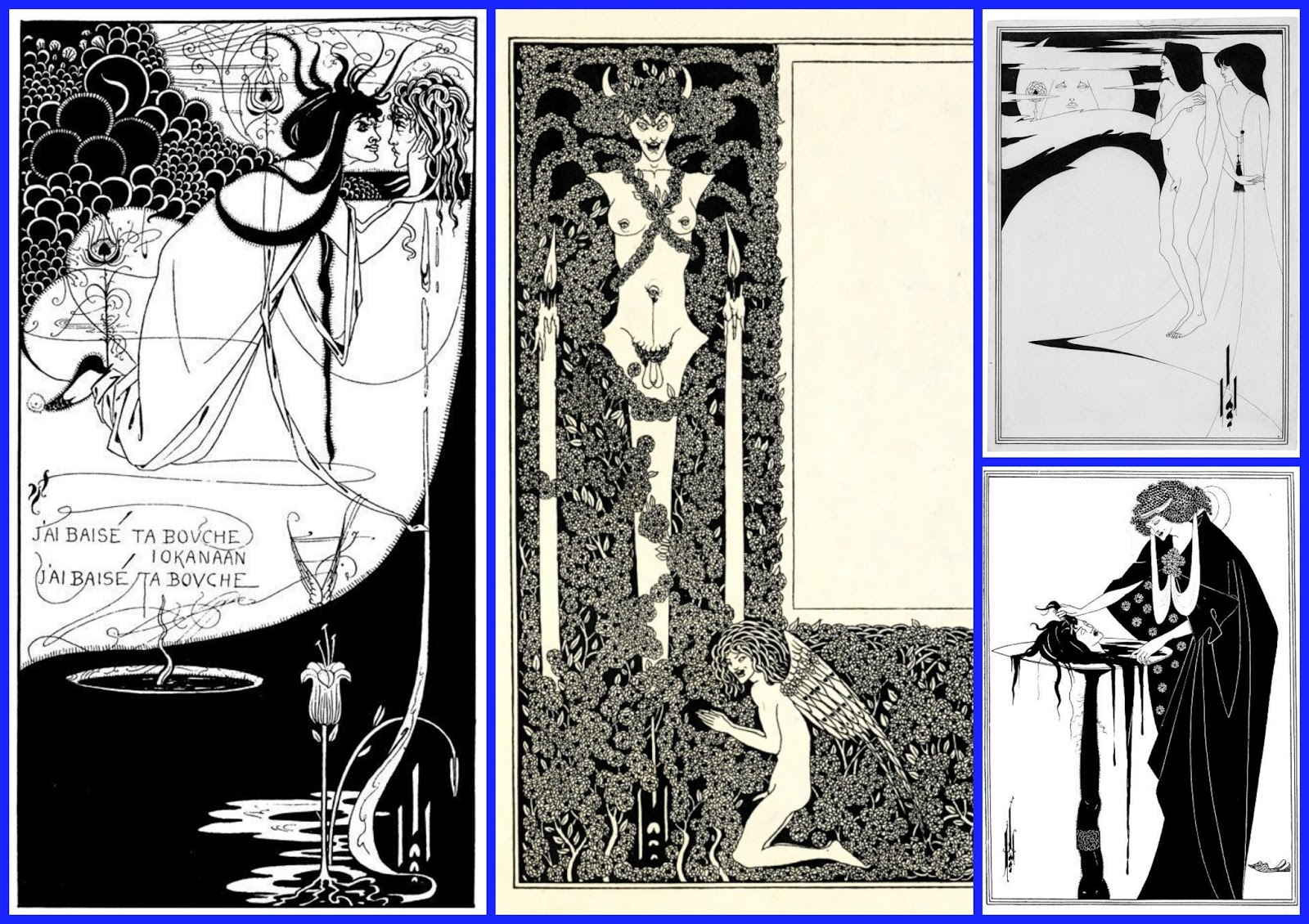
On 11th February 1896, at the Comédie-Parisienne in Paris, Oscar Wilde’s play of the Biblical story of Salomé received its premiere. Rehearsals for an earlier production had begun in 1892 starring the famous celebrity actress, Sarah Bernhardt, but the London production was banned, supposedly because the Lord Chamberlain (the censor of the day) decided that it was blasphemous to portray Biblical characters on the stage. By the time the play was staged in Paris, Wilde had been imprisoned as a result of a series of tragic miscalculations and the fervid homophobia of late Victorian Establishment.
Aubrey Beardsley's original illustrations include Wilde in the moon (top right)

What the Bible says (Mark Ch 6: 14 – 28)
John the Baptist has been raised from the dead, and that is why miraculous powers are at work in him.”
15 Others said, “He is Elijah.” And still others claimed, “He is a prophet, like one of the prophets of long ago.”
16 But when Herod heard this, he said, “John, whom I beheaded, has been raised from the dead!”
17 For Herod himself had given orders to have John arrested, and he had him bound and put in prison. He did this because of Herodias, his brother Philip’s wife, whom he had married.
18 For John had been saying to Herod, “It is not lawful for you to have your brother’s wife.”
19 So Herodias nursed a grudge against John and wanted to kill him. But she was not able to,
20 because Herod feared John and protected him, knowing him to be a righteous and holy man. When Herod heard John, he was greatly puzzled; yet he liked to listen to him.
21 Finally the opportune time came. On his birthday Herod gave a banquet for his high officials and military commanders and the leading men of Galilee.
22 When the daughter of Herodias came in and danced, she pleased Herod and his dinner guests. The king said to the girl, “Ask me for anything you want, and I’ll give it to you.”
23 And he promised her with an oath, “Whatever you ask I will give you, up to half my kingdom.”
24 She went out and said to her mother, “What shall I ask for?” “The head of John the Baptist,” she answered.
25 At once the girl hurried in to the king with the request: “I want you to give me right now the head of John the Baptist on a platter.”
26 The king was greatly distressed, but because of his oaths and his dinner guests, he did not want to refuse her. 27 So he immediately sent an executioner with orders to bring John’s head. The man went, beheaded John in the prison,
28 and brought back his head on a platter. He presented it to the girl, and she gave it to her mother.
Images copyright RSC taken by Isaac James. Actors: Matthew Tennyson, Ilan Evans, Jon Tranchard, Christopher Middleton, Simon Yadoo, Bally Gill, Johnson Willis, Assad Saman, Andro Cowperthwaite, Ben Hall

Influences and imaginative transformation
In crafting the play, Wilde:
  • takes the text (above) from the Gospel of Mark and the shorter version in Matthew’s Gospel;
  • considers the many classical paintings of the scene by da Vinci, Moreau, Rubens and Titian among others (rejecting some and admiring others);
  • and, like Shakespeare, steals phrases and rhythms from a number of other writings (Scheffauer, J C Heywood, Flaubert, Huysmans, Maeterlinck) and even
  • his own brother, Wiliam Wilde, who wrote a poem about Salomé in Trinity College magazine, in 1878.
What he does, though, is transform the story into something strange and ritualistic. The language is fluid and poetic, hypnotic and surprising. Salomé, in Wilde’s play, isn’t persuaded by her mother to demand the head of Iokanaan (John the Baptist), (as occurs in the Bible) but makes her own decision to do so and is explicit in Wilde’s play that she hasn’t consulted her mother. Thus Wilde’s Salomé is breaking free, growing up, upsetting authority, dancing on her own terms….
Isaac James photographs. Actors: Assad Zaman, Matthew Tennyson, Gavin Fowler, Suzanne Burden and Company
Owen Horsley’s production
It at first glance seems perverse to give a female role to a male actor in a 2017 Roman plays season at the RSC, given the few numbers of (textually) female roles available in Antony and Cleopatra, Coriolanus, Julius Caesar and Titus Andronicus. But the decision absolutely works in the context of the rest of the production’s design and, in my opinion, gave Wilde’s play a frisson of repressed/unrequited/ambiguous/burgeoning love and sexuality that was wonderfully apt in this year of the 50th anniversary of the partial decriminalisation of gay (male) sex. Matthew Tennyson played Salomé with delicately eye-popping rage; he alternated between naïve expressions of desire, determined ferocity and intricate vulnerability. Standing up to his dementedly incestuous stepfather, Herod, played with lascivious cowardly torment by Matthew Pidgeon, Salomé was a heroic and tragic figure who struggled to know how to express her/his love. Circling them both was the accusatory Herodias played by Suzanne Burden with flamboyant gusto (often appealing to the audience directly and inviting us to judge what we were seeing.)
Isaac James photographs. Actors: Ilan Evans, Matthew Tennyson, Gavin Fowler, Matthew Pidgeon, Ben Hall, Bally Gill, Jon Trenchard, Christopher Middleton, Miles Mitchell, Andro Cowperthwaite, Robert Ginty, Byron Mondahl, Johnson Willis, Simon Yadoo

Total theatre
The moon hung over this beautifully-lit and evocatively-costumed production, literally and imaginatively as the Roman soldiers, the Jewish and non-Jewish revellers and the Roman ambassador were all mystified about how to respond to both the dancing princess and the muscular prophet, Iokanaan (John the Baptist played by Gavin Fowler), emerging from his cistern beneath the stage smeared in dirt and booming out his intense warnings. The executioner, played by Ilan Evans, got to belt out the songs of Perfume Genius, an artist I didn’t know before this production but whose anthemic, heavily-percussive music seemed to fit the awesome, longing, desperate, romantic atmosphere of this theatrical presentation of the pangs of transgressive love.
Variations of the play: film, opera, Berkoff's adaptation

Saturday, 19 August 2017

There is a world elsewhere

Productions during the 2017 summer school
70th anniversary of the summer school
I’ve just finished attending the 70th anniversary of the Royal Shakespeare Company’s Summer School. There are some attendees who remember seeing Laurence Olivier and Vivian Leigh perform in Stratford in Titus Andronicus in 1955. Four years later delegates saw a season including Paul Robeson in Othello, Charles Laughton in A Midsummer Night’s Dream and Dame Edith Evans in both All’s Well That Ends Well and Coriolanus (the latter also with Olivier.) Imagine.
Faces of the RSC summer school 2017: Janet Suzman, Katy Stephens, Ray Fearon, Tony Byrne, Nia Gwynne, David Troughton, Erica Whyman, Chuk Iwuji, Dr Elizabeth Sandis, Miles Tandy, Penny Downie, Suzanne Burden, Michael Billington, Jacqui O'Hanlon, Dr Maria Evans, Matthew Tennyson, Prof Michael Dobson, Prof Russell Jackson, Gavin Fowler
31st anniversary for me….
My first summer school was in 1986, the year I married Sally, and the year The Swan theatre opened in Stratford-upon-Avon. I haven’t been every single year since then, but more years than not and, like with Shakespeare himself, there are surprises every year.

Roman season
This year it’s all about Ancient Rome. So all four of Shakespeare’s Roman plays are being staged: Antony and Cleopatra, Julius Caesar and Titus Andronicus at the moment and  Coriolanus later in the year. There is a spoof new play based on Plautus by Phil Porter, charmingly titled Vice Versa (or the Decline and Fall of General Braggadocio at the hands of his canny servant Dexter and Terence the Monkey) which can only be described as the love child of Carry On – Up Pompeii – Panto On Weed. Sitting between these offerings was a gay-focused version of Oscar Wilde’s Salomé with a male actor in the role of the dancing princess.

Decapitations, songs, stabbings, dances, neck-breakings, love scenes….
They say variety is the spice of life and the theatrical sights veered between grisly shocks and tender vignettes. All of the productions offered a new angle or fresh perspective on the characters or themes. Over it all soared the language of Shakespeare and Wilde (and the thumping doggerel of Phil Porter, acting like a satyr dance or bergomask to the season.) During the day lectures by people like the rigorous Dame Janet Suzman and the visionary Erica Whyman commented on the season, the plays, the RSC and the state of theatre and the world in 2017. As Coriolanus himself says, “There is a world elsewhere….” There were no overt attempts to make the plays relevant to today’s political upheavals but it was impossible to ignore the parallels and hear echoes of our current world. As Ben Jonson wrote in the First Folio,
“Soul of the Age!....
He was not of an age, but for all time!”
Shakespeare Birthplace Trust Exhibition

All time and all places
As if to underline the Shakespeare Everywhere theme, a new exhibition at The Birthplace explores active involvement in Shakespeare in a group of Asian countries. To some Shakespeare is all about the overthrow of tyrants; to some he is the epitome of justice and mercy; to others he is the key to unlocking the freedom of the imagination and creativity. He is, to me, all these things and many more – a body of work, a fascinating point in history, an explosion of language and dramatic situations.
He was a man, take him for all in all,
I shall not look upon his like again.
Shakespeare Imagery: to Bard or not to Bard....

Saturday, 19 November 2016

Like a scurvy politician

London
Recently returned from five days in London (which I’ll blog about soon) but the prime motivation for going at this time of year was to witness Glenda Jackson in Shakespeare’s King Lear at the Old Vic Theatre. I saw her last onstage in Peter Brook’s production of Antony and Cleopatra in Stratford-upon-Avon at the RSC in 1978 (aware that she was a double-Oscar winner for 1969’s Women in Love and 1973’s A Touch of Class. Since retiring from acting at the top of her game, she has been a member of the UK Parliament from 1992 to 2015 (23 years of honorably serving Hampstead and Highgate/Kilburn.) I am a fan of her film performances. As well as her Oscar-winning films and the TV series Elizabeth R, I thought she was equally brilliant in Hedda, Stevie, Triple Echo, Sunday Bloody Sunday, The Rainbow, The Music Lovers, Mary Queen of Scots {with Vanessa Redgrave} and The Patricia Neal Story.
Glenda Jackson from parliament to King Lear with Rhys Ifans as The Fool, Sargon Yelda as Kent and Morfydd Clark as Cordelia. Production photo credits: Manuel Harlan
Script as blueprint
Having seen King Lear with Sir Antony Sher recently, and blogged about it here, it was with some trepidation that I approached the play again so soon. I needn’t have worried – it was like a different play entirely, shorn of sentimentality, riven with intellectual decisions and riddled with disturbing and upsetting truths. Both productions were well worth seeing, in my view, though felt like entirely divergent works of art (as per Shakespeare’s genius and the way that any drama script is only a blueprint for theatrical interpretation.)
Lear: Glenda Jackson, Edmund: Simon Manyonda, Edgar: Harry Melling, Regan: Jane Horrocks, Cornwall: Danny Webb, Albany: William Chubb, Goneril: Celia Imrie, The Fool: Rhys Ifans, Ensemble/France: Matt Gavan, Gloucester: Karl Johnson. Production photo credits: Manuel Harlan

Like a scurvy politician
Any line in King Lear about power, ruling and politics had an extra resonance, given Glenda Jackson’s recent parliamentary career:
    Get thee glass eyes;    
And like a scurvy politician, seem    
To see the things thou dost not.
And the play’s devastating critique of the gap between rich and poor was fully potent in the mouths of actors like Glenda Jackson and Karl Johnson who played Gloucester:
So distribution should undo excess
And each man have enough.
Through tattered clothes great vices do appear;
Robes and furred gowns hide all. Plate sin with gold
And the strong lance of justice hurtless breaks:
Arm it in rags, a pigmy's straw does pierce it.
Harry Melling and Karl Johnson as Edgar and Gloucester; "I stumbled when I saw." Production photo credits: Manuel Harlan
The Greg Doran production probably moved me more than this one by Deborah Warner, but this production made me think more angrily about the issues in the play. There were some theatrical and design decisions that were unsettling (probably intentionally so) and some performance moments that challenged my ideas about the play but as an experience it remained compelling to watch, probably intensified by sitting on the front row! The rest of the company all had their moments of stage glory but the abiding memory is of the towering performance by Glenda Jackson. This was a father raging against the dying of the light; a man who was frustrated that he was not being afforded the luxuries he expected to receive in his retirement; a king who discovered, alas too late, that his wilful rule had led to the most abject poverty (literal and metaphorical) in his kingdom. Glenda’s voice soared, swooped, growled, howled and machine-gunned every Shakespearean image and still left room for the soft caress of lines like
We two alone will sing like birds in the cage.
When thou dost ask me blessing, I'll kneel down
And ask of thee forgiveness; so we'll live,
And pray, and sing, and tell old tales, and laugh
At gilded butterflies, and hear poor rogues
Talk of court news, and we'll talk with them too –
Who loses and who wins, who's in, who's out
And take upon us the mystery of things
As if we were God's spies….
Unforgettable.
Rhys Ifans as The Fool and Glenda Jackson as Lear. Production photo credits: Manuel Harl

Saturday, 9 January 2016

Give Me A Bowl Of Wine

Adrian Smith, family and friends
Give me a bowl of wine
Brutus’s full line to Cassius in Julius Caesar is “Give me a bowl of wine; in this I bury all unkindness.” Wine in Shakespeare is often shared between characters who are healing rifts or expressing friendship. Over the years I have enjoyed some very jolly wine-consuming occasions with friends like the Tuffnells and the Lancelots who all appreciate a hearty glug. The latest wine-tasting with online Drink Me magazine’s, Adrian Smith, took place in his stylish Leeds city centre offices towards the end of 2015. (Editor's Update Jan 2021: check out Aidy's personal website and The Three Drinkers website to see what's happened in the years since this post....)
Unpretentious quaffing
The beauty of Adrian’s “sessions” (apart from the relaxed company and excellent nibbles) is that he loves wine and encourages an enthusiastic approach to sampling, especially new wines that he has discovered on his international travels. I’ve learned how to release the aroma of wine through gadgets, decanting and swirling glasses; and I’ve learned about the body of a wine, the fruitiness or sweetness of wine, the acidity and the tannins. But more important than any of the imaginative and bizarre words to describe the taste and smell of wine is the answer to the simple question – “Do you enjoy drinking it?” Context is everything. Cheap plonk looking across the Bay of Naples can taste just as lovely as expensive wine in a local restaurant. Cheap fizz on a birthday beach picnic can be just as delicious as posh champagne.
Give me some wine and let me speak a little
The above line is the line that follows Antony’s “I am dying, Egypt, dying” just before Antony’s death in the arms of Cleopatra. Apparently alcohol is a common request on death beds, almost as frequent as calling for loved ones and praying to God. Rarely do people think of anything especially witty to say – but a glass of wine or a splash of gin brings immediate comfort and no doubt memories of convivial times with family and friends. 50 years after Shakespeare died, the Rev John Ward, vicar of Holy Trinity Church, Stratford-upon-Avon, relates that the night before he died (in 1616, 400 years ago this year) Shakespeare had a drinking session with buddies playwright Ben Jonson and poet Michael Drayton. It’s hard after all this time to be sure of whether or not this was true, but since Shakespeare's plays and poems are filled with words and images of alcoholic drinks, I have no doubt that my boy Billy enjoyed a tipple. Here’s to the next wine-tasting. Cheers!

Tuesday, 22 December 2015

This Wide And Universal Theatre

Jane Eyre – I am no bird
Jane Eyre, in my opinion, is one of the glories of English Literature. It’s not my favourite Charlotte Brontë  novel – that would be Villette, partly because I think that novel is more subversive and Lucy Snowe is a very troubling and troubled character. But Jane Eyre has had a massive cultural impact and given way to concepts and phrases that are in the nation’s subconscious fabric:
•    Plain Jane
•    The red room
•    The madwoman in the attic
•    Do you think I am an automaton?
•    I am a free human being with an independent will
•    Reader, I married him
•    The ruined house (and damaged man) symbolic of redemption

Sally Cookson’s production
Earlier in the year Bristol Old Vic staged a two-night production by Sally Cookson, devised by the cast, designed by Michael Vale with music by Benji Bower. I mention their three names because their contributions to the final performance were overwhelming. I caught this production in its shortened one-night revival at Cineworld in an NT Live broadcast and found it thrilling, funny and moving. Film and TV versions have been shy of using Charlotte Bronte’s over-wrought language but the cast here delivered many “quotations” with energy.
Total Theatre
With a utilitarian stage of ladders, windows, bars and ramps, the space reflected the struggles in the novel between survival, aspiration, barriers and hope. The music underscored the emotions and surprised at times with blues versions of Noël Coward’s Mad About the Boy and Gnarls Barkley’s Crazy. Melanie Mason, in a vivid red dress, sang out Bertha Mason’s broken heart and somehow distilled the spirit of Jean Rhys’s Antoinette Cosway from Wide Sargasso Sea. The bristly charismatic Laura Elphinstone as Helen Burns, Adèle Varens and St John Rivers, the galumphing Craig Edwards as Pilot (the dog) and bass-toned Felix Hayes as the (in Charlotte’s words) the “strikingly peculiar” Rochester all shone in a multi-role cast that worked their socks off. And Madeleine Worrall tied everything together in her journey as Jane from stubborn, tormented child to passionate, free-spirited woman.
“Jane, be still; don't struggle so like a wild, frantic bird, that is rending its own plumage in its desperation.""I am no bird; and no net ensnares me; I am a free human being, with an independent will; which I now exert to leave you.”
London Road, The Rocky Horror Show, Hamlet, Hecuba, Antony and Cleopatra
Theatre in the Cinema
This year I’ve seen 8 theatre productions at the cinema and enjoyed every one – the price, the convenience, the close-ups, the clarity. I can’t see an argument against broadcasting live theatre and hope the practice continues. In terms of reaching audiences throughout the UK and the world, it is, it seems to me, a no-brainer. I’ve still managed to shell out for 24 live theatre events at the Alhambra in Bradford, at Leeds Arena, at the West Yorkshire Playhouse, in the West End of London and, most frequently, at the Royal Shakespeare Theatre and Swan theatres in Stratford-upon-Avon. So, from what I’ve experienced (and from what I’ve read) cinema broadcasts of theatre have not diminished theatre audiences and, in some cases, have given them a boost. Long may it continue. Best theatre of the year? Probably Jane Eyre at the cinema and, amongst live productions, a toss up between Oppenheimer and Death of a Salesman.

Saturday, 24 October 2015

Autumn Orgies

Autumn is my favourite season and the orgy of sensations brings me profound pleasure: soft golden light, cooling breezes, falling leaves, burning tints, shades of red, yellow, orange, brown and darkening green. Why is Autumn my favourite season? (“The teeming autumn, big with rich increase” from Shakespeare's Sonnet 97) Is it because, as an ex-teacher, Autumn heralded the new academic year, the fresh start, the new beginning (supplanting Spring as the metaphorical dawn of the year)? Is it because Autumn brings the last blaze of colour before “Winter is Coming”? Or is it because I was born in October? October is the source of my nativity and maybe Autumn imprinted its seasonal DNA in my own DNA.
Odd Autumnal goings-on at Bolton Abbey
An Autumn twas/That grew the more by reaping*
(*from Shakespeare’s Antony and Cleopatra)
As well as the Autumn orgy of sensory delight, I also had an orgy of Shakespeare last week. On Tuesday I saw the new film of Macbeth at the cinema. A difficult play to get right and with notoriously tricky bits of staging, I think Justin Kurzel did an excellent job and certainly created a film that holds up well against Polanski’s, Kurosawa’s and Welles’s cinematic versions. Fassbender was solid, though became a bit one-note, I think, from about half way through (apart from his brilliant delivery of the scene after the death of his wife.) The photography, design and music were, I thought, fantastic, capturing the play’s brooding, violent and disturbing imagery. I also admired the performances of David Thewlis as Duncan, Sean Harris as Macduff, Paddy Considine as Banquo and Jack Reynor as Malcolm. But the bits that jump into my brain four days later were the decisions around the women of the play – the way the Weird Sisters were filmed, the fate of Lady Macduff and the portrayal (and interpretative decisions) focused on Marion Cotillard’s heartbreakingly disintegrating Lady Macbeth.
Macbeth
We few, we happy few, we band of brothers
On Wednesday I attended the RSC Live screening of Henry V, a production I’d seen with daughter Emily in Stratford with the understudy cast. I partly wanted to see it because I’m a huge fan of Oliver Ford Davies and his delivery of the play’s Chorus lines were wonderful, I think. The production is the end of the sequence of four histories directed by the assured and talented Greg Doran, ex-actor and current Artistic Director of the RSC. The staging, design, music and performances were all compelling and I look forward to the completion of the history Octology in the near future.
The cast of the RSC Greg Doran production of Henry V
The beauty of the world! The paragon of animals!
And so to my third Shakespeare production of the week: the NT Live screening of Lyndsey Turner’s Barbican production of Hamlet. I had managed to avoid reading most of the commentary about the production so went in with Sally feeling open-minded but not especially fired up. Reader, I loved it. I thought the production was a magnificent version of the play (a play that I have directed and seen many times and hope to see many more times.)
My production of Hamlet
Lyndsey Turner's production
My enthusiasm for Lyndsey Turner's production could have been because I think (and have always thought that) Ciarán Hinds is a tremendous actor and his Claudius was at first magisterially plausible and finally cowardly and evil. Anastasia Hille’s Gertrude and Sian Brooke’s Ophelia were two of the best portrayals of those roles I’ve ever seen and the way Turner directed them both in the lead-up to Ophelia’s death I thought was very moving. “There is a willow grows…” was as good as I’ve ever heard. Cucumberpatch hooked me from the start and I thought the editing of the text(s) was absolutely legitimate in revealing new aspects of the play. The disintegration of the production’s world through the blowing in of the war detritus at the end of the first half was vivid and admirably utilised by the actors. Most of all, though, I think I enjoyed it because I could see the close-ups of the actors’ faces. Would I have enjoyed it as much live on the vast Barbican stage? I’ll never know, but as a cinematic experience, it gripped me from haunting start to brutal finish.
Lyndsey Turner's stimulating production of Hamlet