- Some, like me, have an “OK” first week, a shocking second week and then recover
- Some people are asymptomatic and hardly know they’ve had it
- Some people deteriorate rapidly and die
- Some people become very ill for a long time
- Some people, like me, develop silent hypoxia from which you can recover (as I did) but which can alternatively lead to a sudden plummeting of health, becoming desperately breathless and hospitalisation
- And there are many variations and gradations between.
Saturday, 23 October 2021
Worse b4 Better
Saturday, 17 April 2021
Learning to dance in the rain
- Russell T Davies (thanks for your TV series It’s A Sin and past creativity)
- Captain Tom Moore (thanks for your past service and current inspiration)
- Marcus Rashford (thanks for your tenacity and courage)
- Josh O’Connor and Riz Ahmed (thanks for all your performances, in particular recently in Romeo and Juliet and Sound of Metal, but formerly in God's Own Country and Nightcrawler)
- And Prince Phillip, HM Queen Elizabeth II’s “constant strength and guide” and “strength and stay.”
I mean, I think you’re specialBut you fall within a bell curve
Life isn’t about waiting for the storm to pass,It’s about learning to dance in the rain
There is a pleasure in the pathless woods,There is a rapture on the lonely shore,There is society, where none intrudes,By the deep Sea, and music in its roar:I love not Man the less, but Nature more….
![]() |
| River Wharfe at Bolton Abbey, River Aire near Saltaire and Leeds-Liverpool canal |
Saturday, 3 April 2021
Couple of Swells

“Ah, good conversation - there's nothing like it, is there? The air of ideas is the only air worth breathing.”
Saturday, 27 February 2021
Talking Shakespeare Neljä (Four)
![]() |
| Greg Doran of the Royal Shakespeare Talking Shakespeare with David Oyelowo, Helen Mirren and Ian McKellen |
![]() |
| Selection of David Oyelowo roles: as Henry VI, Othello, Orlando in As You Like It and the movie Selma |
![]() |
| Helen Mirren as Cleopatra (three times), Cressida, Prospera in The Tempest and Rosalind in As You Like It |
Saturday, 16 January 2021
Miss Jean Louise, stand up....
- No-Face from Spirited Away
- Sadness from Inside Out
- Idgie Threadgoode from Fried Green Tomatoes at the Whistle Stop Café
- Mr Perks from The Railway Children and
- Lina Lamont from Singin’ in the Rain
- 10 Fantasies
- 7 Comedies
- 5 Animations
- 5 Documentaries
- 4 Dramas
- 3 Historical Films
- 3 Crime Thrillers
- 3 Musicals
- 2 Biopics
- 2 Family Films
- 2 Literary Adaptations
- 2 SciFi Movies
- 1 Disaster Movie and
- 1 Satire.
Saturday, 19 December 2020
Talking Shakespeare Kaksi (Two)
The valiant Talbot’s words in Henry VI Part One are a potent reflection of what my mind has felt like during 2020. At times, the effects of the pandemic (on me) have produced clarity, joy and hope but more often confusion, frustration and despair (the negative emotions mostly caused by the UK government, I have to say.) Time has seemed elastic so pre-Covid times feels like two months ago and also two years ago.
- Local walks continue on most days,
- jigsaws keep the left brain/right brain synapses twanging,
- freshly-baked mulled wine and mince pies have now been sampled and
- posh takeaways from La Rue restaurant provide a once-a-week luxury oasis, providing a time to scrub down, dress up and light candles.
- Paterson Joseph almost became a chef before turning to acting. All of the interviewees were asked about their earliest introductions to the national poet and Paterson Joseph delivered a classic line that chimed with my own experience: “I didn’t come to Shakespeare – Shakespeare came to me.” I first “noticed” Joseph in 1990 as Oswald in King Lear, and suddenly realised – because of his performance – what a brilliant and significant role Oswald is. I was also lucky to see his shattering Othello (with the evillest Iago I’ve seen in Andy Serkis) at the Royal Exchange in Manchester. I loved Joseph’s Patroclus in Troilus and Cressida and, most jaw-droppingly, his tormented Brutus (pitted against Ray Fearon’s Mark Antony) in Julius Caesar. He didn’t talk about his many non-Shakespearean roles (including the recent Kamal Hadley in the BBC’s Noughts and Crosses and one of my favourites, his role in Survivors; plus on stage his compelling Atahualpa in Shaffer’s Royal Hunt of the Sun at the National Theatre) but then the point of the series is to talk about Shakespeare and I’ll never forget the Channel 4 documentary in which he directed a group of disaffected teenagers in London in a moving production of Romeo and Juliet.
- Simon Russell Beale first exploded into my theatrical knowledge in a series of Restoration plays at the Royal Shakespeare Company playing gut-wrenching comic grotesques with painful vulnerabilities. He has spoken to the RSC Summer School a couple of times and it became obvious that comedy was not his only skill. Seeing him in Ghosts and The Seagull made it clear that he was “one of the greats.” He extracted every moment of impact from his appearances as Edgar in King Lear and his Thersites in Troilus and Cressida was truly disgusting. Then as a toad-like Richard III, an extremely strange Ariel in The Tempest and (at the Donmar) a heart-breakingly buttoned-up, pinched and pained Malvolio from Twelfth Night it became clear he could tackle anything Shakespeare wrote with clarity, intelligence and heart. He triumphed at the National with Benedick in Much Ado About Nothing and Hamlet and surprised (inevitably) with his Cassius in Julius Caesar and Macbeth at the Almeida. I thought he was tremendous as Leontes in The Winter’s Tale at the Old Vic but it was his Timon in Timon of Athens at the National (and broadcast to cinemas) that blew me away, reinventing the play anew as a Play for Today in these no-such-thing-as-society Thatcherite times. Of course he’s done Falstaff on TV (a more vicious one than usual) and (brilliantly) King Lear himself at the National. But his Prospero, on his return to the RSC, in a multimedia Tempest was a revelation – here was a guilty Prospero, as tormented as Ariel and Caliban, struggling to forgive himself never mind anyone else and finally breaking the audience’s hearts as he parted from the island.
- Juliet Stevenson confided that she peed on stage during a spear-carrier scene (alongside Ruby Wax) in her first appearance at the RSC in a production of The Tempest. She paid tribute to early mentors in her acting career (well known like Peter Brook and less well known like David Perry) – sometimes by saying or doing things that she reacted against. Her insights into language and space were marvellous to hear as she discussed in detail her approach to Isabella in Measure for Measure, Cressida in Troilus and Cressida and Rosalind in As You Like It. The season in which she played the latter two roles was a significant one for me as I was living in Stratford-upon-Avon during that year teaching English as a Foreign Language to groups of adults who I would accompany to the theatre so I saw those two productions a great number of times, each time spotting more and more depth and detail, especially in Stevenson’s performances. Of course in later years I got to know her screen work such as Truly, Madly, Deeply and Life Story in which she played Rosalind Franklin, the scientist who contributed to the discovery of the structure of DNA.
- (Sir) Antony Sher, one of the most powerful presences I’ve seen on stage in plays like Tartuffe and Tamburlaine the Great, had a plethora of breakthrough roles to discuss, not to mention aspects of his own biography (growing up a Lithuanian-Jew in South Africa, being gay and working at the Liverpool Playhouse.) His famous Richard III (on crutches with a prosthetic back), Shylock (in Merchant of Venice), Titus Andronicus (in a production which started in South Africa where audiences were unsurprised by the anarchic violence in the play which was given a contemporary political context), Leontes in The Winter’s Tale (where he researched and brilliantly portrayed the psychological condition of morbid jealousy), and the warrior-like Macbeth, in a Swan production that he and Harriet Walter infused with a palpable and terrifying sense of panic - all these performances were memorable and mesmerising. In recent years he famously portrayed Falstaff with equal doses of bonhomie and arrogant cruelty in the History sequence of Henry IV and a monumental King Lear arriving on an elevated wheely-throne.
![]() |
| Greg Doran Talking Shakespeare with Paterson Joseph, Simon Russell Beale, Antony Sher and Juliet Stevenson |
Saturday, 21 November 2020
Talking Shakespeare Yksi (One)
![]() |
| Outer images from last Christmas, inner images from 2020 prep |
- Adjoa Andoh, known for Doctor Who and Casualty, is known to me especially for two stunning performances: as Ulysees in Troilus and Cressida and as an astonishing Richard II in an all-black, all-female production of Richard II at The Globe. Her interview ranged widely over all her Shakespearean roles but, most powerfully, about her personal life and commitment to community work.
- Ray Fearon revealed how he fell into acting by accident and started performing in amateur community projects. He was inspired when working as an extra in Caryl Churchill’s Serious Money to (successfully) apply for Rose Bruford drama school. He worked at Liverpool Everyman and Manchester’s Royal Exchange before rising through the ranks at both the RSC and the National Theatre. His big breaks at the RSC came in a touring production of Romeo and Juliet and then (his third) Othello with the frisson of his Desdemona being played by his Juliet, Zoe Waites. He gave a moving account of his experience playing Pericles, a magnificent performance that stuck in my own mind when I saw it, and then talked about the sensational all-black Julius Caesar when he played a scarily dangerous Mark Antony.
![]() |
| Adjoa Andoh in Richard II and Troilus and Cressida, Ray Fearon in Antony and Cleopatra, Romeo and Juliet and Othello |
- Judi Dench revealed herself to be the trooper she is and went the furthest back in time to her childhood in York and her early appearances at the Old Vic before marking off virtually all of Shakespeare’s heroines in her 70-year career. She talked about some of her legendary performances with typical humility – and plenty of funny anecdotes – but came up to date with her recent stage work that I’ve been lucky enough to witness live, in Macbeth, The Comedy of Errors, Antony and Cleopatra, Hamlet, All’s Well That Ends Well, The Merry Wives (musical) of Windsor, A Midsummer Night’s Dream and The Winter’s Tale.
- Alexandra Gilbreath’s throaty tones have always drawn me in to her performances and she was enthusiastic and insightful about her major roles, all of which I saw in Stratford: Hermione (The Winter’s Tale), Juliet, Rosalind (As You Like It) Kate (The Taming of the Shrew), Olivia (Twelfth Night) and, alongside Judi Dench, in the musical version of Merry Wives.
![]() |
| Judi Dench in Macbeth, Merry Wives, A Midsummer Night's Dream, Alex Gilbreath in As You Like It, Romeo and Juliet, Taming of the Shrew, The Winter's Tale |
Saturday, 24 October 2020
One man in his time plays many parts
All the world’s a stage,
And all the men and women merely players;
They have their exits and their entrances,
And one man in his time plays many parts,
His acts being seven ages.
At first the infant,
Mewling and puking in the nurse’s arms.
Then the whining school-boy, with his satchel
And shining morning face, creeping like snail
Unwillingly to school.
And then the lover,
Sighing like furnace, with a woeful ballad
Made to his mistress’ eyebrow.
Then a soldier,
Full of strange oaths, and bearded like the pard,
Jealous in honour, sudden and quick in quarrel,
Seeking the bubble reputation
Even in the cannon’s mouth.
And then the justice,
In fair round belly with good capon lined,
With eyes severe and beard of formal cut,
Full of wise saws and modern instances.
And so he plays his part.
The sixth age shifts
Into the lean and slipper’d pantaloon,
With spectacles on nose and pouch on side;
His youthful hose, well sav’d, a world too wide
For his shrunk shank; and his big manly voice,
Turning again toward childish treble, pipes
And whistles in his sound.
Last scene of all,
That ends this strange eventful history,
Is second childishness and mere oblivion;
Sans teeth, sans eyes, sans taste, sans everything.
Saturday, 3 October 2020
Return to Live Theatre
Krapp's Last Tape
Earlier this evening I had my first experience of live theatre since March via the one-way system, temperature checks and socially distanced seating at Leeds Playhouse…. It felt appropriate that the first play I saw since lockdown was by Samuel Beckett, the master of tragi-comic nihilism. Krapp's Last Tape takes place on a “late evening in the future” when Krapp reminisces about his earlier life, in particular an audio record he made 30 years ago on the spool of an old tape recorder and in the pages of a tatty ledger…. There but for the grace of God go I…. Niall Buggy played the banana-eating Krapp with a mixture of wistful vulnerability, frustrated rage and a poignant desire to interpret and make sense of his shifting, distorted memories. Was the past exactly what he remembered? Was his 39 year old self a truer version of Krapp than his 69 year old present self? Time to make one last tape.... Terrific performance of a thought-provoking monologue.
Orpheus in the Record Shop
In the second piece, rapper Testament (a William Blake fan, so he's OK by me!) fused beatboxing, myth and poetry to present a tale of love lost, dreams dreamt and future journeys imagined with help from pianist and composer Taz Modi and nine live musicians from the orchestra of Opera North. The 75-minute tour-de-force showcased Testament's human beatboxing talents with a huge variety of sounds blended into the overwhelming soundscape of the classical instruments gradually introduced by Opera North, including a soaring female singer The stage space of the Quarry Theatre was used spectacularly with atmospheric lighting but my long-term memories of this piece will probably be less technical than personal. During Testament's monologue he conjured a cast of characters that came in and out of his record shop - there were many identifiable laughs on the joys and pretensions of vinyl, record collectors, music tastes and the precarious existence of trying to run a retail business with love but little economic sense! Of all the characters weaving in and out of the narrative the dominant presence (though painfully absent) was Orpheus's own Eurydice, in this case named Justine. Though the story, whilst funny, was often tear-jerking, there was a depth charge of hope at the end. Music is everywhere. Love is everywhere. And it was a great thrill for me, at Leeds Playhouse, that twice one evening in October 2020, I sat again in a live audience, the anticipation was immense and the house lights dimmed to darkness before launching Krapp's Last Tape and Orpheus in the Record Shop. (Back next week for La Voix Humaine.)
Saturday, 26 September 2020
PreBirthday Birthday Treats
Big Birthday Tighter Lockdown
I live in an area that has had an increasing Covid infection rate so, with tighter lockdown restrictions, my plans for celebrating my 60th birthday in the middle of October are well and truly on hold. Which explains why my favourite walk on the moors to Top Withins (scheduled for my birthday weekend) happened early. And a trip to the Harvey Nichols restaurant in Leeds was also tacked onto a trip that was meant to be just doing chores. Blowing the cobwebs away and putting the world to rights with a picnic at the Brontë Falls; and savouring the time and tastes over a delicious meal – I already feel I’ve been well and truly treated. (Happy Early Birthday To Me!) As a bonus I visited for the first time the Tiled Hall Café at Leeds Art Gallery.
- I felt safe and comfortable in Pictureville cinema
- One of my favourite films of 2012 was Wajdja about a girl and her desire to ride a bike, made in secretive conditions in Saudi Arabia by the same director as The Perfect Candidate, Haifaa Al-Mounsour – this new film has a bigger budget, seems more obviously “cinematic” but has the same sensibilities and attention to human detail as Wadjda
- As soon as you see Dr Maryam (Mila Al Zahrani) driving her car, you know this is a 21st century Saudi Arabia. Maryam is an ordinary woman, observant and devout, and with extraordinary determination and enough temper to cut through some of the bullshit she encounters in her life as a trained doctor in a remote clinic and, later, accidentally, as a candidate for the local Municipal Council
- Helping Maryam (at first reluctantly) are her two sisters: Sara (a teenage eye-roller) and Selma (a confident wedding planner, played by Dhay who is, apparently, for those who know these things, a real-life social media influencer)
- The three sisters are left home alone by their patriarchal father who, against stereotype, wants to go “on tour” with his band of musicians, partly to recover from the grief over the loss of his unconventional wife a year before. He is prepared to defy extremist threats to censor his musical talents and states that he wants his daughters to live fulfilled lives.
- The authorities want Dr Maryam to concentrate on treating patients who are prepared to let a female doctor touch them and, later, to focus her political efforts on playgrounds for children and gardens. But there’s a more urgent priority in Maryam’s mind and her rival male candidate has no interest in…. repairing the road to her local clinic
- The Perfect Candidate made me laugh, feel angry, feel nervous, opened new vistas in my mind – and gave me hope
Saturday, 19 September 2020
A (Yorkshire) lass unparallel'd
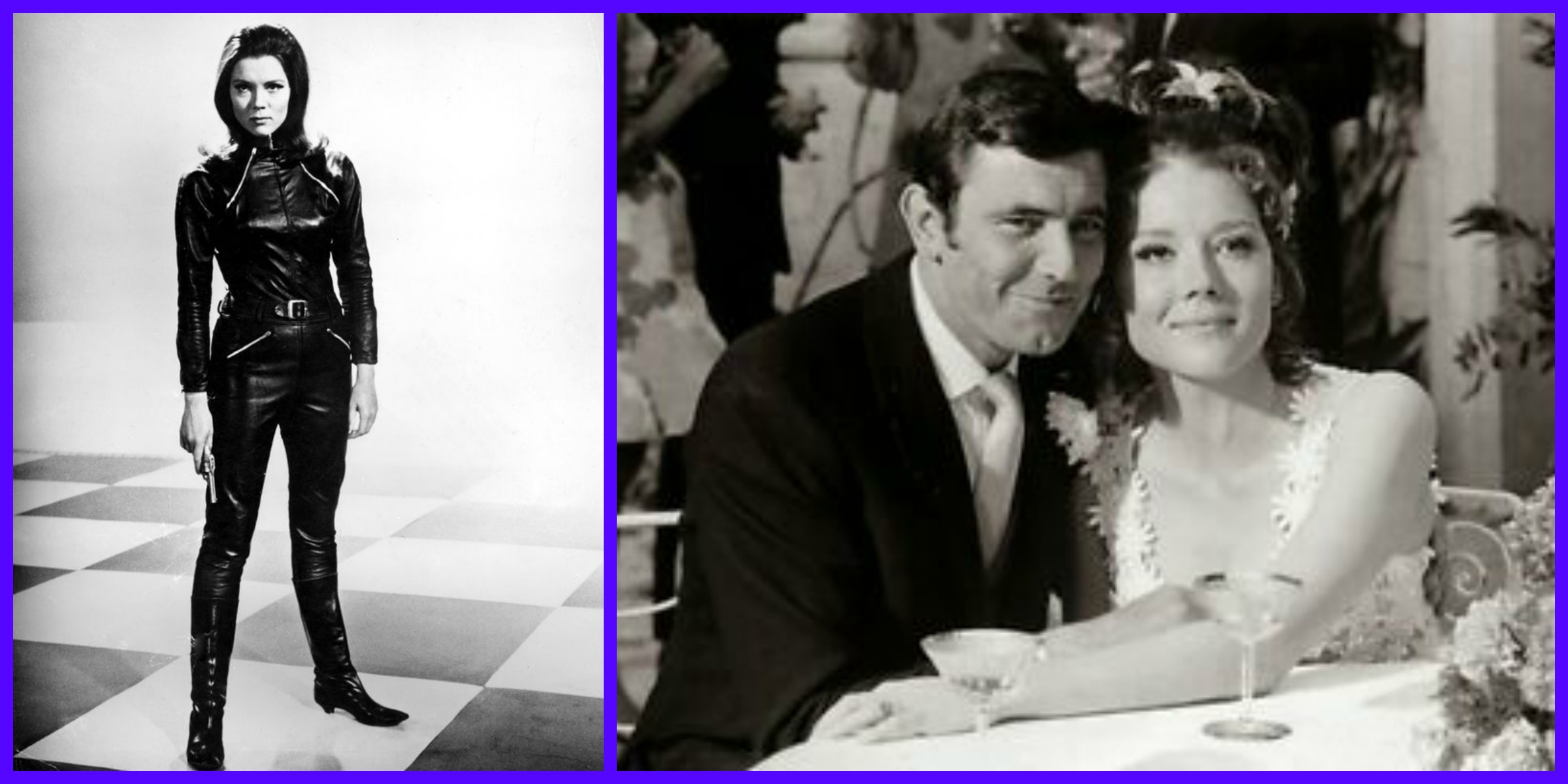
So, fare thee well.And thus spake Jenny Michelmore to Diana Rigg at the Chichester Festival Theatre in 1985. Thirty-five years later, on September 10th 2020, that same majestic Cleopatra, Dame Diana, took her last bow. Born in Doncaster, Diana Rigg always paid tribute to her Yorkshire roots. Her father was a railway engineer who was transferred to work on the railways in India where Diana learned Hindi as a second language. In later years, when an interviewer expected her to cite India when asking “where did you develop your ingrained sense of justice?” Diana’s answer was “Yorkshire.” Although feeling she didn’t fit in when she returned to school in Leeds, Diana’s drama teacher at Fulneck, Sylvia Greenwood, instilled a love of Shakespeare and performing and Dame Diana returned to Leeds to receive an honorary degree and visit her old school.
Now boast thee, Death. In thy possession lies
A lass unparallel'd. Downy windows, close;
And golden Phoebus never be beheld
Of eyes again so royal!
- In Theatre: Brecht’s Caucasian Chalk Circle and Mother Courage, Shakespeare’s King Lear, Twelfth Night, Macbeth and Antony and Cleopatra (as Cordelia, Viola, Lady M and Cleopatra), Ronald Millar’s Abelard and Helouise, Stoppard’s plays Jumpers and Night and Day, both Eliza Dolittle and Mrs Higgins (twice) in My Fair Lady, Sondheim’s Follies, Euripides’ Medea, Albee’s Who’s Afraid of Virginia Woolf, Williams’s Suddenly Last Summer and Chekhov’s The Cherry Orchard
- On TV: Shakespeare’s King Lear (as Regan), The Morecambe and Wise Show, Clytemnestra in The Oresteia, Ibsens’s Hedda Gabler, the 1985 Bleak House, her BAFTA-winning turn in Mother Love, Moll Flanders, Mrs Danvers in 1997’s Rebecca, Oleanna Tyrell in Game of Thrones, and cameos in popular programmes like Victoria, Detectorists, Doctor Who and the forthcoming Black Narcissus. But she will always be associated with her groundbreaking performance as Emma Peel in 51 episodes of The Avengers
- On film: Shakespeare’s Midsummer Night’s Dream and Julius Caesar (as Helena and Portia), Mrs Tracey Bond in On Her Majesty’s Secret Service, Theatre of Blood, A Little Night Music, The Great Muppet Caper, Evil Under The Sun, The Painted Veil and the forthcoming Last Night in Soho