Showing posts with label National Theatre. Show all posts

Saturday, 27 February 2021

Talking Shakespeare Neljä (Four)

Dense, Juicy, Layered
David Oyelowo, speaking from Los Angeles, remembered a dusty (and intimidating) copy of Shakespeare’s plays in his family’s Islington council flat. He was later surprised to discover Kenneth Branagh’s film of Henry V was also written by Shakespeare, having watched it as a movie, not caring about the language. The real breakthrough for David, though, was seeing a live production at the National Theatre – the visceral production of Robert Lapage’s mudbath Midsummer Night’s Dream with Timothy Spall as Bottom. David started acting accidentally when he tried to impress a girl by joining a youth theatre and then standing in when another young actor couldn’t attend because of a tube strike. His Theatre Studies teacher, Jill Foster, encouraged him to consider acting as a profession and helped David audition (successfully) for LAMDA. His father fully expected him to “get it out of his system” when he was given small roles (seven lines in Antony and Cleopatra) at the Royal Shakespeare Company. But the bug had bitten and seeing someone like Mark Rylance in his fourth incarnation of Hamlet at The Globe deliver the language with “dexterity, musculariy and elasticity” further reinforced David’s conviction that Shakespeare is the “Everest of Acting… so dense, so juicy, so layered.” 
Greg Doran of the Royal Shakespeare Talking Shakespeare with David Oyelowo, Helen Mirren and Ian McKellen
Vulnerability and Frailty
He gave a very funny account of getting the role of Henry VI and loved “the journey” of his time on Michael Boyd’s production but became weary of the “pioneer” emphasis placed on him by the media wanting to interview him about being the first black actor at the RSC to play an English king. He detected a similarity between Dr Martin Luther King in the movie Selma and Henry VI where the abiding motivation for both characters, as he played them, was religious faith, leading to vulnerability and frailty. David felt that both MLK and Henry VI fully expected everyone around them to be imbued with the same values and were both destabilised when the. His other major Shakespeare role was playing Othello with Daniel Craig and Rachel Brosnahan (as Iago and Desdemona) in an intimate production in New York in 2015. Like Greg Doran, I hope he can be tempted away from Hollywood for more UK stage work in the future.
Selection of David Oyelowo roles: as Henry VI, Othello, Orlando in As You Like It and the movie Selma
Queen Helen
Helen Mirren is a multiple award winner: she has carried home an Oscar, a Tony and an Emmy and has famously played a line of queens: Queen Margaret in the Henry VI trilogy; and on TV and film: Catherine the Great, Elizabeth I and Elizabeth II. She also has the distinction of playing Cleopatra three times, first at the National Youth Theatre in 1963 and then later playing opposite Michael Gambon (1982) and Alan Rickman (1998) as her Antonys. I was lucky to see the 1982 Adrian Noble production (in The Other Place in Stratford-upon-Avon) and for me it became a benchmark production of how epic plays can be staged in small spaces. Helen’s early memories of working at the RSC include watching the generous Ian Richardson from the wings in Coriolanus.  She reminisced about working (warily) with the mercurial Nicol Williamson (on both stage and in the film Excalibur) and played Lady Anne, Julia in Two Gentlemen of Verona and Ophelia to Alan Howard’s Hamlet. She also vividly recounted the touring production of Troilus and Cressida which many argued brought the play back into favour in modern times and she described working with Peter Brook in the legendary project Conference of the Birds which toured the Saharan regions of Africa in 1979.
Helen Mirren as Cleopatra (three times), Cressida, Prospera in The Tempest and Rosalind in As You Like It
Sir Ian ("You shall not pass....")
Ian McKellen has had recent experience of remembering his distinguished acting career as part of his touring one-man show which raised considerable funds for small venues throughout the UK. (Tolkien, Shakespeare, Others and You.) With Greg Doran he shared early memories of seeing and loving theatre and getting involved in amateur and school productions. He always thought Shakespeare seemed fun and enjoyed travelling down from Bolton for school Shakespeare camps in Stratford-upon-Avon. He saw Laurence Olivier, Peggy Ashcroft and Charles Laughton in their prime (but also confessed to sleeping through Olivier’s Corialanus – it was a school trip, after all.) At Cambridge he joined the Marlowe Society and came under the influence of George Rylands who has mentored many of today’s great theatre directors as well as John Barton who persuaded young McKellen he could play the ancient Justice Shallow in Henry IV Part Two. He gave a moving account of working at Nottingham Playhouse with Tyrone Guthrie who gave McKellen confidence about becoming an actor and credits Maggie Smith with recommending him to Olivier to join the Old Vic. He was waspish about Franco Zefirelli and had insights into the impact of Olivier and of touring Shakespeare in the provinces and abroad with Prospect Theatre. I’ve seen many of his stage performances and been lucky to meet him both backstage after Waiting for Godot and at a UK showing of the film Gods and Monsters at Bradford’s Pictureville Cinema. Always gracious and always energetic, with a significant place in popular film history with his portrayals of Magneto and Gandalf, Sir Ian continues to be an astonishing creative force for good in the UK.
Ian McKellen as Romeo, Macbeth, Toby Belch in Twelfth Night (which I saw in Doncaster!), Coriolanus, Richard III, King Lear (twice) and Prospero in The Tempest at Leeds Playhouse


Saturday, 19 September 2020

A (Yorkshire) lass unparallel'd

Boast thee, Death…. Downy windows close
In Antony and Cleopatra, Charmian closes the eyes of her asp-poisoned mistress with the following words:
So, fare thee well.
Now boast thee, Death. In thy possession lies
A lass unparallel'd. Downy windows, close;
And golden Phoebus never be beheld
Of eyes again so royal!
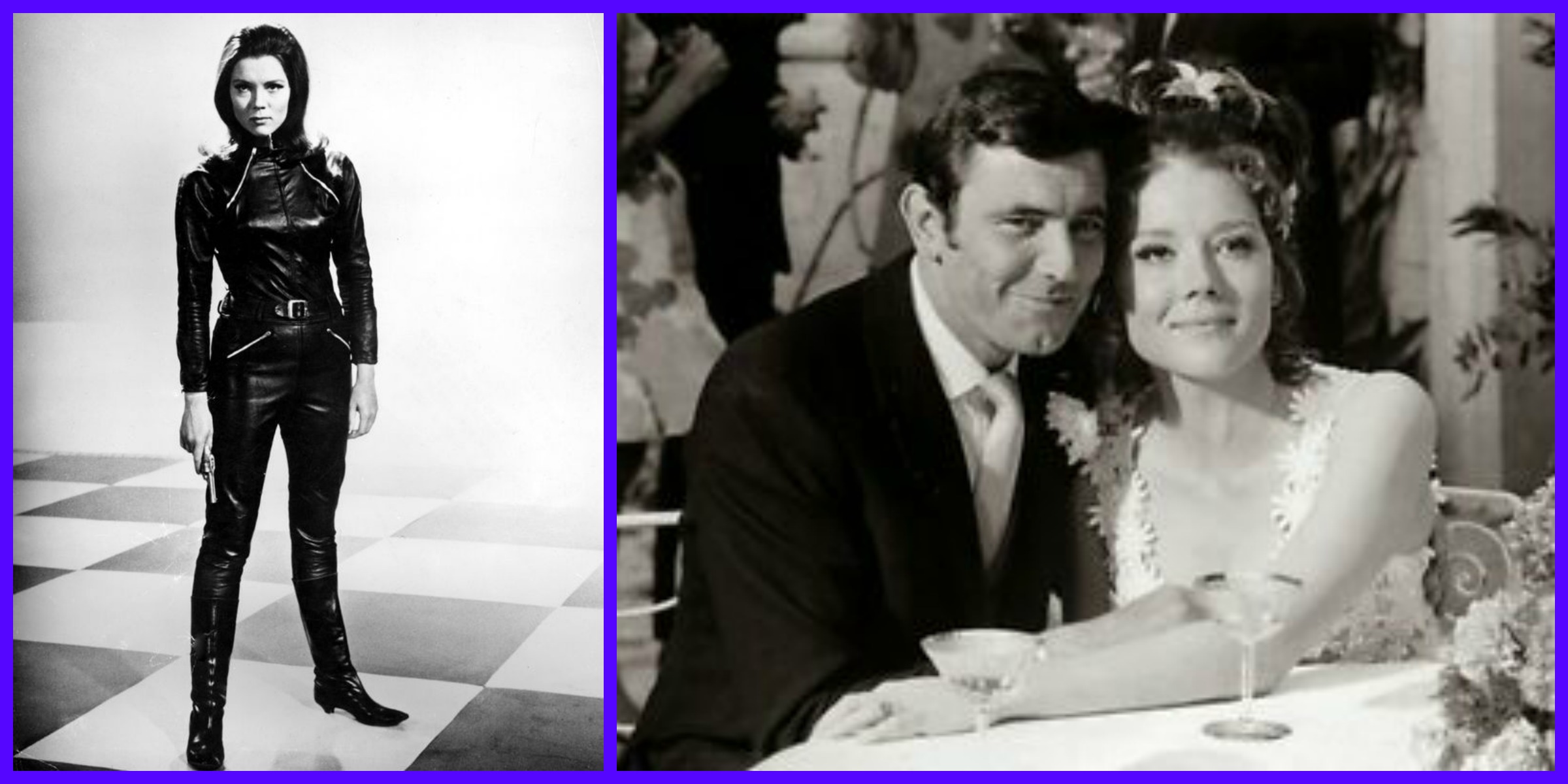
And thus spake Jenny Michelmore to Diana Rigg at the Chichester Festival Theatre in 1985. Thirty-five years later, on September 10th 2020, that same majestic Cleopatra, Dame Diana, took her last bow. Born in Doncaster, Diana Rigg always paid tribute to her Yorkshire roots. Her father was a railway engineer who was transferred to work on the railways in India where Diana learned Hindi as a second language. In later years, when an interviewer expected her to cite India when asking “where did you develop your ingrained sense of justice?”  Diana’s answer was “Yorkshire.” Although feeling she didn’t fit in when she returned to school in Leeds, Diana’s drama teacher at Fulneck, Sylvia Greenwood, instilled a love of Shakespeare and performing and Dame Diana returned to Leeds to receive an honorary degree and visit her old school.
Mistress of Theatre, TV, Cinema
At school Diana appeared as Orlando in Shakespeare’s As You Like It and Emily Brontë in The Brontës. She went on to be crowned with plaudits, winning BAFTA, Emmy, Tony and Evening Standard Awards in her time. (And striking out – successfully – for equal pay with her co-star in The Avengers at a time when it was rare for women to highlight inequality.) Highlights included:
  • In Theatre: Brecht’s Caucasian Chalk Circle and Mother Courage, Shakespeare’s King Lear, Twelfth Night, Macbeth and Antony and Cleopatra (as Cordelia, Viola, Lady M and Cleopatra), Ronald Millar’s Abelard and Helouise, Stoppard’s plays Jumpers and Night and Day, both Eliza Dolittle and Mrs Higgins (twice) in My Fair Lady, Sondheim’s Follies, Euripides’ Medea, Albee’s Who’s Afraid of Virginia Woolf, Williams’s Suddenly Last Summer and Chekhov’s The Cherry Orchard
  • On TV: Shakespeare’s King Lear (as Regan), The Morecambe and Wise Show, Clytemnestra in The Oresteia, Ibsens’s Hedda Gabler, the 1985 Bleak House, her BAFTA-winning turn in Mother Love, Moll Flanders, Mrs Danvers in 1997’s Rebecca, Oleanna Tyrell in Game of Thrones, and cameos in popular programmes like Victoria, Detectorists, Doctor Who and the forthcoming Black Narcissus. But she will always be associated with her groundbreaking performance as Emma Peel in 51 episodes of The Avengers
  • On film: Shakespeare’s Midsummer Night’s Dream and Julius Caesar (as Helena and Portia), Mrs Tracey Bond in On Her Majesty’s Secret Service, Theatre of Blood, A Little Night Music, The Great Muppet Caper, Evil Under The Sun, The Painted Veil and the forthcoming Last Night in Soho
As well as her Shakespeare roles, I was most affected by (on TV) her performances in The Avengers, Mother Love, Moll Flanders, Game of Thrones and Detectorists; on film the shock of her fate in On Her Majesty’s Secret Service; but I was lucky enough to see her grimy, cackling, pipe-smoking, funny, grotesque Mother Courage on stage at the National Theatre in 1995 – a character full of grim energy at the beginning, dragging her enormous cart around the stage, quipping, dominating, manipulating; and, by the end of the production, a zombified hollowed-out shell of a woman, emblematic of all people shattered by the effects of needless war. An extremely un-vain performance. An acting legend.


Saturday, 24 February 2018

Cat on a hot tin roof

Newman & Taylor, Charleson & Duncan, Boyle & Parker (photo credit: Keith Pattison/PR), O'Connell & Miller (photo credit: Johan Persson)
“I’ve got the guts to die…. have you got the guts to live?”
The first time I saw Tennessee Williams’s Cat on a hot tin roof was a TV showing during my teenage years of the 1958 film version starring Elizabeth Taylor, Paul Newman and Burl Ives. I have memories of the power of the character of “Maggie the cat” and remember the row between father and son where the climax was a declaration that love is what matters, but I was definitely too young to fully understand the adult bitchiness, secrets, tensions and manipulations that Williams had poured into the relationships. Of course, back in the 1970s, what I didn’t know is that the screenplay was effectively a censored version of the play, removing much of the play’s subversive (for the times) text.
Newman/Taylor (SNAP/Rex Features), Cast of Young Vic production (photo credit: Johan Persson), Charleson and Duncan (photo credit: Mike Hollist/Daily Mail/Rex Features)

“We’re through with lies and liars in this house.”
In March 1988 at Bradford Alhambra I saw the touring production of Howard Davies’s National Theatre production designed by William Dudley and starring Lindsay Duncan as Maggie, Ian Charleson as Brick, Alison Steadman as Mae, Barbara Leigh-Hunt as Big Mama and Eric Porter as Big Daddy. I hadn’t cottoned on to the reputations of any of these actors so I just took the play at face value and remember being awestruck by the lyrical beauty and viciousness of Williams’s dialogue and felt gobsmacked/heartsmacked/soulsmacked by the actors’ ability to present flayed ugly reality in full view of an audience, but in characters that were yearning for connections and love and truth.
School production of Streetcar with Lois Taylor, Joe Layton and Clare Kelly (photo credit: Dale Wain) and the three main women in the Young Vic production: Hayley Squires, Sienna Miller and Lisa Palfrey (photo credit: Johan Persson)   


“I’m not living with you. We occupy the same cage.”
Fast forward to October 2012 and Sarah Esdaile’s production in the Quarry theatre with Zoe Boyle as Maggie, Jamie Parker as Brick and Richard Cordery as Big Daddy. The design by Francis O’Connor suggested the text’s “twentyeight thousand acres of the richest land this side of the valley Nile….. Victorian with a touch of the Far East.” Paul Pyant’s Lighting and Mic Pool’s Sound dripped with the heat of summer. By now I’d taught Streetcar Named Desire and seen both that play and Suddenly Last Summer, Camino Real, The Glass Menagerie, Orpheus Descending and taught and directed a student production of Streetcar. I’d also read Tennesse Williams’s kaleidoscopic memoir and read enough biographical detail to understand his own self and his own family were the main “copy” in his work. His alcoholic father, his volatile mother, his lobotomised sister, his repressed sexuality, his health problems, anxieties and dreams - all feverishly emerged in his stage characters and situations. But from where was the poetry and the vision? His innate genius, I suppose.
Top two photos of West Yorkshire Playhouse production; photo credits: Keith Pattison/PR. Other photos by John Persson of the Young Vic production

“What is the victory of a cat on a hot tin roof? – I wish I knew…. Just staying on it, I guess, as long as she can….”

And so to last night to see the NTLive broadcast of the Young Vic production by Benedict Andrews designed by Magda Willi. Sienna Miller was a feline Maggie, Jack O’Connell was a crumbling Brick, Colm Meaney a domineering Big Daddy, Hayley Squires a desperate Mae and Lisa Palfrey a heartbreaking Big Mama. The rest of the cast and production values were equally evocative in my opinion – evocative of Williams’s study of “Mendacity” – the lies we tell to remain a part of civilised society when all the time we are festering with shameful desires…. a perfect play to watch in this time of fake news and bare-faced political lying. Something about the two central performances in this version suggested to me there was hope at the end. “Wouldn’t it be funny if that was true?” says Brick to Maggie as she embarks on a determined baby-making campaign…. the way Sienna Miller played it I thought “it is true, there is hope, life will find a way.”
Jack O'Connell and Sienna Miller in photos by Johan Persson