Showing posts with label Haworth. Show all posts

Saturday, 3 April 2021

Couple of Swells

Return to Top Withins
We're a couple of swells
We stop at the best hotels
But we prefer the country far away from the city smells
So we'll walk up the Avenue
Yes, we'll walk up the Avenue
And we’ll walk up to Top Withins is what we’ll do…
It’s been a while, but as Covid-19 restrictions are lifted, a picnic on the moors above Haworth is a great place to blow away the cobwebs and drink in the Yorkshire air.
Rolling Away The Metaphorical Stone
And because we can gather in gardens again, Sally’s birthday was resurrected, this time with a sit-down meal beneath a canopy, under fairy lights, wrapped up warm, with nearest and dearest…. And communing in real life is so much better than cyberchatting. Pixels don’t do justice to the breathing souls of human beings. Online meetups are all very well, but my understanding of the art and science of communication is that pauses, interruptions, false starts, ellisions, facial expressions and eyebrow twitches are all essential to comprehension. Software doesn’t allow simultaneous argument or overlap so bring on LIVING people in REAL LIFE
With all the frills upon it
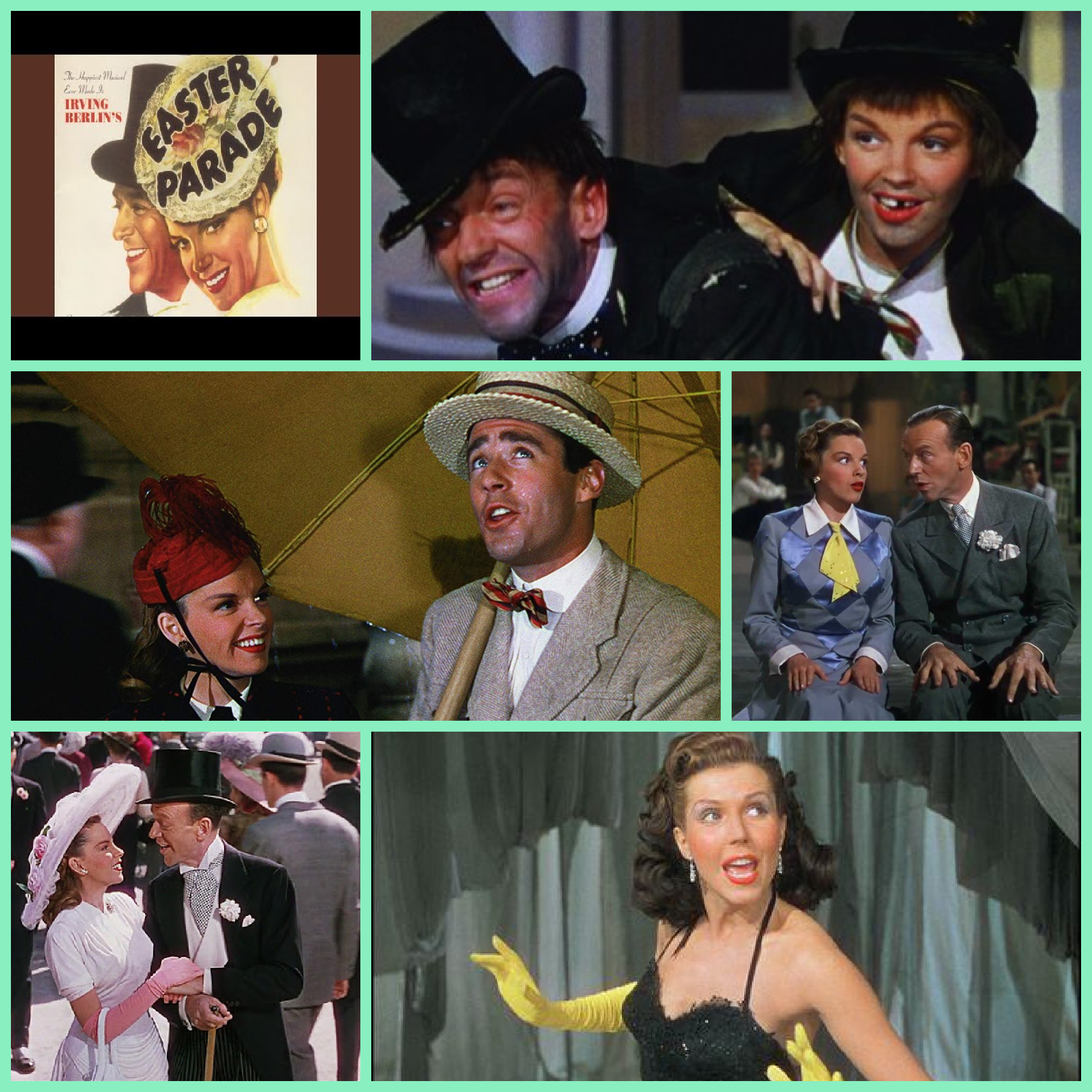
The screen is certainly good, though, for treats like Judy Garland, Fred Astaire, Ann Miller and Peter Lawford walking down that Avenue with their Easter bonnets, watching out for that fella with his umbrella, shaking the blues away, being drum crazy, loving a piano and stepping out with my baby…. A further significant movie experience during the week building up to Easter included Scorsese’s exquisite film of The Age of Innocence with Daniel Day Lewis, Michelle Pfeiffer, Winona Ryder and Miriam Margolyes
“Ah, good conversation - there's nothing like it, is there? The air of ideas is the only air worth breathing.”
Spring Fighting With Winter
Blossoms are appearing, tulips are opening, daffodils are fluttering as they should. But the nights are still frosty and the weather is unpredictable. But I’ve been feeling the unexpected budding buds of a scintilla of desire to get back to some creative writing. Whether or not I will write creatively again feels a bit immaterial at the moment, given the efforts needed to “get through” the tail end of the pandemic crisis. I hope the world isn’t exactly the same as it was before. I expect to continue hiking through the trees, beside the streams, under the skies and planning…. planning for the next stages of the endemic-Covid world…

Saturday, 28 November 2020

Harlow Carr Glow

Haworth Moors followed by Stew and Dumplings....

Top Withins
A positive feature of 2020 (and God knows, we need to cherish positive aspects of 2020) is that I’ve walked more often than I’ve ever walked before – mostly locally through Northcliffe, Heaton and Hirst Woods but also along the Leeds-Liverpool canal and up onto the Shipley, Baildon, Ilkley and Haworth moors. I regularly reflect on how lucky I am to live in Saltaire with easy access to city, town and village facilities as well as the Yorkshire countryside. The pictures above will surprise no-one (in Europe or the USA) who knows me well enough to know that Top Withins and the Brontë falls are among my favourite locations. The view from Top Withins can be murky, misty, wild and atmospheric and it can also be inspiring, expansive, bright and uplifting. Sometimes all at once.
Refunds and postponements
West Yorkshire, like most of the rest of the Midlands and North, will be in “Tier 3” after Lockdown 2.0 ends next week. I hope in years to come I will re-read posts like this and wonder what Tier 3 meant and Covid-19 will be a distant memory of a bad couple of years that humanity overcame. Time will tell. (Yes, I know I overuse that phrase but then I like to view life historically….) So, refunds are (once again) coming in for theatre bookings, afternoon teas and travel plans. One thing that survived Lockdown 2.0 was an outdoor experience at the Royal Horticultural Society Garden in Harrogate: the Glow walk at Harlow Carr Gardens.
Glow
Harlow Carr is the most northerly RHS garden, originally part of the Forest of Knaresborough and then the Harlow Carr Botanical Gardens before the RHS absorbed the Northern Horticultural Society and took on the running of Harlow Carr. Glow is a simple idea. Lay a few thousand metres of cable and flood trees with colour….
Shades of Imagination
Highlights include a tunnel of light bulbs, reflections across the Queen Mother lake, newly built bridges, mini-waterfalls, willow sculptures of stags and, of course, the colours glowing in the cold night air: deep shades of blue, red, purple, pink and green embellishing the trunks, branches, bushes and leaves, revealing their natural, twisty (sometimes ancient) glory. It was also the occasion of my first mince pie in 2020…. December is just around the corner.


Saturday, 21 March 2020

Lockdown Birthday Goodbyes

Yorkshire countryside, Druid’s Altar and Top Withins
March of course brings Spring and Sally’s birthday, so we made the most of the better weather with yomping walks with picnics in the countryside around Oakworth, up to Druid’s Altar above Bingley and to our favourite local destination (Top Withins) above Haworth. We said goodbye to the wider outside world on these trips and expect tomorrow’s Mother’s Day to be the final day the close family meets together before self-isolating until further notice. Happy Birthday, dearest partner of greatness; we won’t forget March 2020 in a hurry.

Saturday, 29 February 2020

The Anne Stone

Poetry Pilgrimage
On a Spring day last year we made it to Haworth by 10:30am and, though the weather was warm and sunny, it was not too hot, which was a relief given the pilgrimage we had planned: seven miles tramping north of Haworth with views over the Worth Valley. A seven mile walk is not a stretch for many people but given the ups and downs –  more ups than downs – it certainly got the heart beating and the back sweating….
Circular walk
The walk, designed by Michael Stewart, begins (and ends) at the Brontë Parsonage and partly follows what has become known as “The Railway Children Walk.” The views were part West Yorkshire industrial landscape, part forest, part fields, part moors, part paths, part roads, a series of stiles, a packhorse bridge and an ancient stone bridge, one view after another changing and ever changing.  We drank coffee overlooking a small valley; and had our picnic lunch sitting on a stone wall. Yorkshire placenames in the area are typically evocative: Bridgehouse Beck, Holden Park, Race Moor Lane, True Well Hall, Dean Bridge, Turkey Inn, Pickles Hill, Lumb Beck, Oldfield Gate.
"Take Courage"
The final destination was Parson’s Field near the Parsonage where the wonderful Jackie Kay has penned a tribute to Anne. Charlotte’s and Emily’s stones are elsewhere in the area, but I am very pleased that Anne’s Stone is here because of course her mortal remains lie in Scarborough where she was taken in 1849 whilst suffering from tuberculosis. Contemporary accounts say that her final words to Charlotte were “Take Courage.”
Anne by Jackie Kay
These plain dark sober clothes
Are my disguise. No, I was not preparing
For an early death, yours or mine.
You got me all wrong, all the time.
But sisters, I will have the last word,
Write the last line. I am still at sea.
But if I can do some good in this world
I will right the wrong. I am still young.
And the moor’s winds lift my light-dark hair.
I am still here when the sun goes up,
Still here when the moon drops down.
I do not now stand alone.


Saturday, 25 January 2020

Come From Away

Birthday Season
For my birthday last year, I chose a retro activity: the widescreen Sound of Music on the big screen at the National Media Museum in Bradford. The cinema treat followed a delicious meal at the Alhambra Theatre overlooking the stunning City Hall with its bell tower based on the Palazzo Vecchio in Florence, Italy. And, as usual, in the week before my birthday I went with Sally and a picnic up to the Haworth Moors to visit the Brontë falls and Top Withins.
Restaurant 1914 at Bradford Alhambra, treat breakfast and buffet lunch and widescreen Sound of Music
From Bradford to London....
Big Smoke
As part of my birthday treats, we’d booked a November trip to London to treat ourselves to some “date time” in local pubs and at fancy restaurants including the Francophile Brasserie Zédel.
Infinity in the palm of your hand
One of our stops was to see an exhibition focused on one of my heroes: poet, painter, engraver, visionary, environmentalist and prophet – William Blake (1757 – 1827.) Many of his poems are in my top 100 poems of all time and his life was an inspiring mix of graft, grief, creativity and mysticism. I’ve written plays about his life and staged concerts containing his words, so it was a huge privilege and pleasure to see many of his artistic works represented so sympathetically at The Tate. “The imagination is not a state; it is the human existence itself.”
We’ve all had the spooky hell dream, people
What surprised me me about the first of our two London theatre treats, The Book of Mormon, was how essentially good-natured it is (despite some fruity language.) I came away admiring Mormons for more than their shiny, white teeth. The fun to be had at the expense of (all) manufactured religion is loving and reverent and the slickness of the production was at times breathtaking. The score is a wonder – switching between ballads, peppy narratives, swing, jive, faux-African, disco and tap; and I couldn’t for the life of me tell you the plot, but the time passed by in a white-shirted flash
Suddenly there’s something in between me and the sky
More profound was a musical that was more than the sum of its parts. Did you know there was a musical about 9/11, the attack on the twin towers? Neither did I, until word of mouth from London friends suggested this “chamber musical” was well worth watching. Come from away was created using interviews and transcripts from the people of the Canadian town of Gander and the crew and passengers of the 38 planes that descended into their lives when planes were diverted to Gander on that fateful morning in 2001. Luggage was stuck in holds so, apart from beds, the citizens of Gander rallied to provide toiletries, medicines, sustenance and shelter to all kinds of people from all parts of the world. If this sounds to be an improbable subject for a musical, believe it! And yet, from the small to the huge, from the quirky detail to the epic tragedy, from the minor irritation to the life-changing encounter, the writers manage to concoct a whole society in a Greek-chorus style celebration of Every Human Emotion. A life-affirming experience, and a good way to end this “birthday season.” (As Mr Rogers said: “When I was a boy and I would see scary things in the news, my mother would say to me, "Look for the helpers. You will always find people who are helping.”)


Saturday, 1 June 2019

The Charlotte Stone

Brontë200
The past five years have been a bonanza for admirers of Haworth’s Brontë family with the Brontë200 five-year programme of bicentenaries: the Reverend Patrick Brontë’s invitation to become Haworth’s leading minister in 1819 and the births of Charlotte, Emily, Branwell and Anne (1816, 1817, 1818 and 1820.) As part of the celebrations, author Michael Stewart has devised a series of walks to visit monumental stones positioned in key places across Brontëland and Sally and I recently went on a pilgrimage to find The Charlotte Stone.
bog-burst of pain, fame, love, unluck.
The walk begins in Thornton near the remains of the Bell Chapel where Patrick was curate from 1815 to 1820. Over the road, the current St James’ Church contains an interesting exhibition about the Brontës. You ascend on tracks that pass Thornton Hall, probably the inspiration for Mr Rochester’s house in Jane Eyre. The wild and surprising views above Thornton carry you along high ridges that then descend to the Great Northern Railway trail where you cross the awesome 20-arch Thornton viaduct. The walk ends (inevitably) at the Brontë birthplace, now Emily’s café, and the site of The Charlotte Stone with a poem by Carol Ann Duffy. Officially “Easy,” I would describe the walk as “Strenuous” and we took all day, but that’s cos we included a lengthy picnic stop (or two) with hot bevarages and time to take in the Yorkshire views. 
Charlotte by Carol Ann Duffy
Walking the parlour, round round round the table,
miles; dead sisters stragglers till ghosts; retired wretch,
runty, pale, plain C.Brontë; mouth skewed, tooth-rot.
You see you have prayed to stone; unheard, thwarted.
But would yank your heart through your frock,
fling it as a hawk over the moors, flaysome.
So the tiny handwriting of your mind as you pace.
So not female not male like the wind’s voice.
The vice of this place clamps you; daughter; father
who will not see thee wed, traipsing your cold circles
between needlework, bed, sleep’s double-lock.
Mother and siblings, vile knot under the flagstones, biding.
But the prose seethes, will not let you be, be thus;
bog-burst of pain, fame, love, unluck. True; enough.
So your still doll-steps in the dollshouse parsonage.
So your writer’s hand the hand of a god rending the roof.

Saturday, 13 April 2019

Shall Earth No More Inspire Thee

Mother's Day at the Bronte Parsonage Museum

Mother's Day 2019
We chose to be in Haworth on Mother’s Day. It may seem counterintuitive since the Brontë Parsonage was a home bereft of a mother. Mother Maria died soon after the famous family moved to the town of Haworth from Thornton in Bradford. Therefore, the Parsonage (during the years 1820 to 1861) relied for maternal influences on Aunt Branwell for 21 years, on home helps Tabby Aykroyd and Martha Brown and the sisterly love and mutual support of Charlotte, Emily and Anne.
When imagination once runs riot
Every time I walk round the Brontë Parsonage Museum (and I have done it over 20 times now, including the times I took students there) I spot something new or feel something different. This time I found myself imagining the love, rivalry and intensity of the sibling relationships; how they must have been constantly aware of where each other was in the house, the changing dynamics when each of them left for a time, the circumstances that brought each of them back. And the changing atmosphere when, one by one, they died.
Shall Earth No More Inspire Thee
The extra incentive to visit on Mother’s Day was the opportunity to enjoy a unique audio-hiking experience. The Parsonage Museum have commissioned composer Adrian McNally to set to music a selection of Emily Brontë’s poems. Adrian composed by day at Ponden Hall (historically a place that sheltered Branwell, Emily and Anne along with servant Sarah Garrs during the Crow Hill Bog Burst, a thunderstorm and mudslide in 1824.) Adrian then practised and performed the music on the piano you can see today in Mr Brontë’s study (played by Emily during her lifetime, also by Anne.) Rachel and Becky Unthank (folk group, The Unthanks) have performed and recorded the poems and the Parsonage have devised a walk up onto Penistone Hill so you can listen to the songs/poems as you follow a 45-minute climb and descent onto the nearby moor.
Song Cycle in order of audio experience in Haworth
1. Deep deep down in the silent grave
With no-one to mourn above
Here with my knee upon thy stone
I bid adieu to feelings gone
I leave with thee my tears and pain
And rush into the world again

O come again what chains withhold
The steps that used so fleet to be
Come leave thy dwelling dark and cold
Once more to visit me

Was it with the fields of green
Blowing flower and budding tree
With the summer heaven serene
That thou didst visit me?

No ‘t was not the flowery plain
No ‘t was not the fragrant air
Summer skies will come again
But thou wilt not be there

2. She dried her tears and they did smile
To see her cheeks' returning glow
How little dreaming all the while
That full heart throbbed to overflow.

With that sweet look and lively tone
And bright eye shining all the day
They could not guess at midnight lone
How she would weep the time away.

3. I’m happiest when most away
I can bear my soul from its home of clay
On a windy night when the moon is bright
And the eye can wander through worlds of light—

When I am not and none beside—
Nor earth nor sea nor cloudless sky—
But only spirit wandering wide
Through infinite immensity.

4. Shall Earth no more inspire thee,
Thou lonely dreamer now?
Since passion may not fire thee
Shall nature cease to bow?

Thy mind is ever moving
In regions dark to thee;
Recall its useless roving -
Come back and dwell with me.

I know my mountain breezes
Enchant and soothe thee still -
I know my sunshine pleases
Despite thy wayward will.

When day with evening blending
Sinks from the summer sky,
I've seen thy spirit bending
In fond idolatry.

I've watched thee every hour;
I know my mighty sway,
I know my magic power
To drive thy griefs away.

Few hearts to mortals given
On earth so wildly pine;
Yet few would ask a Heaven
More like this Earth than thine.

Then let my winds caress thee;
Thy comrade let me be -
Since nought beside can bless thee
Return and dwell with me.

5. O evening, why is thy light so sad
Why is the sun's last ray so cold?
Hush our smile is as ever glad
But thy heart is growing old.

It's over now; I've known it all;
I'll hide it in my heart no more,
But back again that night recall,
And think the fearful vision o'er.

The evening sun in cloudless shine
Has passed from summer's heaven divine,
And dark the shades of twilight grew,
And stars were in the depth of blue,
And in the heath or mountains far
From human eye and human care,
With thoughtful heart and tearful eye,
I sadly watched that solemn sky.
6. High waving heather 'neath stormy blasts bending,
Midnight and moonlight and bright shining stars;
Darkness and glory rejoicingly blending,
Earth rising to heaven and heaven descending,
Man's spirit away from its drear dungeon sending,
Bursting the fetters and breaking the bars.

All down the mountain sides wild forests lending
One mighty voice to the life-giving wind;
Rivers their banks in their jubilee rending,
Fast through the valleys a reckless course wending,
Wider and deeper their waters extending,
Leaving a desolate desert behind.

Shining and lowering and swelling and dying,
Changing forever from midnight to noon;
Roaring like thunder, like soft music sighing,
Shadows on shadows advancing and flying,
Lightning-bright flashes the deep gloom defying,
Coming as swiftly and fading as soon.

7. Lines
The soft unclouded blue of air,
The earth as golden, green, and fair,
And bright as Eden's used to be,
That air and earth have rested me,

Laid on the grass I lapsed away,
Sank back again to childhood's day;
All harsh thoughts perished, memory mild
Subdued both grief and passion wild.

But did the sunshine even now
That bathed his stern and swarthy brow,
Oh did it wake—I long to know—
One whisper, one sweet dream in him,
One lingering joy that years ago
Had faded—lost in distance dim?

That iron man was born like me,
⁠And he was once an ardent boy;
He must have felt in infancy
⁠The glory of a summer sky.

Though storms untold his mind has tossed,
He cannot utterly have lost
Remembrance of his early home—
So lost that not a gleam may come.

No vision of his mother's face
⁠When she so fondly mild set free
Her darling child from her embrace
⁠To roam till eve at liberty.

Nor of his haunts, nor of the flowers,
⁠His tiny hand would grateful bear,
Returning from the darkening bowers,
⁠To weave into her glossy hair.

I saw the light breeze kiss his cheek,
⁠His fingers 'mid the roses twined;
I watched to mark one transient streak
⁠Of pensive softness shade his mind.

The open window showed around
⁠A glowing park and glorious sky,
And thick woods swelling with the sound
⁠Of nature's mingled harmony.

Silent he sat. That stormy breast
At length I said has deigned to rest;
At length above that spirit flows
The waveless ocean of repose.

Let me draw near, 'twill soothe to view
His dark eyes dimmed with holy dew;
Remorse even now may wake within
And half unchain his soul from sin.

Perhaps this is the destined hour
When Hell shall lose its fatal power,
And Heaven itself shall bend above
To hail the soul redeemed by love.

Unmarked I gazed, my idle thought
Passed with the ray whose shine it caught;
One glance revealed how little care
He felt for all the beauty there.

Oh! crime can make the heart grow old
⁠Sooner than years of wearing woe,
Can turn the warmest bosom cold
⁠As winter wind or polar snow.
8. Remembrance
Cold in the earth - and the deep snow piled above thee.
Far, far removed, cold in the dreary grave!
Have I forgot, my only Love, to love thee,
Severed at last by Time's all-severing wave?

Now, when alone, do my thoughts no longer hover
Over the mountains on that northern shore;
Resting their wings where heath and fern-leaves cover
That noble heart for ever, ever more?

Cold in the earth - and fifteen wild Decembers,
From those brown hills, have melted into spring:
Faithful, indeed, is the spirit that remembers
After such years of change and suffering!

Sweet Love of youth, forgive, if I forget thee
While the world's tide is bearing me along;
Other desires and other hopes beset me,
Hopes which obscure but cannot do thee wrong!

No later light has lightened up my heaven;
No second morn has ever shone for me:
All my life's bliss from thy dear life was given,
All my life's bliss is in the grave with thee.

But when the days of golden dreams had perished
And even Despair was powerless to destroy,
Then did I learn how existence could be cherished,
Strengthened, and fed without the aid of joy.

Then did I check the tears of useless passion -
Weaned my young soul from yearning after thine;
Sternly denied its burning wish to hasten
Down to that tomb already more than mine.

And even yet, I dare not let it languish,
Dare not indulge in Memory's rapturous pain;
Once drinking deep of that divinest anguish,
How could I seek the empty world again?

9. The night is darkening round me
The wild winds coldly blow;
But a tyrant spell has bound me
And I cannot, cannot go.

The giant trees are bending
Their bare boughs weighed with snow.
And the storm is fast descending,
And yet I cannot go.

Clouds beyond clouds above me,
Wastes beyond wastes below;
But nothing drear can move me;
I will not, cannot go.

I'll come when thou art saddest,
Laid alone in the darkened room,
When the mad day's mirth has vanished,
And the smile of joy is banished
From evening's chilly gloom.

I'll come when the heart's real feeling
Has entire, unbiased sway,
And my influence o'er thee stealing,
Grief deepening, joy congealing,
Shall bear thy soul away.

Listen! 'tis just the hour,
The awful time for thee.
Dost thou not feel upon thy soul
A flood of strange sensations roll,
Forerunners of a sterner power,
Heralds of me?

I would have touched the heavenly key
That spoke alike of bliss and thee;
I would have woke the entrancing song,
But its words died upon my tongue.
And then I knew that hallowed strain
Would never speak of joy again,
And then I felt . . .

The night is darkening round me
The wild winds coldly blow;
But a tyrant spell has bound me
And I cannot, cannot go.


Saturday, 21 July 2018

Little Germany

Bradford Literature Festival 2018, Juliet Barker (bottom right) talking about EB, tour of Little Germany
Bradford Literature Festival 2018
In the year of Emily Brontë’s (birth) bicentenary it was a treat at the Bradford Literature Festival to attend talks about the Haworth woman who published just one novel (and a raft of brilliant poems) but who, in my view, is a trailblazer and a genius. Our other highlight at the Festival was a tour of Bradford’s Little Germany. In the early part of the nineteenth century, Leeds had more worsted merchants than Bradford but by 1861 Bradford had 157 to Leeds’s 17. The massive success of the textile industry in Bradford was largely a result of the immigration of a group of German Jews.
Hall Ings and the rise of a citadel
These immigrants – Schuster (who led the way by building a warehouse in Hall Ings in 1836), Behrens (whose gates can still be seen – see pic in collage at top of this blog), Zossenheim, Semon, Moser and Julius Delius (whose son Frederick became known as a typically-English composer) – served the city and the region and built up its reputation and wealth over the central part of the 1800s. The Wool Exchange (now housing an awesome branch of Waterstone’s bookshop) was central to the economic bustle. Merchants from every country of the British Empire – as well as Iceland, America, Tibet and China – were known to haggle for the hundreds of types of wool and hair (including that of alpacas from Titus Salt of Saltaire fame.) And just up the hill, you can walk round the unique collection of imposing listed buildings known, probably forever, as Little Germany.


Saturday, 15 July 2017

Bradford Literature Festival 2017

Bradford Literature Festival 2017
The cover of the booklet proclaimed 400 writers, 300 events, 10 days, 1 city
I listened to 28 speakers in 10 events over 4 days
I felt insanely proud of the city where I live for hosting such an event – the fourth year now and getting stronger each time. A thousand congratulations to the driving forces: Syima Aslam, Irna Qureshi and their superb team.
Bradford Waterstones in the old Wool Exchange

Inclusive, surprising, chock-a-block with surprising juxtapositions
I’ve been to a number of literary and writing festivals during my lifetime but I haven’t experienced one with such a variety: from Harry Potter spell-making to Pakistani politics, from Jane Austen to Rebel Girls, from Star Wars to Cricket, from LGBTIQ events to J B Priestley, from Waris Shah’s epic love love poem to lessons on how to avoid writing bad sex scenes. The organisers seem to be fearless and determined to put in something for everyone. And everyone, it seemed, turned out.
Bradford: City Square, City Hall, R C Bridgestock in the Victorian courtroom (see below)

City square in the sun
I found something on both weekends to intrigue and pull me in. But my abiding memory of the festival might be sitting in City Square watching the fountains play and being astonished (and moved) by the smiling crowds going in and out of the book tent, by the individuals, friends, strangers, families, young, old, all ethnicities, all backgrounds and all types watching the pop-up entertainments. Many, I’m sure, were as equally contented as me that, after all the metaphorical earthquakes in the political world in recent years, the evidence of people congregating at the Bradford Literature Festival shows that the human race is overwhelmingly peaceful, loving, investigative and open-hearted. Culture and the arts celebrate communities, spread ideas and, yes, it’s true, they advance civilisation. Much to learn. Much to debate. Much to ponder. Much to love.
Samantha Ellis's book, the Arabian Nights event (Abdul-Rheman Malik, Robert Irwin and S F Said); the Arthurian legends (Kirsty Logan, Reluca Radulescu and Remona Aly); and Game of Thrones: Myths and History (Tom Huddleston and Carolyne Larrington)

So what did I learn, debate, ponder and love?

Book Bidding Wars

  • Inside City Hall is as jaw-dropping as the outside, inspired as it is by the Palazzo Vecchio in Florence
  • The women from the publishing industry who spoke at this event were inspiring, funny and encouraging (thank you Ailah Ahmed, Danuta Kean, Lisa Milton and Kate Nash)
  • Update on my Rhenium Tales efforts: the arc of my second book is laid out with some material already dumped there because I’ve cut it out of Book One
  • Book One, Raydan Wakes, is in the final stretch of complete first draft at 111,000 words split into 15 chunky chapters, each divided into three sections….
  • Nothing at this event made me think I should stop writing and editing, writing and editing….

The Arthurian Legend and its Enduring Appeal

  • Remona Aly (journalist and broadcaster) was an endearing and enthusiastic chair whose expressions of her fandom articulated exactly my own Arthurian obsessions (and that's what's great about the festival: where the internal worlds of a white Roman Catholic in his 50s and a young Muslim woman can meet in an unlikely space....)
  • Kirsty Logan inspired me to buy her book The Gracekeepers 
  • I wish I’d been taught at university by Professor Reluca Radulescu
  • The three women debated the crux of the Arthurian canon: the fruitful jostle between the imaginative, the scholarly, the historical, the gender-focused, the patriotic, the European and the romantic approaches
  • The Tag “King Arthur” in the list to the right will demonstrate how much I wallowed in this event

Arabian Nights: the Original Science Fiction

  • There are way more stories in the Arabian Nights collection than I knew of
  • From oral tradition to the printed collection(s) on shelves now, the journey of The Arabian Nights is fraught with cultural, political and linguistic complexities
  • There are some wild and wonderful stories I never knew containing prophetic imaginings and leaps of technology
  • The Arabian Nights is more mind-boggling and enticing than I thought before
  • I need a new translation (thank you Abdul-Rehman Malik, Robert Irwin and S F Said)

Game of Thrones: Myths & History

  • Tom Huddleston (author and film journalist) and Professor Carolyne Larrington (Oxford) made a brilliant double act with well-prepared questions (Tom) and authoritative answers (Carolyne) and conversation that was mesmerisingly entertaining (both of them, thank you)
  • Another event, like the King Arthur session, that explored how history, geography, politics, gender studies, fiction and the imagination can work together to brew sci-fi and fantasy
  • They revelled in the North-South divide of York/Lancaster and Stark/Lannister which tickled me to bits
  • They revealed some crazy medieval anecdotes and prompted me to make four pages of notes

The Books they don’t want you to read

  • Kevin Duffy helps run Bluemoose books which published STOP! Don’t read this by Leonora Rustamova and her students, a story which is worth researching if you don’t know it (click here)
  • Melvin Burgess (who wrote two of my favourite “Young Adult” books Bloodtide and Bloodsong) is much more genial than I expected
  • Tariq Mehmood is a funny guy – and sometimes scary in his emphatic challenges – but whose book You’re not proper is one I’m looking forward to reading
  • All three men wrangled around the subject of banning books and acknowledged the empty chair reserved for Juno Dawson who had withdrawn from the festival for reasons which could be seen as ironic given the topic of this event – complex times – so I hope one day I’ll be able to hear Juno talking about her work; she would, I think, have had a different perspective to the three men on the panel, all of whom were interesting....
Branwell Brontë, Juliet Barker, the Bidding Wars panel (Lisa Milton, Ailah Ahmed, Kate Nash, Danuta Kean), Samantha Ellis, Michael Stewart, Louise Doughty and Robert Edric

And on the second weekend?

The Missing Brontë

  • Juliet Barker really is the best speaker about the Brontës on the circuit
  • She showed us extraordinary images of the Haworth Parsonage and analysed the ‘gun portrait’ in a fresh way
  • She painted a picture of Branwell that was complicated and sympathetic, believable and sad
  • She made a strong case for Branwell’s role in pushing the imaginative lives of the sisters when they were children

Inspired by the Brontës

  • Samantha Ellis, author of Take Courage (about Anne Brontë) and How to be a heroine, is an absolute delight and would be a great dinner party guest
  • Louise Doughty, author of Apple Tree Yard, won a place to be at the same dinner party; both she and Samantha Ellis spoke with humour and passion about the Brontës and how their writing had influenced their work
  • I tried to ignore Robert Edric who seemed to be there under false pretences; and Michael Stewart (writer) asked some good questions and some rubbish questions; but luckily the two women had enough to say and illuminated the theme of the event
Boyd Tonkin and Germaine Greer

Gender Expectations in the Lives of the Brontës

  • Boyd Tonkin (writer, journalist, editor) commented intelligently and asked pertinent questions
  • Germaine Greer (academic, environmentalist) said a lot, often wittily, always memorably, frequently debatable
  • On signing “To Tony” inside one of her Shakespeare books for me at the end, formidable Germaine looked me in the eye and said “I have a cousin called Tony who exposed himself to my little sister.” Which meant I forgot just about everything else she’d said earlier, except I remember that she admitted she didn’t know Wuthering Heights well, even though she was happy to deliver strong opinions about it.
  • Greer’s book Shakespeare’s Wife is a brilliant account of Elizabethan/Jacobean social history so I’ll always be a Germaine fan because of it. But I’ll avoid listening to her talking about the Brontës in the future. She ain’t got nothing useful to say about them. Entertaining. Thought-provoking. Occasionally stubbornly wrong. Juliet Barker beats her hands down. Not that it’s a competition…

A Man’s Game

  • Ross Raisin (ex Bradford Grammar School, award-winning author) is a thoughtful and philosophical speaker; his first novel God’s Own Country was (imho) an absorbing and poetic read; I got a copy of his latest A Natural signed at this event
  • David Park is a Belfast-born writer whose words inspired me to buy his collection of short stories, Gods and Angels, so I’ll look forward to reading that
  • Ellis Cashmore (sociologist and cultural critic) moderated, intervened, provoked and enjoyed his own thought processes awfully much
  • Will women’s sport ever (again) receive as much media attention and financial investment as male sport?
  • I was interested to learn how in the early part of the 20th Century women’s football flourished and was then banned by the FA….
  • Is there a modern crisis of masculinity?
  • Do fiction writers have any responsibility in attempting to portray an ‘ideal’ man?
Ellis Cashmore, Ross Raisin, David Park, A Natural, Melvin Burgess and the Banned Book event (Kevin Duffy, Melvin Burgess and Tariq Mehmood)

Realism in Crime Fiction & Tour of the Bradford Police Museum

  • Who knew there was a fascinating Police Museum housed in City Hall? I know now.
  • Who knew there were Victorian police cells to visit and an astonishing Victorian courtroom, often hired by film and TV production companies? I know now.
  • R C Bridgestock (aka husband-and-wife team Bob and Carol) gave an entertaining account of their careers in the police force, their transition to writing crime fiction and their forays into consulting on series’ like Sally Wainwright’s Happy Valley 
  • Bob and Carol were generous in their enouragement and writing tips
  • Pamela Clare, make-up artist, showed astonishing skill in demonstrating gruesome facial injuries on audience members
  • Martin Baines was an informative, entertaining and thoughtful guide round the fascinating bowels of City Hall and revealing insights into the past (and present) practices of police custody
I’m already anticipating Bradford Literature Festival 2018
The founders of the BLF: Syima Aslam and Irna Quresh