Showing posts with label Garner. Show all posts

Saturday, 2 September 2017

Soaring Tethered


Breakfast, dinner, tea
School dinners were always school dinners during the 1960s and 1970s. You gave the teacher your “dinner money.” I can’t remember when I started talking about lunch when I meant dinner. I haven’t graduated to dinner to mean tea and still say “what’re we having for tea?” (meaning what many call dinner.) Supper was always supper. Then a few years ago I learned some people talk about “kitchen supper” but I always thought of supper as being in your pyjamas sitting in front of the coal fire….(usually bread and dripping or a crumpet toasted on a toasting fork.) I can’t imagine sitting in the kitchen having supper….

Class
I imagined as a child I would always be working class. Then I did A Levels, went to the University of Manchester, lived abroad in Finland for a year and became a teacher. At what point on that journey did I become middle class? Does it matter? Why even think about it? Is it a social invention to keep people in line and control them? Does class exist? It clearly obsesses the British nation, and often troubles, niggles and unsettles me. I think it confuses and divides people. Two related memories have stuck in my mind.
Memory One
The first memory was on the night before being taken to university (in my older brother, Mick’s, car; my parents never owned a car.) I sat on the stairs in my house on Eastmoor Estate in Wakefield and wept like a baby – barrels of snot pouring down my chin – wishing I wasn’t always called the “brainy one.” Within a month or so at university I’d got over that feeling and was reading like a madman and writing essays that were competitively brainy (so brainy that when I came across one recently I didn’t understand the argument one bit.) So my grief about leaving home was short-lived. Something drove me on to devour education and aspire to be as brainy as possible. (Though lacking in common sense, as I think my wife, daughters and sister might testify….)

Burst balloon – memory two
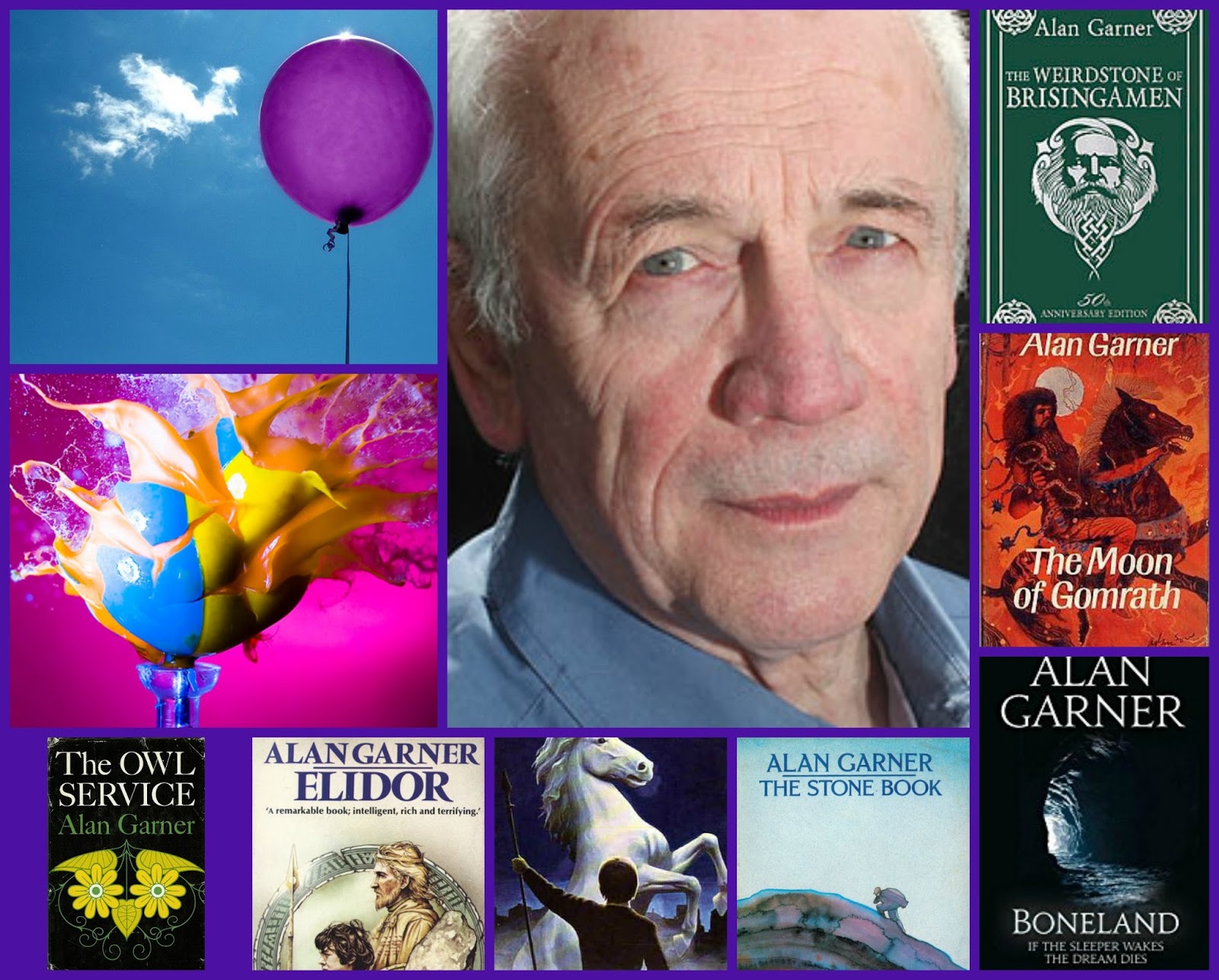
The second memory I have is of listening to one of my favourite writers, Alan Garner, lecture about his own dislocation from his “class.” He was lecturing about writing and mental health and being honest about a personal experience when he felt he had had a nervous breakdown. He saw education and moving away from home akin to being blown up like a balloon. The balloon gets bigger and floats away, getting bigger, seeing further and wider, getting perspective, gaining height. Sometimes the balloon bursts. (How he felt about his own nervous breakdown.) The balloon needs sticking back together. Patching up. Before it can be inflated again. Sometimes, though, the balloon floats but it remains tethered to the ground, to its base, to where it came from. And it can be pulled back to its roots and bounce back again freely when it wants. And soar. And return. And soar again. Soaring tethered.

Saturday, 20 June 2015

Tatau and Terrific TV

Tatau

I just finished watching Tatau with the family. Tatau was/is the BBC3 series filmed on the Cook islands with plenty of directorial verve. (Directors Wayne Yip, Josh Frizzell and Michael Hurst.) On my blog profile I say how loyal I feel towards the BBC and it is this kind of series that makes me want to support them wholeheartedly. It felt like an independent production and had plenty of dazzle in the performances, the direction, the design features and the overall idea. It wasn’t a homogenous committee-drama, that’s for sure, and all the better for that.

BBC3

I hope the decision to put BBC3 online does not backfire. Several of their shows have been big successes: Being Human, In the Flesh, Gavin and Stacey, Torchwood – and there have been excellent documentaries too – one I remember vividly, My Brother the Islamist, could do with monthly repeats. I don’t know how expensive it was to send the crew and cast to the Cook islands for Tatau but it was FANTASTIC to see uncommon locations and less-familiar actors (including a good number from Commonwealth countries) in a weird and wild drama.

Brave commissioning

Some shows are victims of the commissioning channel’s lack of support, for example, the sudden cancelling of Atlantis which grew into a greater show with each episode. I imagine Tatau will not get a second series so we will never know whether it would have matured over another set of episodes. But I for one would tune in if the series was re-commissioned. Bravo to the BBC for giving viewers something out of the ordinary.

Tatau’s strengths

It made an eye-pleasing change to see sun-kissed locations different from drab urban offices and bucolic green villages favoured by typical home-grown TV series. The actors were uniformly good with the double act of Joe Layton as Kyle and Theo Barklem-Biggs as Budgie managing to convey the reality of buddies who had been travelling and who had a shared history. Joe’s intensity and Theo’s buoyancy motored the plot. Theo’s story contained an imaginative twist (no spoilers) and the hints at Maori culture were intriguing.

New faces to British TV

Shushila Takau, Alex Tarrant and Rawiri Jobe as Aumea, Maui and Koringo were convincing and unsettling in their portrayals of ambiguous characters – should Kyle and Budgie trust them or not? Cian Elyse White as Lara Morgan, I thought, was an attractive and charismatic performer and character; she probably had the best-written part in terms of variety of tone and emotion.

Tatau’s weakness

Sadly I think the show’s weakness was in some aspects of the writing, where, although the set-ups and the complications all had massive potential, there were underwritten characters and scenes that seemed either missing or rushed. I want to applaud Richard Zajdlic on the one hand for creating a complex show with some fine scenes and character moments but I wonder whether the pressures of budget and/or time and/or location meant he would have produced a more satisfying total narrative if circumstances had allowed. I noticed he was producing too. I know he is an experienced writer and one of the (many) past shows to which he contributed, This Life, is a major classic, in my opinion.

I wanted to see more depth to particular characters

Aumea’s father and her brother both had much more potential than the script allowed.  Temuera Morrison as the father had a powerful screen presence and his role in the climax could have been much more developed. Budgie’s mum (and Budgie’s whole back story prior to arriving on the island) proved functional rather than integrated and thematic. It struck me that Tyler and Dries (Tai Berdinner-Blades and Barry Atsma) had a lot more mileage and were fascinating in their vignettes but it struck me they were potentially more complex than the screen time given; the relationship between Kyle and Tyler seemed to have resonance but we weren’t shown how or why. Ditto Maui and Dries.

Future Stars

All the actors were engaging and I hope to see them again in the future. The series was ambitious and I hope the BBC does not shy away from promoting material like this again. Overall my family and I enjoyed this series a great deal – and relished shouting at the characters’ decisions – always a good sign of an engaging drama.

Daring to be different – are we in a Golden Age of TV?

Tatau didn’t fall into the category of total predictability. Many TV drama shows follow a formula these days so you can anticipate how each character will behave and even what the director is wanting you to think with predictable camera moves and angles.  Notable exceptions in recent times have been, in my opinion, (in alphabetical order): Arrested Development, Breaking Bad, The Bridge, Deadwood, Fargo, Game of Thrones, Happy Valley, House of Cards, Jonathan Strange & Mr Norrell, Last Tango in Halifax, Orange is the New Black, Peaky Blinders.

Past Glories

From the past I would cite as Great and Golden TV: Band of Brothers, Battlestar Galactica, The Beiderbecke Tapes, Bleak House, Boys from the Blackstuff, Brideshead Revisited, Buffy the Vampire Slayer, Cracker, The Crow Road, Damages, Edge of Darkness, Firefly, I Claudius, The Jewel in the Crown, The Killing, Life on Mars, Oranges are Not the Only Fruit, Our Friends in the North, Martin Chuzzlewit, Middlemarch, Pennies from Heaven, Prime Suspect, The Prisoner, Shameless, The Singing Detective, The Sopranos, Takin’ Over the Asylum, This Life, Tutti Frutti, The West Wing, Twin Peaks.

Not yet seen….

(I’ve had reliably recommended, but not yet seen, Boardwalk Empire, Dexter, Freaks and Geeks, The Game, Generation War (Our Fathers, Our Mothers), The Hour, Line of Duty, Lonesome Dove, Pushing Daisies, Ripper Street, Six Feet Under, Spiral, Veronica Mars, The Wire.)  I’m happy to receive further recommendations or to be reminded of anything I’ve missed from my list.

Tatau is one of those “Guilty-Pleasure” shows

The following list are TV series that I have watched with huge pleasure, but even at the time knew they were not for all tastes : 24, The 100, American Horror Story, Atlantis, The Avengers, Being Human, Call the Midwife, The Champions,
Doctor Who, Dynasty, The Flash, Glue, Heroes, The House of Eliott, In the Flesh, Land of the Giants, Merlin, Misfits, My Mad Fat Diary, North and South, The Returned, The Tripods, Spartacus, Star Trek, The Three Musketeers, Timeslip, The X Files – all entertaining and, for different reasons, shows that absorbed my imagination. But I wouldn’t put them in the “Past Glories” paragraph above. Tatau fits into this category, I think.

Perfect entertainment but something amiss

In all these guilty-pleasure shows, the concept is bigger than the final execution. The actors are usually brilliant, scenes are regularly stunning, all the design elements could not be bettered. But somehow the totality of the script misses a satisfying arc; often the conclusion is contrived, rushed or flawed; sometimes a formula kicks in and writers start repeating successful tropes. Alan Garner once wrote that “originality is the colouring of existing themes” and, in my book, Tatau’s colours were vibrant.


Saturday, 7 February 2015

The Sword in the Stone and Arthurian Romance

Arthurian Romance
Where did my interest in the Myths and Legends of King Arthur come from? I know I’m not alone in being a little bit obsessive about seeking out adaptations of the different tales. King Arthur as a character has appeared in over 30 feature films and countless books; I’m even looking forward to Guy Ritchie’s version, scheduled for cinemas in 2017 according to imdb.com, starring Charlie Hunnam as King Arthur and David Beckham as “Blackleg leader” ….!? Charlie Hunnam joins a list of distinguished screen Arthurs over the years; in the picture below Charlie relaxes (with Excalibur I imagine) in a boat alongside an Arthur-fest of other actors: Clive Owen, Sean Connery, Nigel Terry, Liam Garrigan, Jamie Campbell Bower, Graham Chapman, Brian Aherne and Bradley James.
Arthur at the BBC
I felt the BBC TV series Merlin was strongly-designed and acted with involving relationships. I also thoroughly enjoyed the BBC Radio 4 adaptation of The Once and Future King with David Warner as Merlyn. I have no doubt there will be many future variations, additions and perversions of the Arthurian stories. All the elements have been recycled many times: the boy with a destiny, the noble leader, the magical weapon, the love triangle, the adventures and spiritual quests, the friendships and betrayals, the battles and the tragic end.
Disney's Sword in the Stone, Harry Potter, the Narnia series and Terry Pratchett novels borrow Arthurian elements
After reading The Goshawk by TH White in my teenage years I thought it would be entertaining to read The Sword in the Stone and I bought a paperback copy at Wakefield market. I had not read anything like it before – the knowing asides to the reader, the anachronistic references to the 20th century in a medieval narrative, the exquisite descriptions of English landscapes.
It was easy to identify with the Wart (to rhyme with Art) – a runt of a boy (misunderstood and bullied.) The other main characters are also vivid:
  • the charismatic wizardly teacher, Merlyn
  • the talking owl, Archimedes
  • the affable but clumsy Kay
  • the comical but brave King Pellinore
  • the gruff but kindly Sir Ector. 
Disney’s whimsical film captures much of the plot of The Sword in the Stone but misses out the underlying philosophy and satirical politics.
Merlyn and Archimedes

Arthur pulls the sword
Mixing Fact and Fiction
Following my enjoyment of The Sword in the Stone I scoured references to potential historical figures on whom Arthur could have been based: Artorius, Artúr, Agitius, Ambrosius Aurelianus, Lucius Artorius Castus and Riothamus. Celtic, Briton, Roman or a mix of all three? I read Tennyson’s poetic version Idylls of the King, Enid Blyton’s children’s version of the stories, Rosemary Sutcliff’s retelling, Tristan tales in comic books, John Steinbeck’s skilful adaptation and Mary Stewart’s trilogy about Merlin. I looked up encyclopaedia entries about Tintagel, Glastonbury, Winchester, Cadbury Castle and many other sites around Britain laying claim to fragments of the legendary characters and ideas. I devoured (several times) Alan Garner’s superb tales of Alderley Edge: The Weirdstone of Brisingamen and The Moon of Gomrath and Susan Cooper’s The Dark is Rising Sequence of five books, starting with the unsettling Over Sea, Under Stone.
Academic Module
At university I took an optional course in Arthurian romance when I learned about Gildas, Nennius, Geoffrey of Monmouth’s Historia Regum Britanniae, Wace, Chrétien de Troyes (who introduced the Lancelot/Guenevere love triangle and the Holy Grail), Eschenbach’s Parzival, the Song of Roland, the Alliterative Morte Arthure, the Mabinogion and Spenser’s Faerie Queen. It became obvious that there was no such thing as a definitive Tales of King Arthur originating from a single narrative foundation but a collection of elements from a variety of sources, cultures and traditions. Arthurian Romance is a miscellaneous ragbag of bits and bobs, all the more marvellous for their open-ended possibilities. Alan Garner explains his idea about riffing on old ideas in the afterword to the Alderley Tales: “Originality is the personal colouring of existing themes.”
Films by Robert Bresson and John Boorman
Malory’s Le Morte d’Arthur – a major landmark
There is probably one book, though, that is the nearest thing to a lodestone for fans of Arthurian Romance. Malory’s Le Morte d’Arthur from 1485 is the book that seems to combine the most potent stories and ideas into as coherent a whole as currently exist and this mighty tome was the meat of the course at university. It was the work that was used for the beautiful-to-watch and eminently worthy (but in my opinion strangely dull) production at the Royal Shakespeare Company in 2010 directed by one of my favourite directors, Greg Doran, and starring two of my favourite actors, Sam Troughton and Jonjo O’Neill. I’m not sure why that production didn’t light my fire since it brought together two of my favourite obsessions: the Arthurian legends and the RSC. William Goldman’s famous opening to Adventures in the Screen Trade is the only explanation I can come up with: in the entertainment industry he authoritatively stated: “Nobody knows anything.”
RSC's Morte d'Arthur with Jonjo O'Neill as Lancelot and James Howard as the Grail Angel

“Whoever pulls this sword out of this stone and anvil is born to be the rightful king of all England.”

Before getting to the academic study at university there were two other works that DID light my fire – one set of books and one film musical. The musical was based on the books and the books were based on Malory’s Le Morte d’Arthur. It was a series of books that, it is fair to say, have haunted me since I read them aged 15: the sequels to (or continuation of) The Sword in the Stone – The Once and Future King.
Ioan Gruffudd as Lancelot in Antoine Fuqua's King Arthur


Saturday, 29 November 2014

Jackdaw Collaborator

Robber and partner
We know (from academic comparisons and now computer analysis) that chunks of Shakespeare’s work was adapted, sometimes closely (nicked you might say), from the works of other writers: Plutarch, Plautus, Holinshed, Arthur Brooke, Thomas Lodge, Robert Greene, Ovid’s Metamorphoses and Chaucer to name the most obvious and famous examples. Shakespeare was a jackdaw writer, stealing fragments, adapting plots, robbing motifs and plot devices. We know also that he was a collaborator, working without doubt on some plays with Middleton, Fletcher and George Wilkins. (Possibly Marlowe, Nashe, Peele and Munday too.) (Let me know if you want the evidence for any of the statements in this paragraph….) This doesn’t lessen his achievement in my eyes. Michelin star chefs are not thought rubbish because they use ingredients that have been used before….
Collaborators and writers of Shakespeare's source material
It’s not what you’ve got, it’s what you do with it
Stealing from others for creative and artistic reasons is not a cop-out. As one of my favourite writers, Alan Garner, memorably wrote: “Originality is the personal colouring of existing themes.” Shakespeare’s linguistic reputation relates to what he does with his sources, what he does with the language, how he portrays characters in action and how he reveals the themes and issues in stories that thrill, surprise and delight 400 years later. Poor vocabulary, maybe, in comparison with a modern reader; but, oh my, the way he puts those words together.
You taught me language and my profit on’t is
I know how to curse…. 
Shakespeare Apocrypha.... yes, bits of Macbeth were probably not by WS.....

Saturday, 22 November 2014

You Taught Me Language....

To Infinity and Beyond - quick number summary

With 200 words – you can survive (toddler language)
With 850 words – you can thrive (competent 8 year old)
2000 words – the total used by the average modern-day Jill or Joe (teenager base words)
With 4000 words – the Janet or John who reads will function successfully (educated teenager base words)
12,000 to 17,000 words – the number of base words used regularly by a modern adult with average intelligence
25,000 words – popular writers with numerous works
50,000 to 75,000 words – ALL the words known by a modern adult including all the plurals, negatives, derivations, declensions and conjugations (for example counting "is," "was" and "wasn't" as well as "be") [Some of these words will never be spoken but they will be understood when seen or heard in context.]

28,829 words....
My big reveal is that Shakespeare in fact used FEWER words than the number known and understood by many educated modern adults. He used over 65,000 words (compared to 75,000 for the highest ranking modern person) if you count all variations. With the help of computer technology, we now know he used 28,829 unique word forms and 12,493 of those words forms occur only once.  Interestingly, the top 100 most frequently occurring words (the same 100 words back in Jacobethan times as in modern times) make up 53.9% of his entire output.  Put another way, 50% of Shakespeare's work is made up of language used by the average modern 2 year old.
Not such a hot shot linguist then?
Anti-Stratfordians sometimes argue that Shakespeare’s lack of a university education is evidence that the son of a glover and a brewer descended from farming stock in the Midlands could not write the works in the First Folio.  But as I have demonstrated above, around 50% of his work is very simple, basic English.