Saturday, 8 July 2017

Make your garden rich

Hidden gem
Out near the East Coast, positioned between Hull and Scarborough, lies Burton Agnes Hall and Gardens. It’s a house in a private trust and we followed a recommendation to pay a visit there. It’s not English Heritage, it’s not National Trust. It’s beautifully kept and there’s plenty to do for a whole day, particularly if you’re keen on gardening.
Annie and Joyce
During their lives, my Mum, Annie Penn, and Sally’s Mum, Joyce Allard, loved spending time pottering in their gardens. So it seems somehow fitting that tending our garden at home now has become a retirement activity. Not for me, alas, tapping and scribbling away indoors at my novel; but for Sally who’s developed an absorbing interest in shrubs, hedges, flowers and soils – and their arrangements, colours, hydration and upkeep. Gardening seems to be a bottomless pit of possibilities with so many variations and complications and hits, misses, false starts, surprises, successes, uprootings, feeding, fertilising, mulching, raking, digging, watering, staking, supporting, planting, replanting, pruning and dead-heading. 
Gardens as metaphors
Writers through the years (poets, playwrights, novelists and journalists) have often turned to gardens and nature when trying to express essential things about humanity. The concept of growing something from seed, nurturing it, tending it in its maturity and then deciding when to put it out of its misery or start again has inbuilt metaphorical potential. A garden can be seen as:
a country (the “garden of England”)
a road map of setting priorities and organising time
an emotional history
a place to form roots, tame the wild and form patterns
an area of your life to prune, weed and declutter
a tangible expression of reaping what you sow
a loving harvest of time and effort
a place of rest and contentment
Burton Agnes
The house at Burton Agnes is a massive Elizabethan pile and inside feels lived-in and homely even with spectacular rooms like the Long Gallery and elaborate ceilings and exquisite wooden paneling. But, unusually for me (a sucker for historical houses) it was the garden that sticks in my mind: luscious, dramatic, flamboyant, classical in parts, cottage-like in parts, fuzzily colourful in parts, blazingly daring at times; nooks, crannies, secret paths, weird juxtapositions. It helped that the sun was shining. It helped that one of the characters in my novel is a gardener so I was open to be influenced.
Gentler scion and wildest stock
Sally isn’t a character. She’s real life. And she’s the gardener of my heart. In Shakespeare’s The Winter’s Tale Perdita argues that she only wants to plant pure breeds of flower but Polixenes argues that sometimes when you put together two unlikely things (grafting is the gardening term!) art can improve nature. I sometimes wonder if that’s what happened in 1986 when we got married – the art of marrying improved our individual natures to form a new hybrid plant.
You see, sweet maid, we marry
A gentler scion to the wildest stock
And make conceive a bark of baser kind
By bud of nobler race: this is an art
Which does mend nature, change it rather, but
The art itself is nature.
Happy Anniversary.


Saturday, 1 July 2017

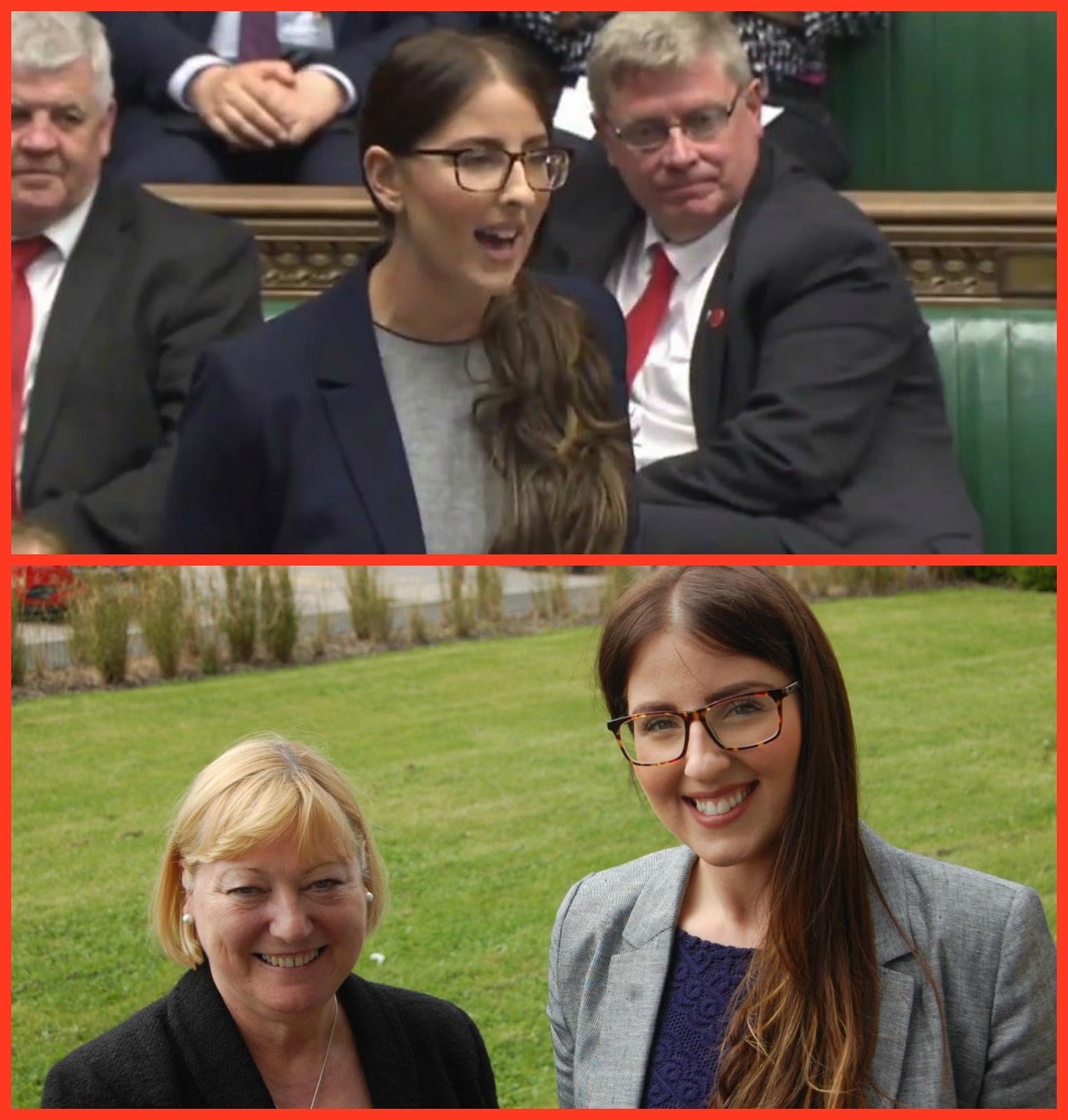
Laura Pidcock maiden speech


Thank you, Pat Glass
Thank you, Mr Speaker, for calling me to make my maiden speech. I also thank the people of North West Durham for allowing me to be here at all. It is apt that I should be called in this debate because, before entering the House, I worked with schools, colleges and teachers for nine years and my predecessor, Pat Glass, dedicated her professional and then political career to education. If I can be half the friend and ally of schools in North West Durham that Pat Glass has been, I will be doing very well.
Pat Glass and Laura Pidcock
A lion hunting a gazelle
Pat Glass leaves a brand new secondary school as one important legacy of her time here. Even in opposition, she managed to prise funding for a school from the former Education Secretary, which took the energy of a lion hunting a gazelle. I, and others, are truly grateful for all that she did for the constituency, and I wish her well in her retirement.
Magnificent, Beautiful, Breathtaking, Cultural
North West Durham is the most magnificent of places, and I am truly blessed to represent such a beautiful part of our country. The green, lush countryside is simply breathtaking, peppered with arable, dairy and upland hill farms; the richness of our culture and history is astounding; and the people are hard workers, proud and strong. Some in here would have us in the north painted as uncultured and without finesse—as savages—but people only think that or say that because they do not know our communities or our people. My constituents are the real wealth creators, and they are people who make this nation great. If anyone wants to see one of the world’s finest cultural traditions, they should look no further than Durham miners’ gala, which, although not in my constituency, is an annual pilgrimage for many of my constituents and is the biggest trade union gathering in Europe. It celebrates the best of solidarity, born of struggle.

Proud tradition
North West Durham has a long and proud tradition of industry and skilled work. Consett was dominated by steel production and became renowned for the thick red dust that covered the town—airborne iron oxide from the plant. At its peak in the 1960s the steelworks provided jobs for some 6,000 people. We had lead mines and hundreds of jobs in a thriving textiles industry in Crook. That industry was unfortunately left to decline. Jobs and communities were not invested in and unemployment rose exponentially. Many are still living with the scars of that period today.
Consett and Crook

The system at large
Turning to this place, this building is intimidating. It reeks of the establishment and of power; its systems are confusing—some may say archaic—and it was built at a time when my class and my sex would have been denied a place within it because we were deemed unworthy. I believe that the intimidating nature of this place is not accidental. The clothes, the language, and the obsession with hierarchies, control and domination are symbolic of the system at large.

Tell the people….
But the most frustrating thing has been to sit opposite those people who tell me that things are better, and that suffering has lessened for my constituents. I would like them to come and tell the people who have been sanctioned that things are better. I would like them to tell that to the teacher in my constituency who was recently made redundant. I would like them to talk to the 16,500 people in County Durham in receipt of food parcels. I would like them to talk to the nurses, the junior doctors and the firefighters—come and tell them that years of austerity have improved their practice or their profession.

Indignity of poverty
I will end with this: we can choose, in this place, to be self-obsessed, to perpetrate fear and greed, to be a monument to injustice, or this can be a place that elevates equality, facilitates the power of the people, and esteems and properly funds a rich network of public services so that nobody is left in the indignity of poverty.